Indian computational media, cultures and even subcultures have becomeIndian computational media—and the cultures and subcultures that have emerged around it—have become an important site for examining a methodological paradox. Home to one of the world's largest populations of engineers, technologists, and AI researchers, India has developed substantial digital capacity while simultaneously revealing significant questions about the infrastructures that support computational art, knowledge production, exhibition practices, and cultural exchange. Here, "synthetic" refers not to artificiality but to infrastructures assembled through improvisation, DIY cultures, lived experience, and practices that resist disposability.
These technologized refractions are profoundly global in their circulation of ideas and tools yet profoundly rooted in contextualization and aesthetics. There exists an intricately woven ecology of international embassies providing patronage, outreach partners, global corporates, design, engineering, art, and film schools with their new media festivals and degree showcases, newly formatted techno-media conferences, virtual worlds, media labs, SMEs, informal collectives, artist studios, hardware platforms, exhibition architectures, and labor formations which range from housewives with forehead rigged cameras recording peeling of mangoes to Tate Modern’s recent artistic showcases.
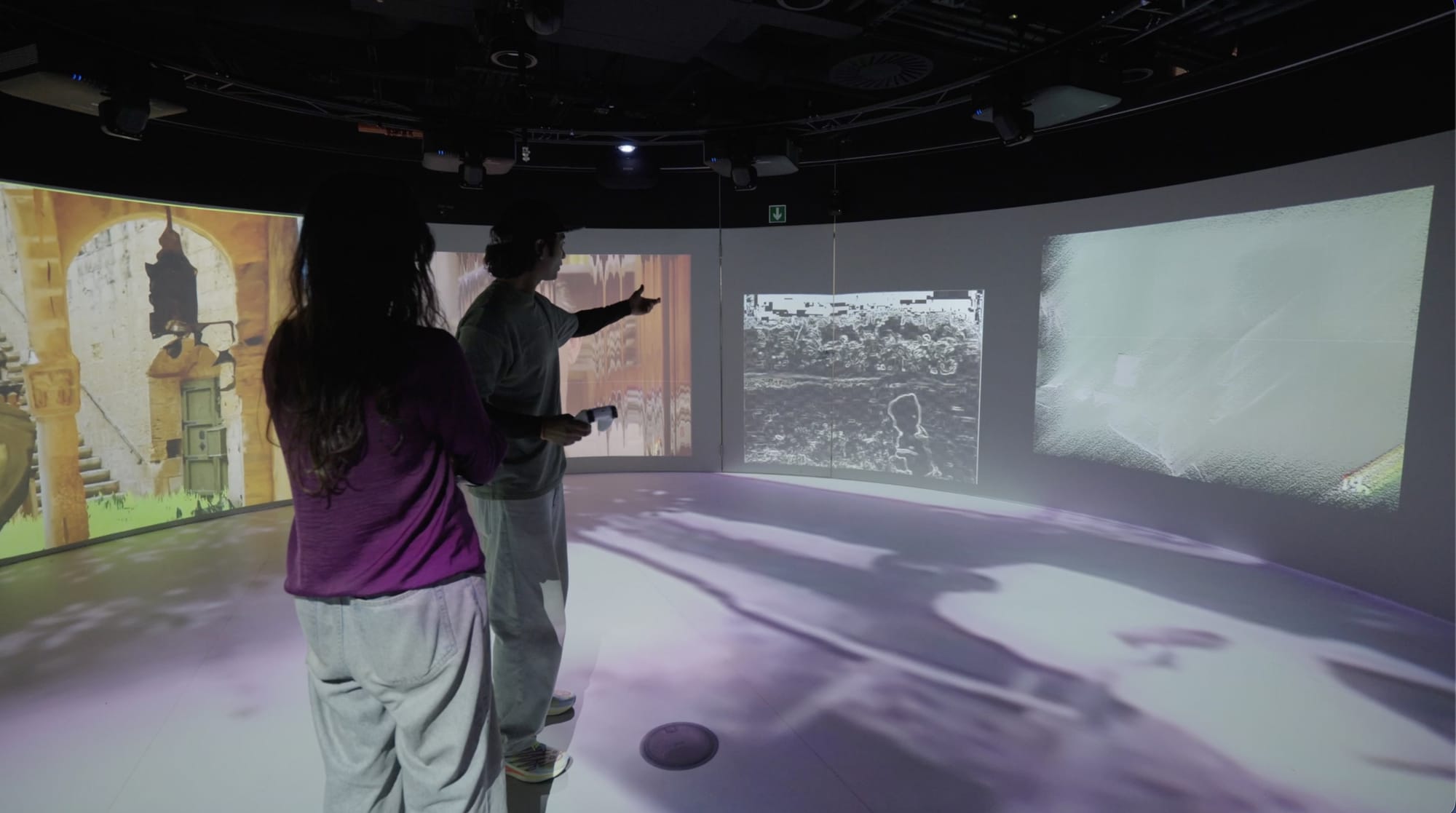
Academia and industry have always tried to help–and exploit–each other. Yet some of the most conceptual computational works almost always arrive from this friction between the two. Rayscapes Arcade (2025–ongoing) is one such proposition. It was conceived by the transdisciplinary collective Coded Playhouses, comprising academics, filmmakers, architects, designers, medical doctors, and creative technologists. The project emerged from a provocation by film scholar Dr. Kaushik Bhaumik, who has taught a course on Satyajit Ray at the School of Arts and Aesthetics, Jawaharlal Nehru University, for more than five years. The question was deceptively simple: what would it mean not merely to conserve Rayscapes Arcade's world, but to computationally expand it? The outcome unfolds through 4 quadrants:
- A playable archive of Sound and Memory (Unreal + Touch Designer Game)
- A Cartography of Rayscapes Arcade's Cinematic Geographies (Architectural City Model)
- A Zoetrope reauthoring Rayscapes Arcade's Archive into Living Memories (Optical Toys and Textiles)
- The recreation of Rayscapes Arcade's compositions via contemporary imaging technologies (iPhone and Dji Drones)
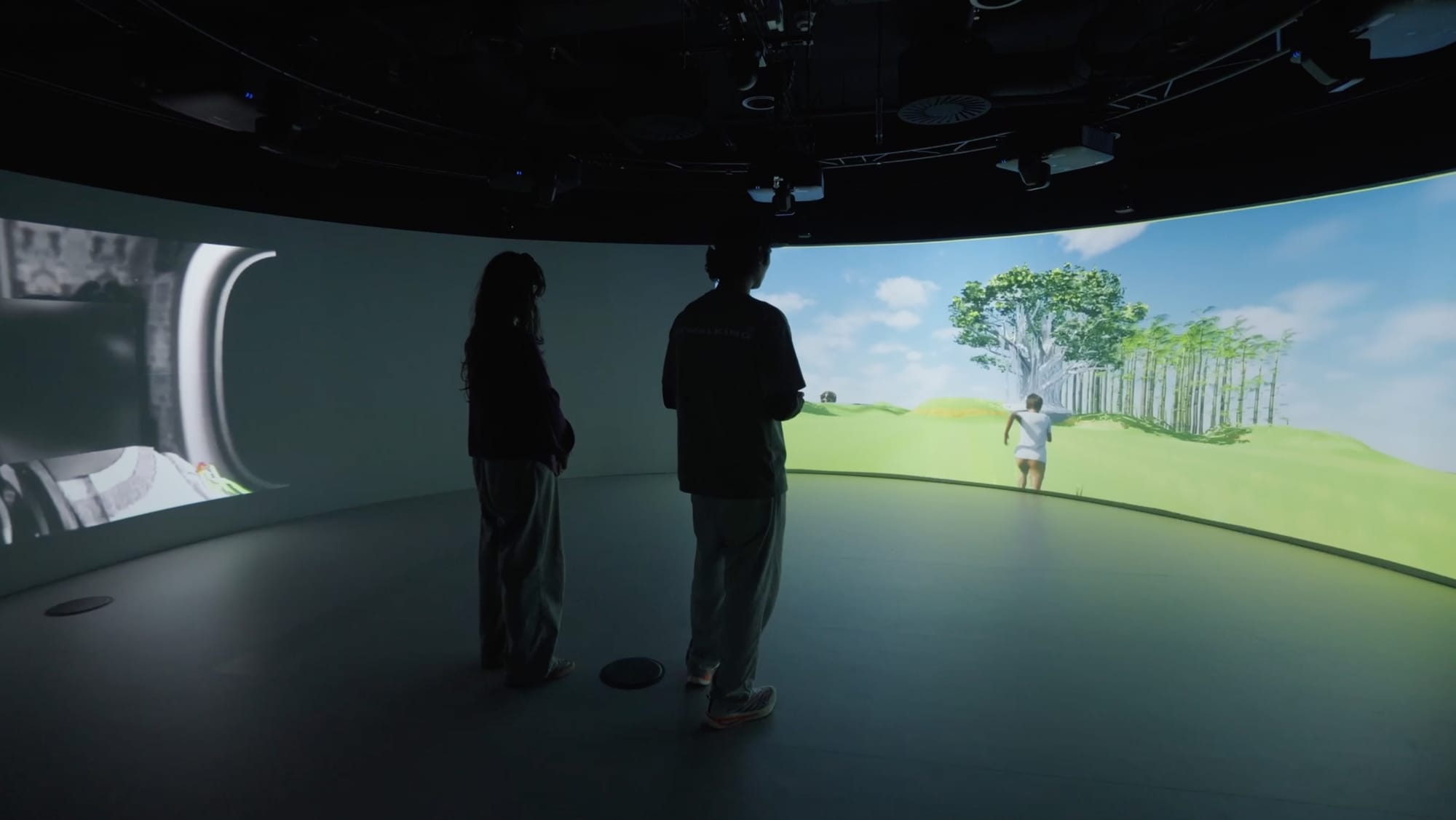
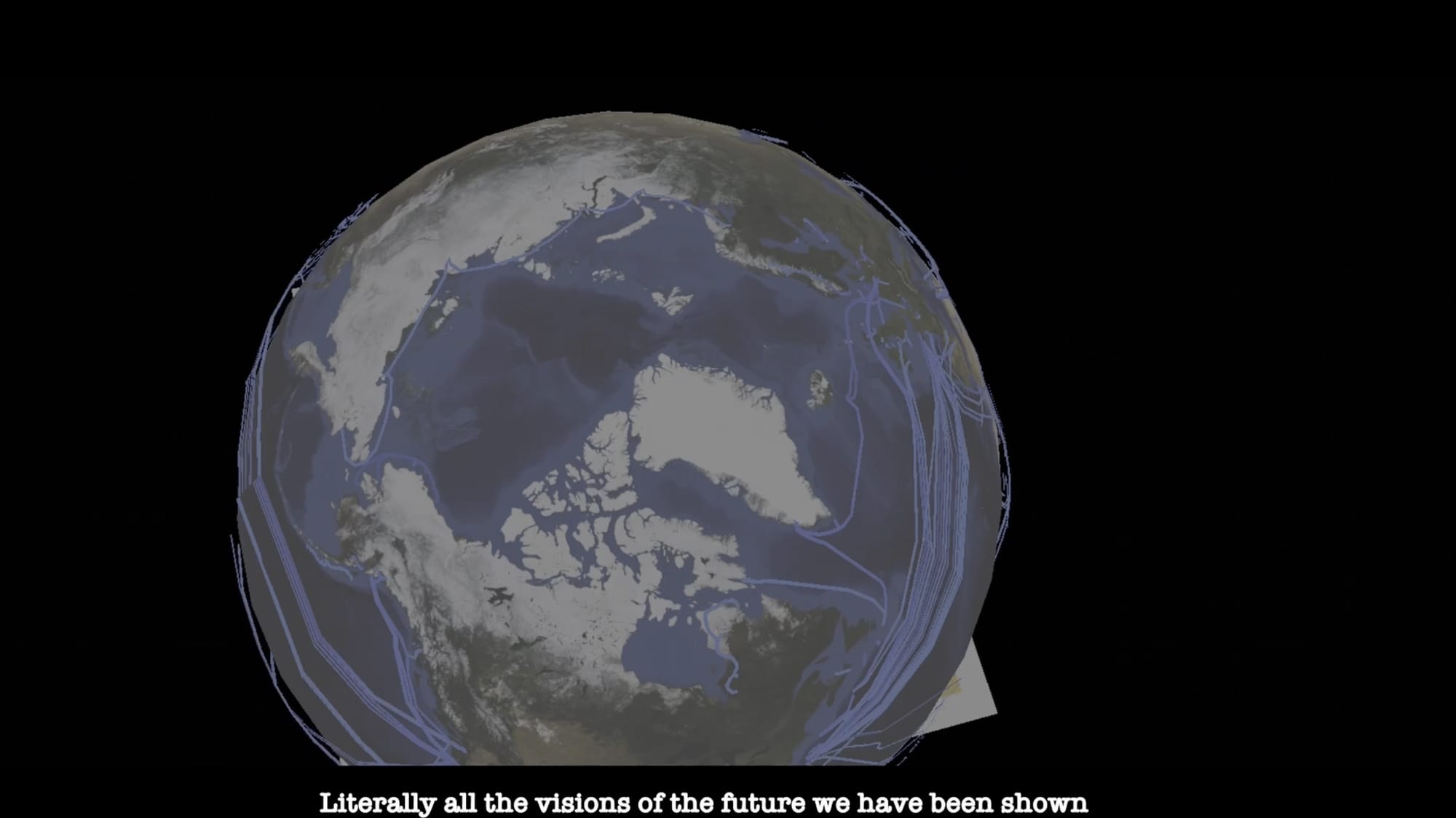
If Rayscapes Arcade computationally expands the archive,यथा वणिजो लाभकामाः समुद्रम्-Like Merchants Desirous of Profit Who Venture Upon the Ocean (2026) directly takes on the infrastructure head-on. Built partly in Touch designer and Unreal Engine and currently on public viewing at British Council, New Delhi traces an arc between colonial telegraph wires, Undersea Cables, Wave Powered AI Inference Platforms in the Global South. The work showcases the Anthropocene’s most honest image and anticipates what’s to come for India’s land, water, and air, alongside the further selling of its elements to new merchants (Meta, Microsoft, Open AI, X, and related actors).
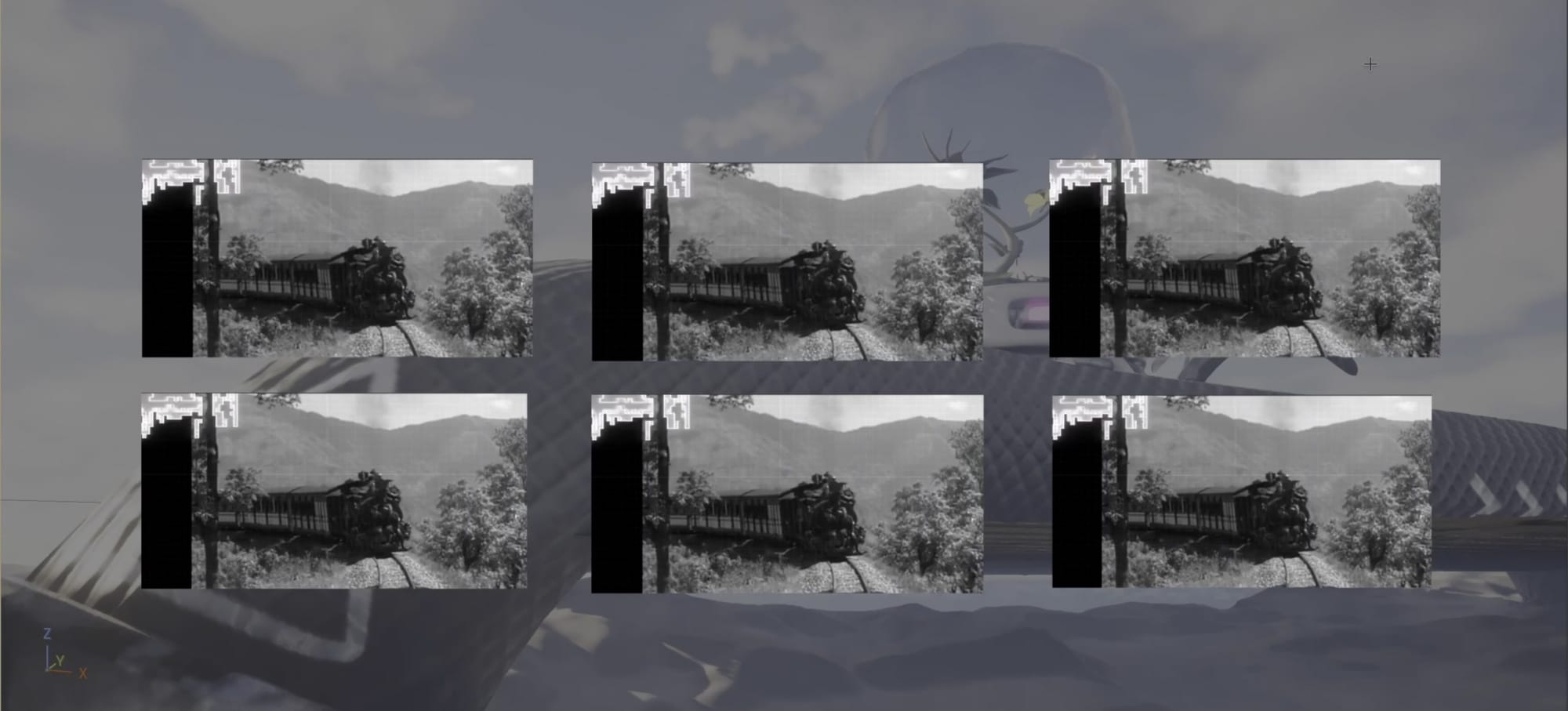
Yet all these formats and modes of curation have a great common factorial – a structural signature of an archive remix, Indian living traditions technologically recoded and heritage conservation enveloping the canvas.
ΨIndia = ∑ᵢ₌₁ⁿ (Ti ⊗ Ai ⊗ Li ⊗ Si) + ε – η
Like Unreal Engine’s Niagara particle simulation, India’s computational cultures can be represented through an equation in which ‘T’ denotes Living Traditions, ‘A’ denotes Algorithms, ‘L’ denotes Labor, ‘S’ denotes Synthetic Infrastructures, ‘E’ denotes Emergent forms, and ‘n’ denotes Ethical Friction. Yet ethics remain external to the equation, appearing as the friction that determines whether emergence becomes emancipation or extraction.
But 1+1≠ 2 as every encounter changes the identity of the terms themselves.
Furthermore, and this is an interesting framework to follow here, as Refik Andol’s DATALAND is now open to the public and global art and film festivals simultaneously champion alternate reality pavilions, the more pressing question becomes about figuring out the right metrics to judge a computational artwork. What happens to these artworks when the grant producing the exhibit is finally executed? Does the blockchain solve the provenance issue? Who owns the archive here, and majorly who consumes these works? Who commissions them? The idea of access and accessibility becomes a beat wherein the image changes, but the infrastructure does not.
It's important to note that various new media software and hardware labelled as open source, marketed with student discounts and tag lined as affordable for everyone are precisely built upon the miniaturization of labor. So, what’s the alternative here if not the tokenization of the entire system and outsourcing hardware which is powerful enough to run them all at 24FPS, or whichever standardized format listed by major art shows. This essay is, in essence, a call for an ethics and aesthetics manifesto wherein the task before us is not to merely build new worlds but to rather engineer conditions under which worlds can remain plural, reparative, and sovereign – for if 1+1≠2, then every computational permutation and combination produces a new reality, and the politics of that reality must be ours to shape.
The tensor product (⊗) indicates the co-constitutive and entangled relationship among these domains rather than a multiplicative operation in the strict mathematical sense. The summation (∑) suggests that these interactions occur across multiple instances or sites (i = 1,…,n).
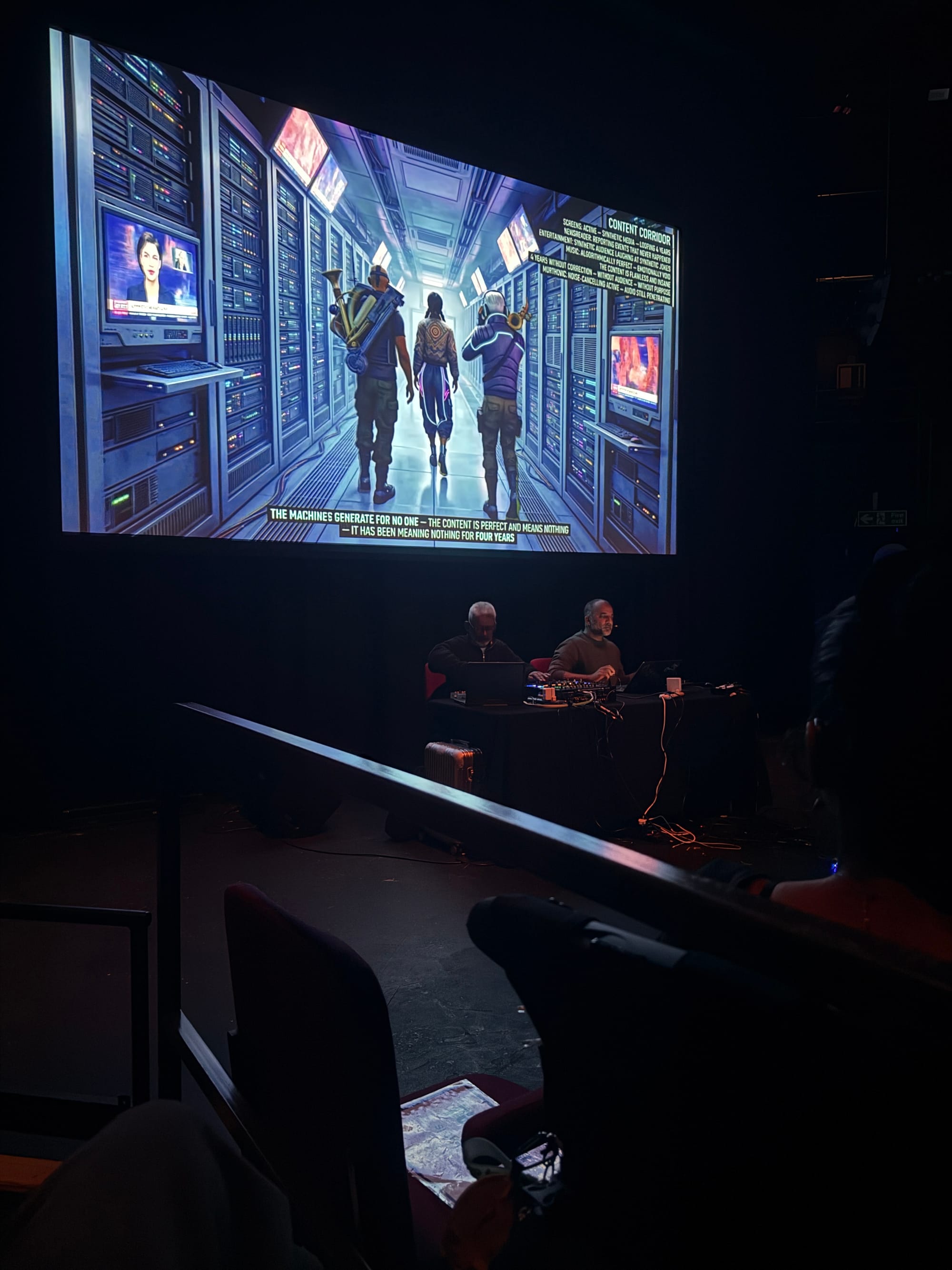
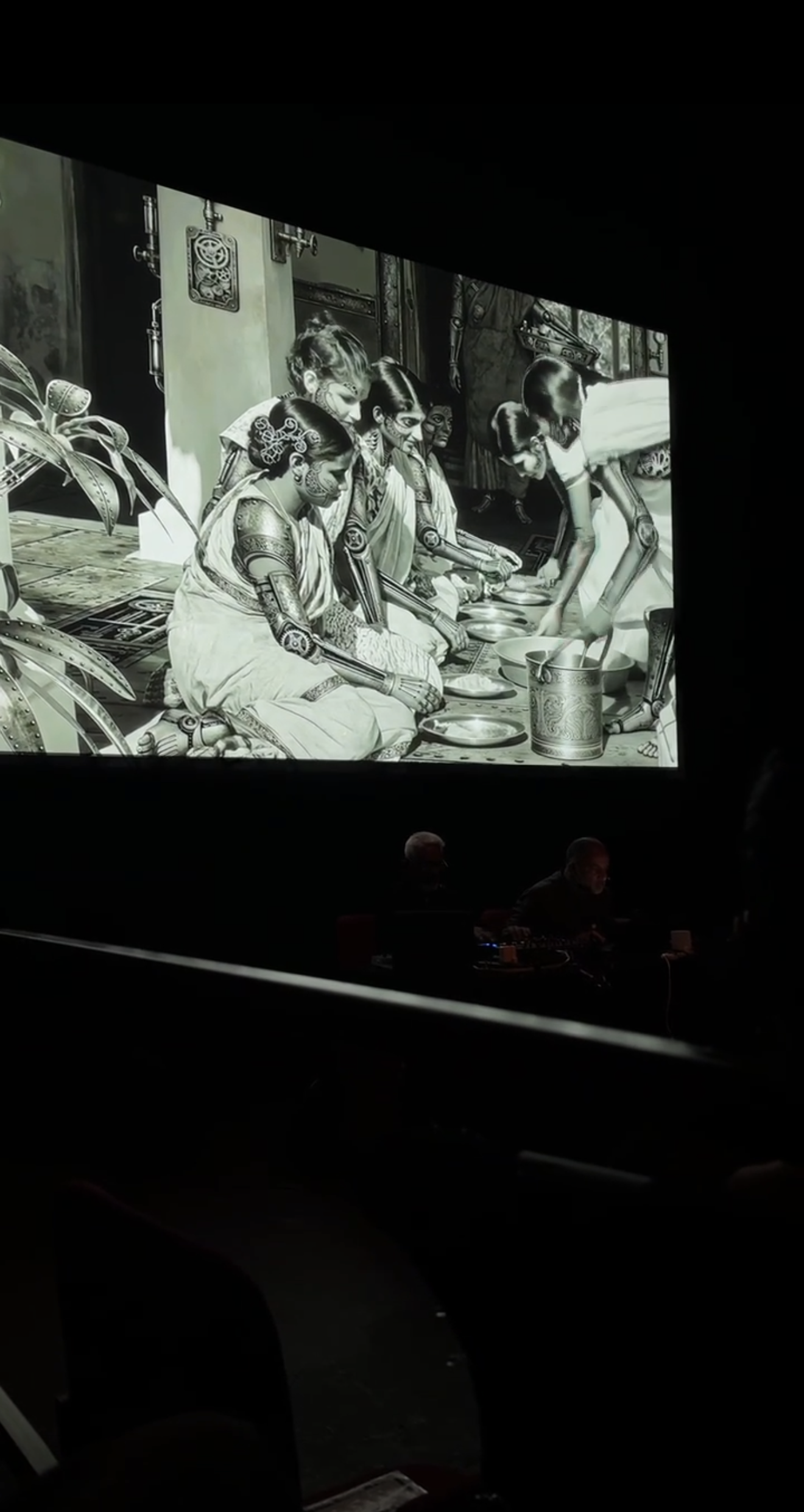
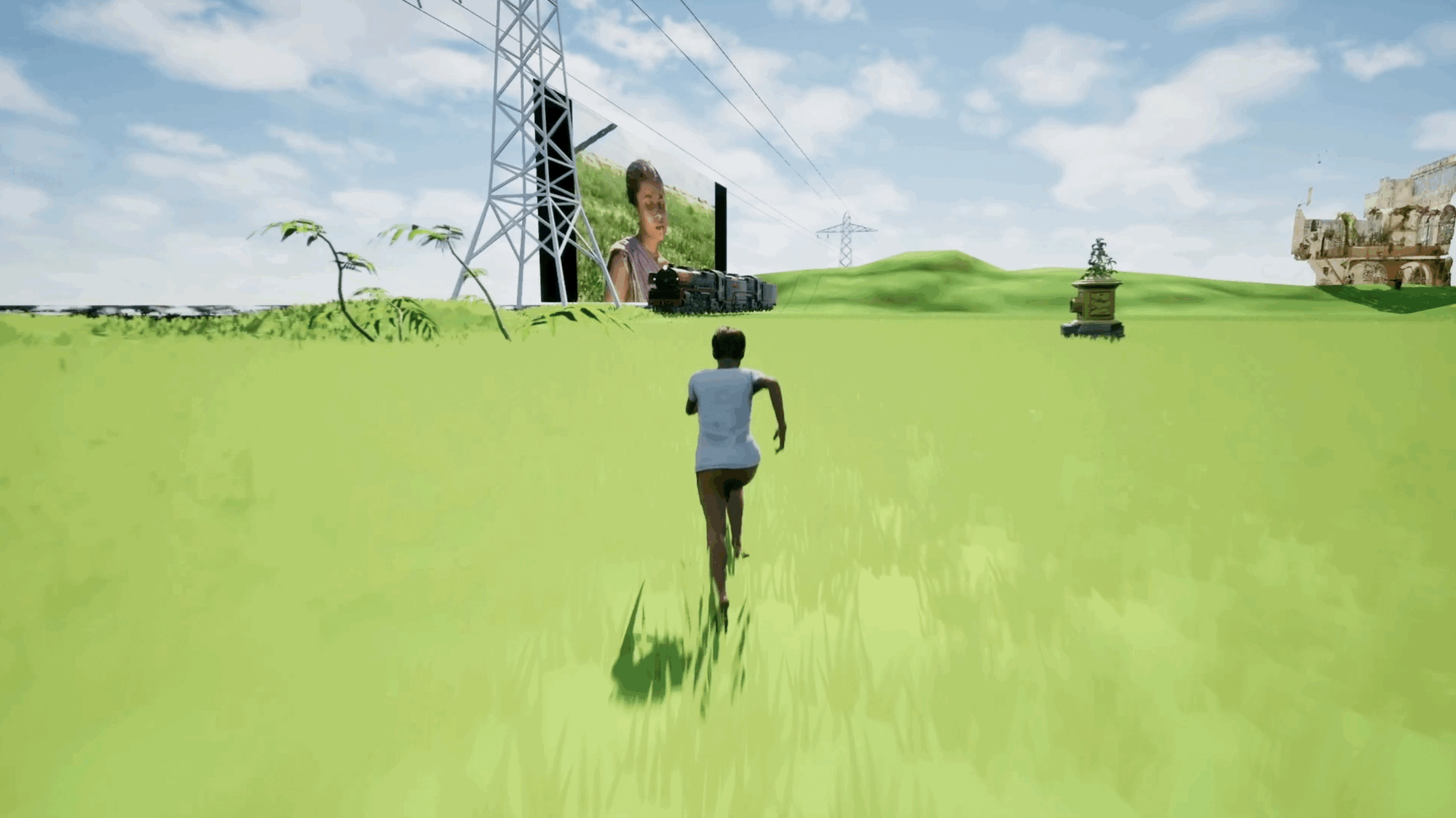
Image Credit: Elsewhere in India, Murthovic & Thiruda and Jayalakshmi Eshwar with Mark Atkin (Curator CPH: DOX).
Additionally, the question of archive is perhaps most urgently raised by practices such as Elsewhere In India whose work utilizes archival restoration, digital reparation, gamic universes and DJ sub-cultures of remix and sampling. As Avinash and Murthy rightly point out that DJ and VJ worlds were built on bootleg fragments, and informal acts of cultural recombination. But what becomes of remix once every image is born digital and every archive is susceptible to algorithmic manipulation and generative intervention? Who owns the archive? Who owns the agency to alter an archive? And what forms of copyright, provenance and other IP laws become essential in a country such as India, where legal and ethical frameworks for computational media remain significantly under- planned and underdeveloped. The archive is no longer simply a repository of the past; it’s a newly curated site, a constant contestation for future world building.