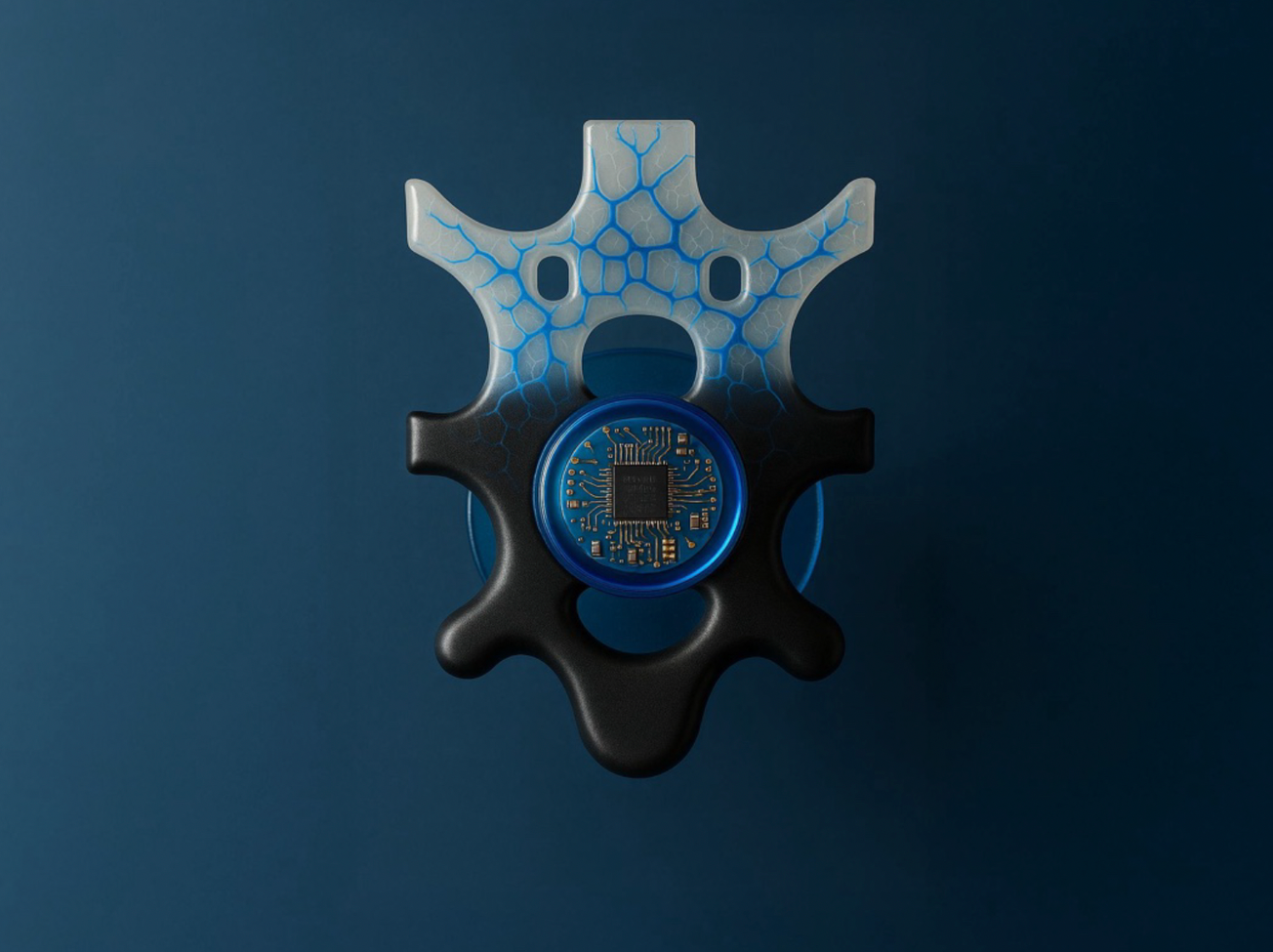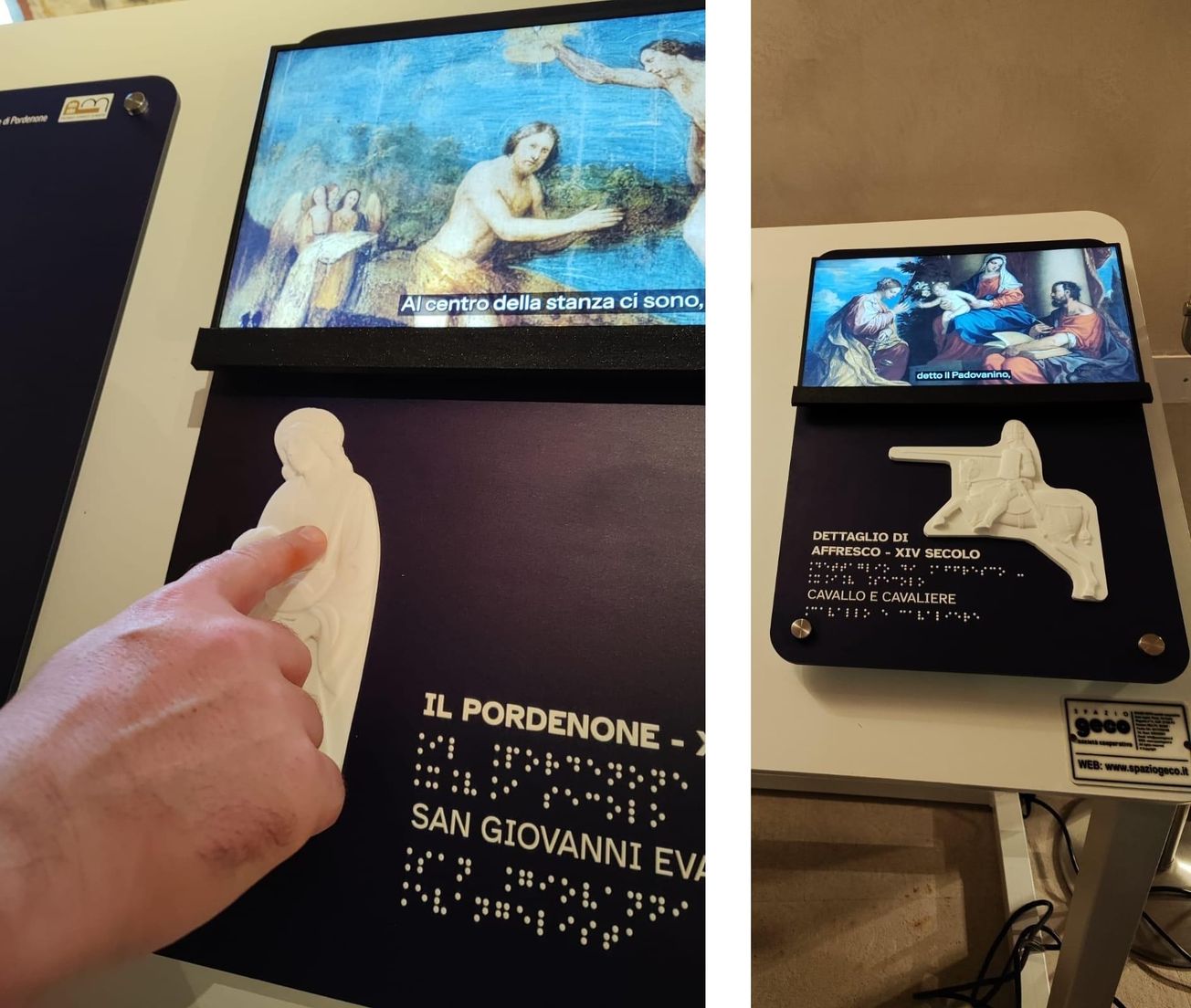
Digital ornaments are appearing across contemporary design. Not as a historical revival, and not simply as a taste for excess, but because something in the relationship between image, tool, and object has shifted. More and more often, a blank surface no longer reads as neutral. It reads as hesitation, and sometimes as a refusal to say anything at all. This essay argues that ornament matters because images now circulate too quickly to hold meaning for long. Digital production, meanwhile, has become precise enough to make surface one of the clearest places where designers can still leave an exact, embodied trace.
Digital communities as symbolic reservoirs
If ornament is reappearing, the next question is what now supplies its symbolic material. More and more often, the answer is digital culture itself. Digital communities increasingly shape what is easy to recognize. They build symbol systems through typography, repeated phrases, motifs, meme structures, and visual habits, turning references into signs of belonging. For many designers in the contemporary West, the problem is no longer simply how to modernize inherited ornament. The problem is where ornamental material comes from at all. In a post-Christian, post-modernist, increasingly post-ideological condition, many symbolic systems are exhausted, politically compromised, internally conflicted, or simply no longer alive as shared continuity. Under those conditions, digital culture becomes less a medium than a reservoir.
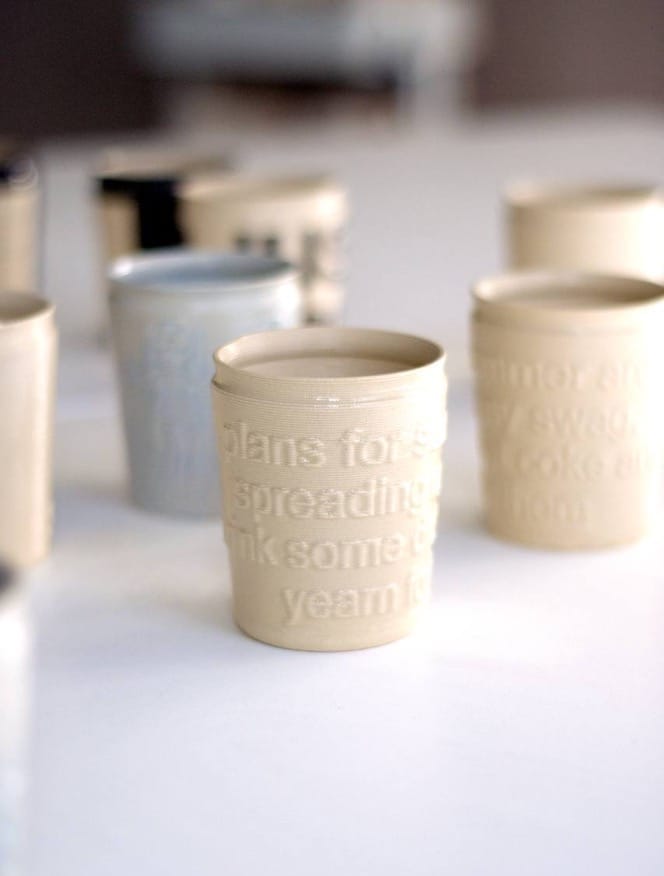
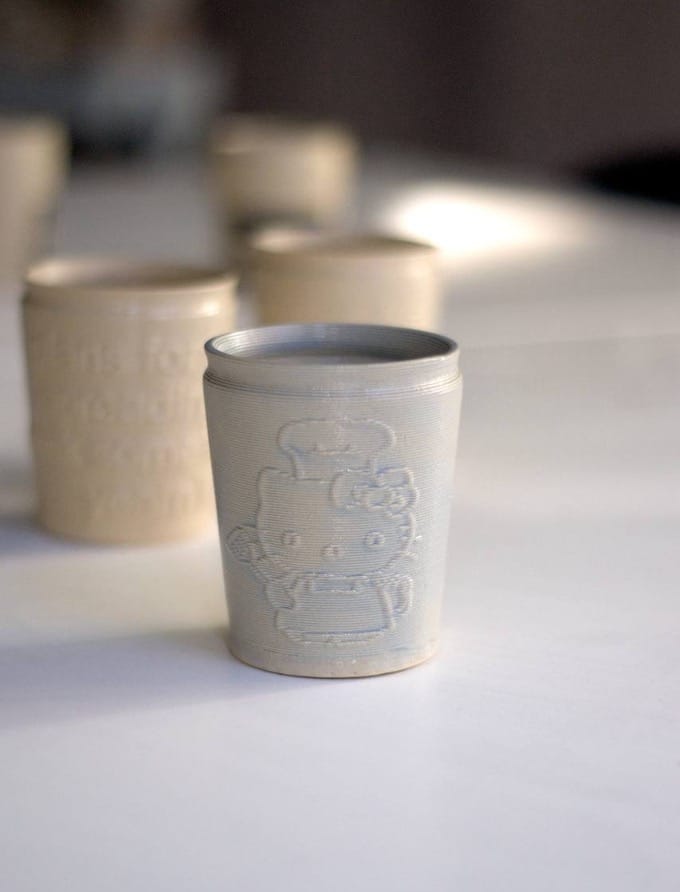
One example is Girls Dinner, developed by Trang Hà and Alia Leonardi, whose graphic language was translated by GLINA³ into ceramic 3D-printed surfaces. Screen-based references became ornament only by passing through shrinkage, firing, and material consequence.
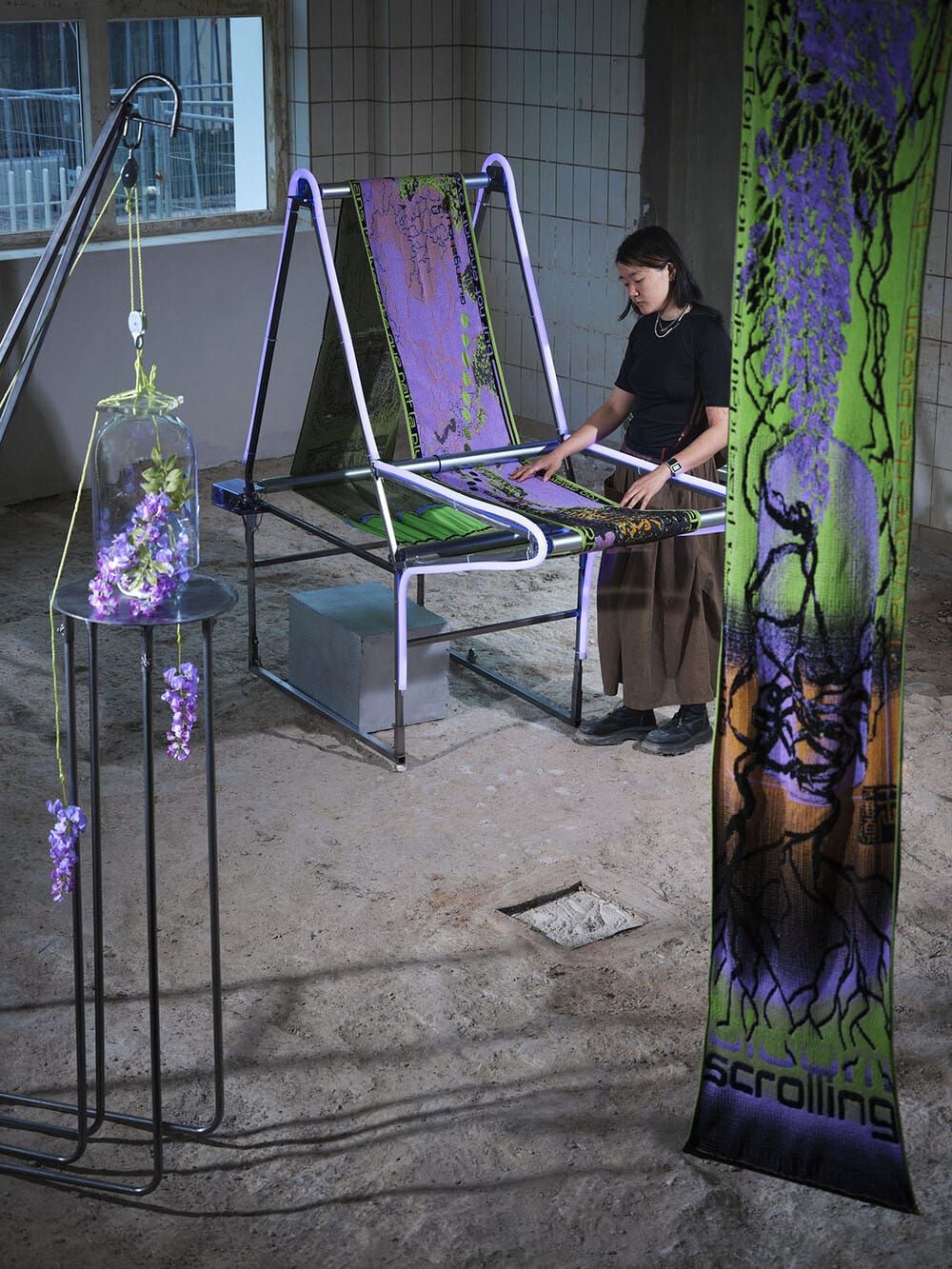
Ache Wang’s Bloomscrolling offers another sharp example of this reservoir: doomscrolling patterns are rendered into hand-knitted textiles, connecting contemporary digital behavior to longer histories of migration, botany, and cultural circulation.
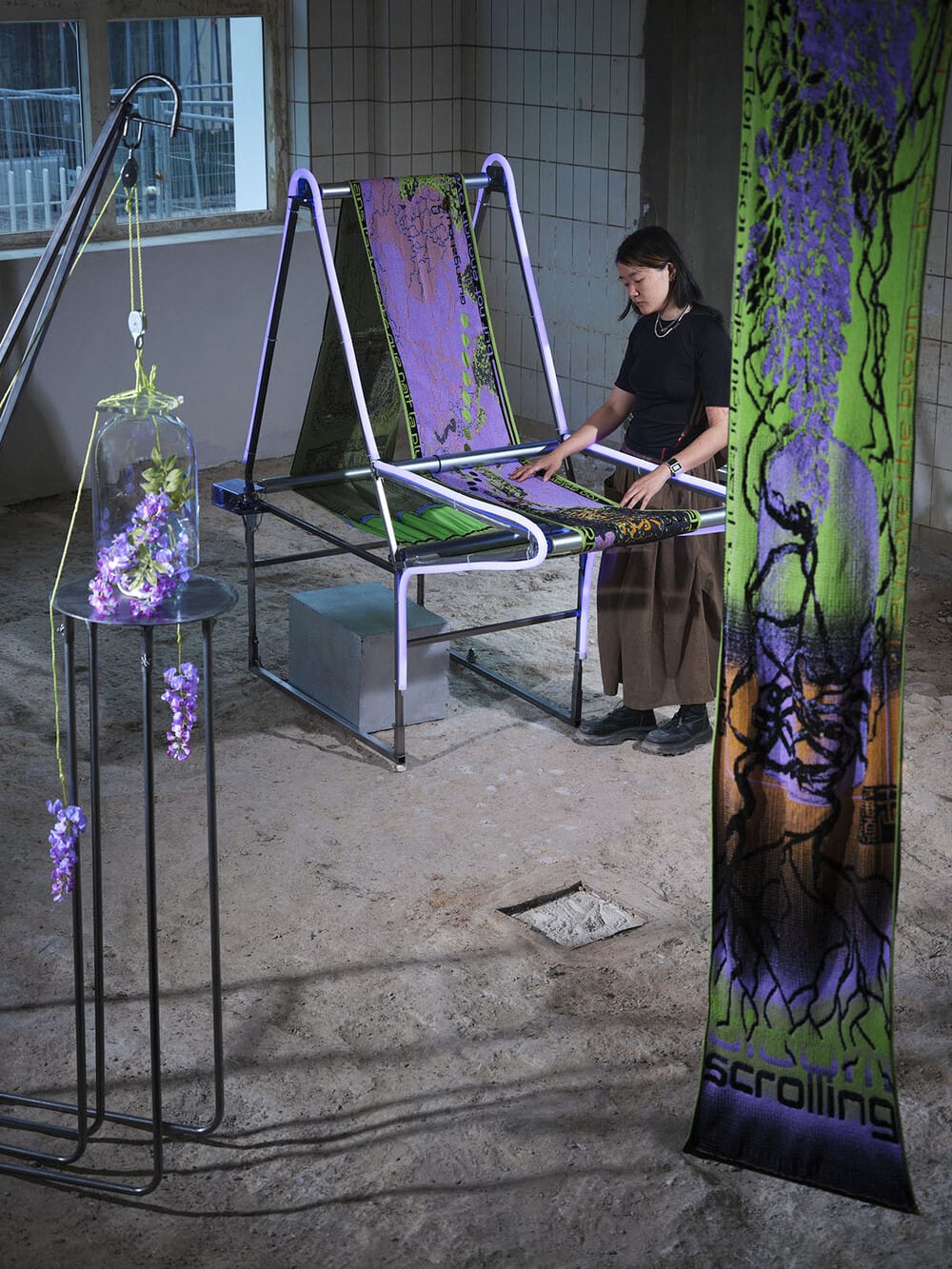
What matters in both cases is not simply that digital culture produces images, but that it increasingly produces symbolic material. The question is whether designers take that material into form, or leave it circulating as content.
When images lose weight
For designers, this shift is practical before it is theoretical. It is now easy to move an image from reference into circulation, and often straight into production. Making something meaningful is still much harder. This condition did not begin with AI. Long before generative systems flooded the feed, Hito Steyerl, in her now-canonical essay In Defense of the Poor Image, described how circulation had already turned the image into something compressed, mobile, degraded, and unstable as evidence. AI radicalized that condition.
A reference appears, circulates, mutates, and is replaced before it has time to settle into thought. It now takes real cognitive effort to know whether you genuinely connected two ideas, or whether you absorbed a pre-chewed image of a connection already moving through the stream and mistook it for thinking. In that environment, the physical object matters differently. It is slower, and it forces decisions to survive contact with matter, gravity, tolerances, production limits, and time. This is our position: the physical object can become a counter-argument to digital generalization. For every AI-slop reference, we owe the world something precise.
Old pressures, new tools
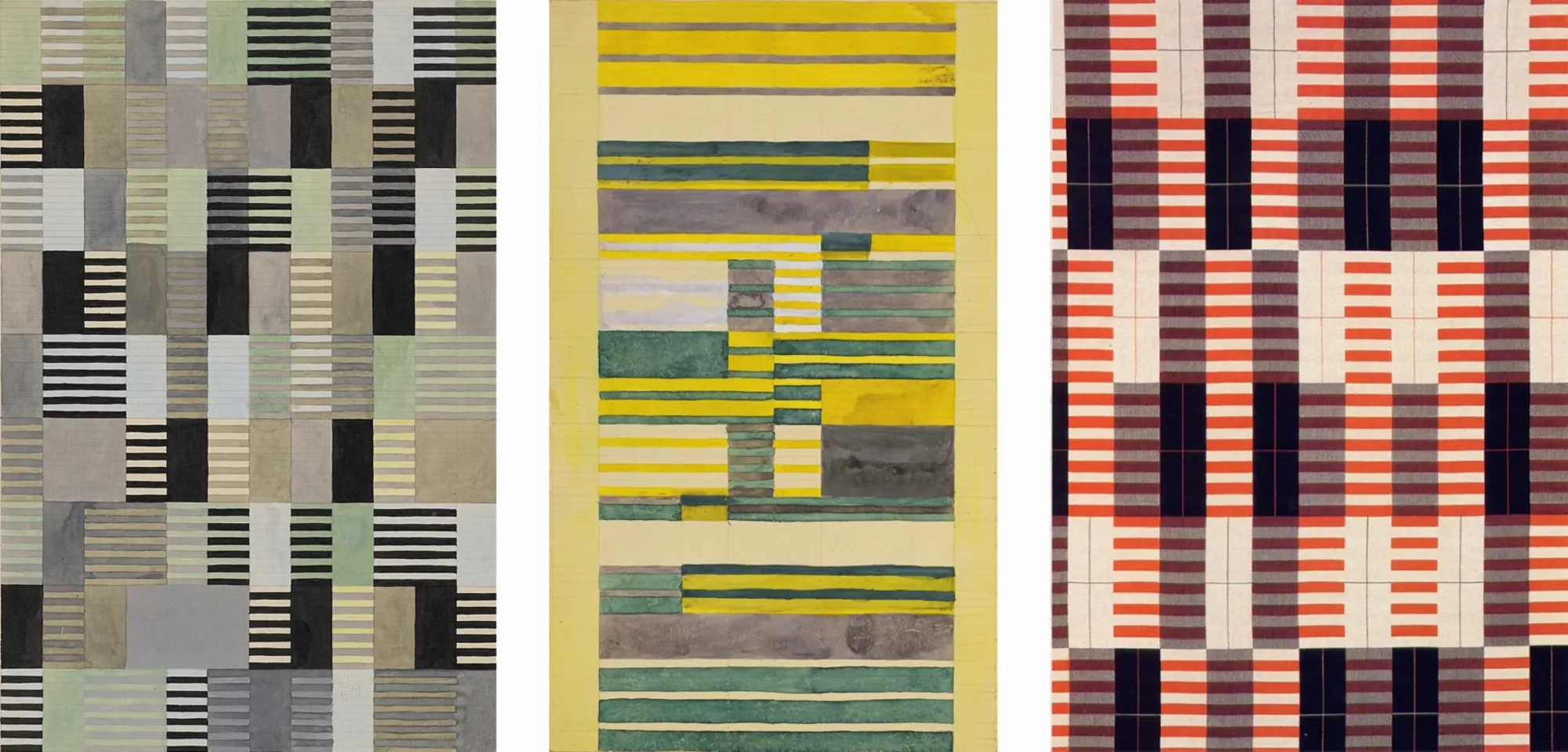
This is not the first time ornament has been reconsidered under technological pressure. In the nineteenth century, Arts and Crafts treated ornament as a way to restore labor, memory, and ethical weight to objects under industrial standardization. Modernism later did not eliminate ornament so much as redistribute it: in Bauhaus, pattern migrated into weave, module, grid, repetition, and type. What the twentieth century taught through reduction, clarity, and negative space still matters. Under conditions of synthetic image abundance, reduction alone no longer carries enough weight. Anni Albers’s woven works make this especially clear: modernism did not simply strip ornament away, but often recoded it as grid, rhythm, and structure.
Production is changing again. Digital fabrication is entering a phase where variation becomes scalable: not only mass production, but mass variation. That shift changes what counts as authorship. Rendering used to function as proof of competence in industrial design and architecture. Once AI began generating seductive meshes and render-like atmospheres at speed, that proof weakened. A beautiful image is no longer enough. The real distinction now lies in translation: whether a form can survive slicing, CNC logic, toolpaths, tolerances, closed surfaces, and material behavior. That translation is where meaning starts to separate itself from slop.
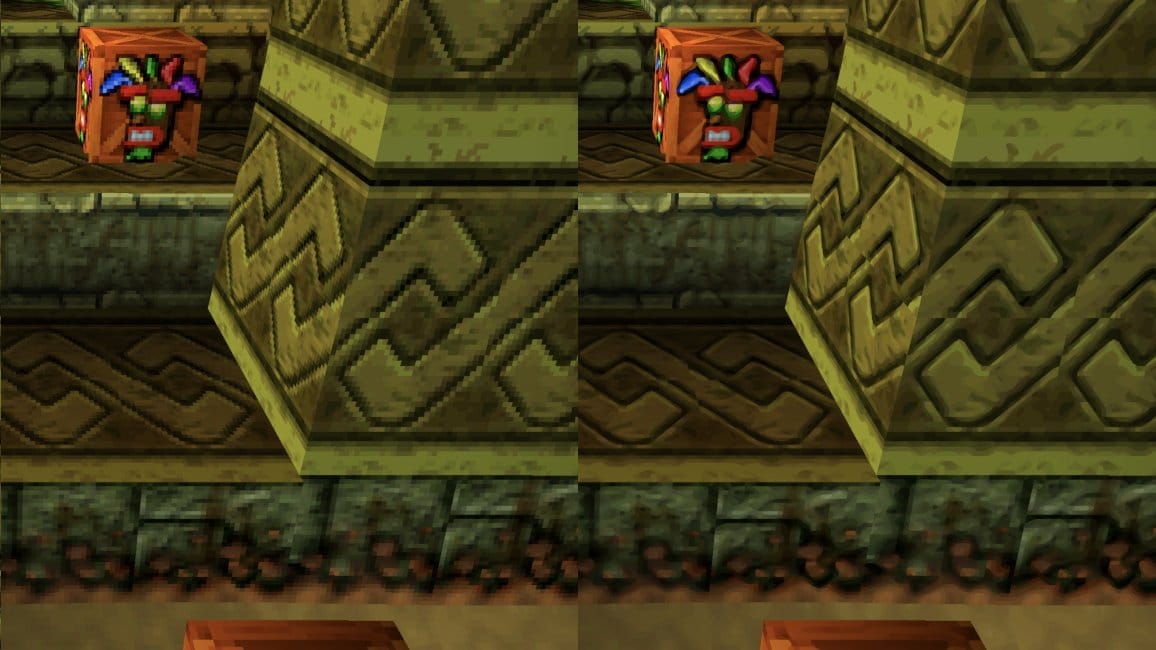
Part of this shift was built by the game industry, which drove the graphic power and processing speed that made visual production and digital fabrication workflows feel almost ordinary. Tools that once belonged to specialist industrial environments now sit within reach of a laptop and a file. CNC, laser engraving, embroidery software, knit programming, clay 3D printing, and AI-assisted mesh generation all shorten the distance between screen and object.
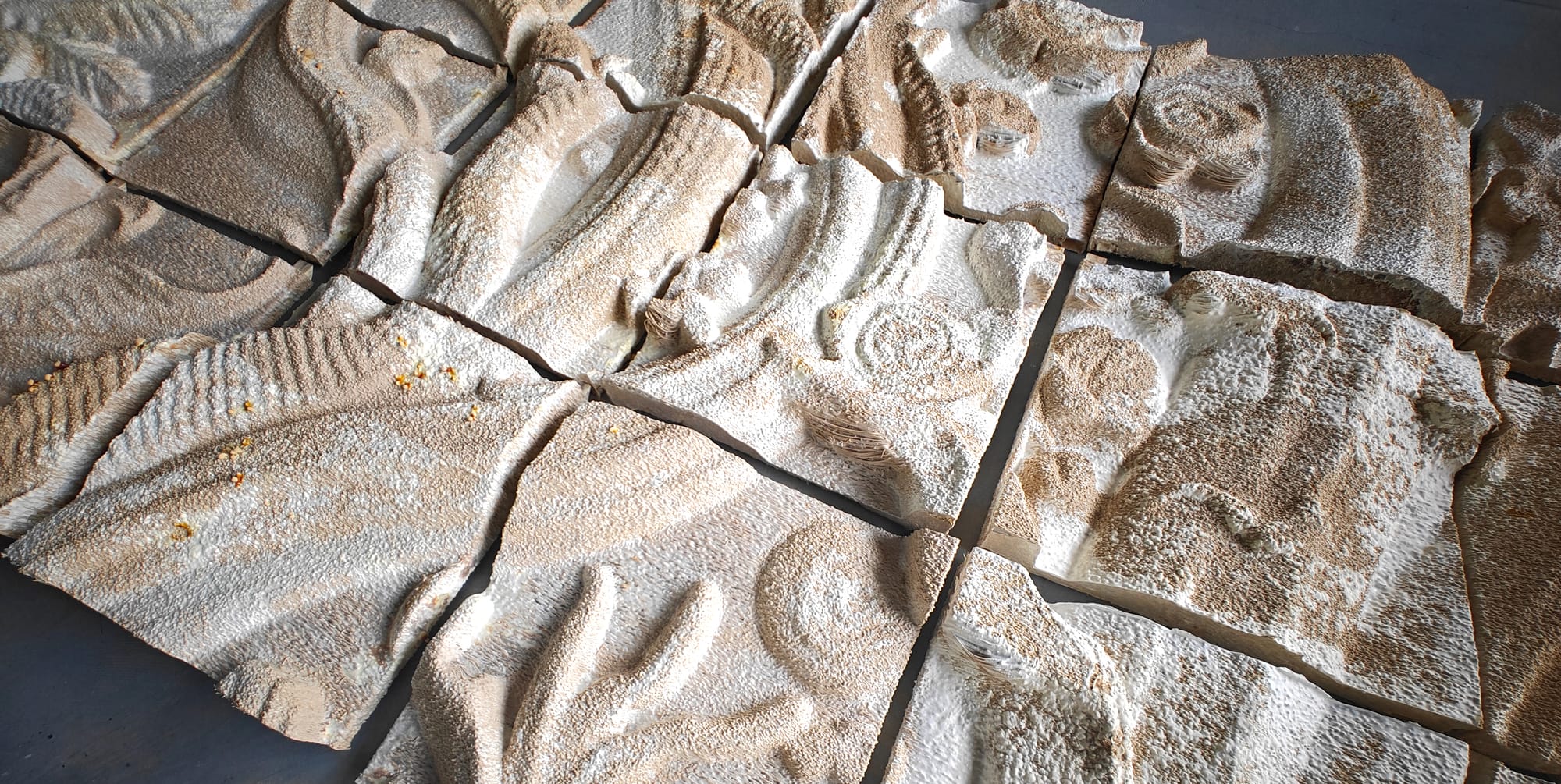
Historically, ornament was negotiated with material: wood, textile, and dye each imposed their own grammar. Digital tools loosen that bond. A single file can now be laser-engraved into wood, cut into textile, marked into metal, or mapped onto clay. Increasingly, software habits start to function like material constraints once did. Klarenbeek & Dros’s 3D-printed mycelium panels make this visible in an unusual register: ornament emerges not through added surface treatment, but through the coordination of digital geometry, growth logic, and material behavior.
Precision is the demand
The answer to how to ornament will not arrive elegantly. Much of what designers make now will look awkward at first: excessive, unresolved, too much in one place and too literal in another. But that awkwardness is not a reason to retreat into blankness. It is the price of trying to become exact again under new conditions.
As we've argued, for every AI-slop reference, we owe the world something precise. That precision will not come from refusing technology or leaning purely into minimalism, but from using new capabilities more attentively, culturally, and responsibly toward where symbols come from and what they do once they enter the world. What returns in ornament is not decoration, but the demand that surfaces mean something again.
Acknowledgments: The authors would like to thank Linnis van Kampen for research assistance.