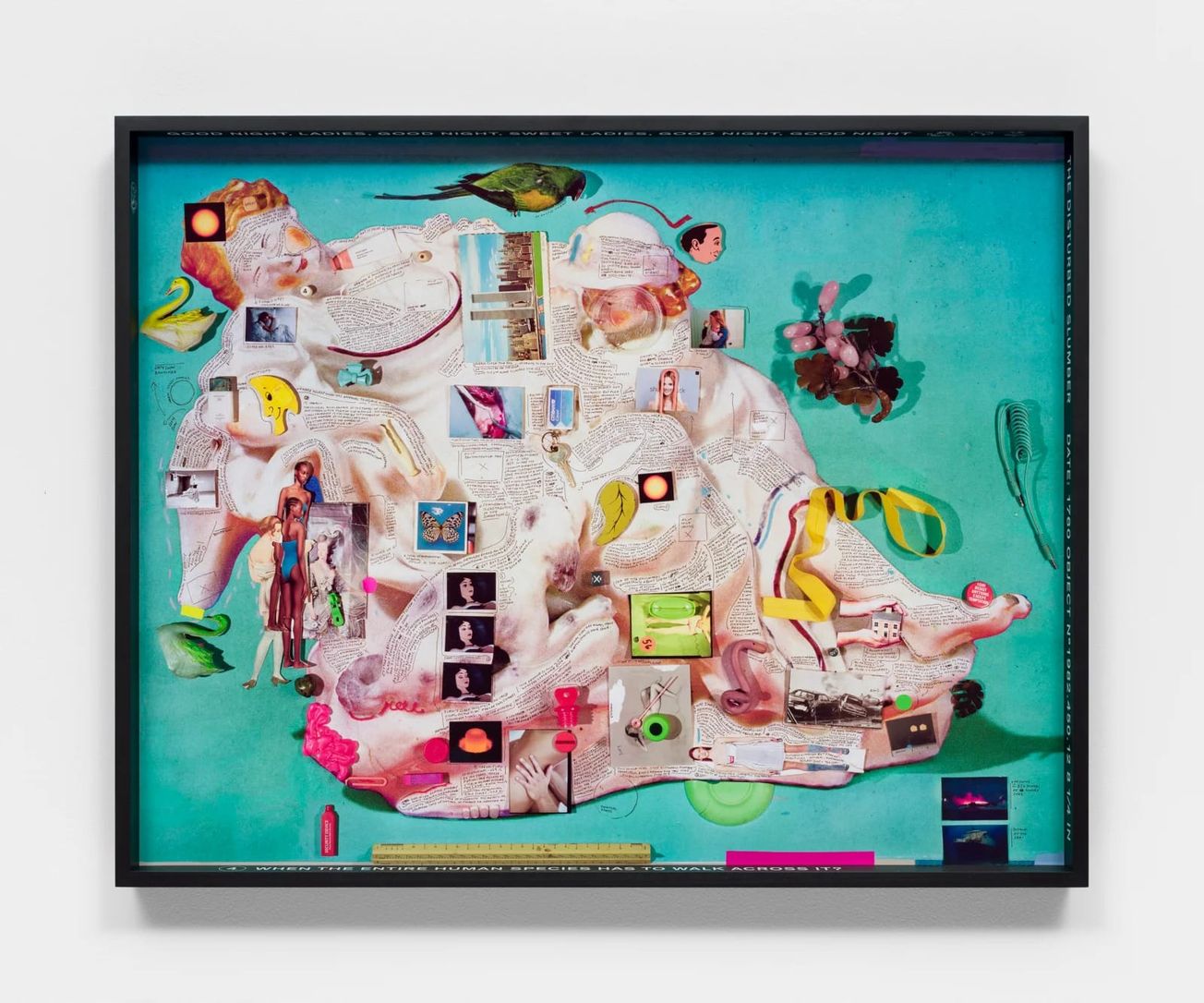
"There’s a lot of pleasure in buying things. "
The statement appears almost casually in Sara Cwynar's contribution to Art21's IRL/URL series, yet it encapsulates the central tension that runs throughout her practice. Photography, she observes, has always been entangled with design, advertising, capitalism and by extension consumerism. Images do not simply represent the world; they help organise desire within it. What distinguishes Cwynar's work is that she neither rejects nor fully embraces this condition. Instead, she inhabits the contradictory liminal space between attraction and critique, exposing the mechanisms through which images construct value while acknowledging their seductive power.
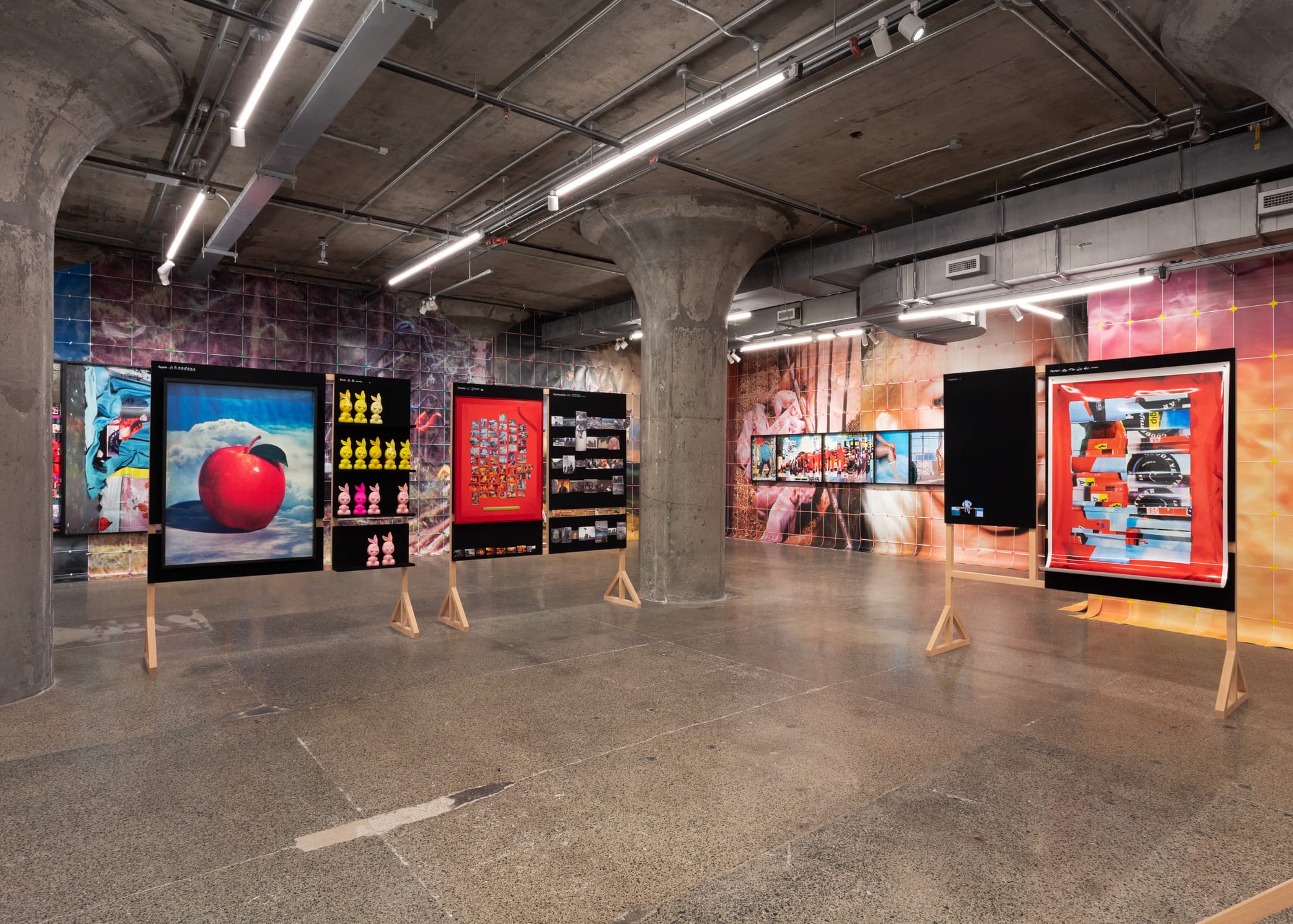
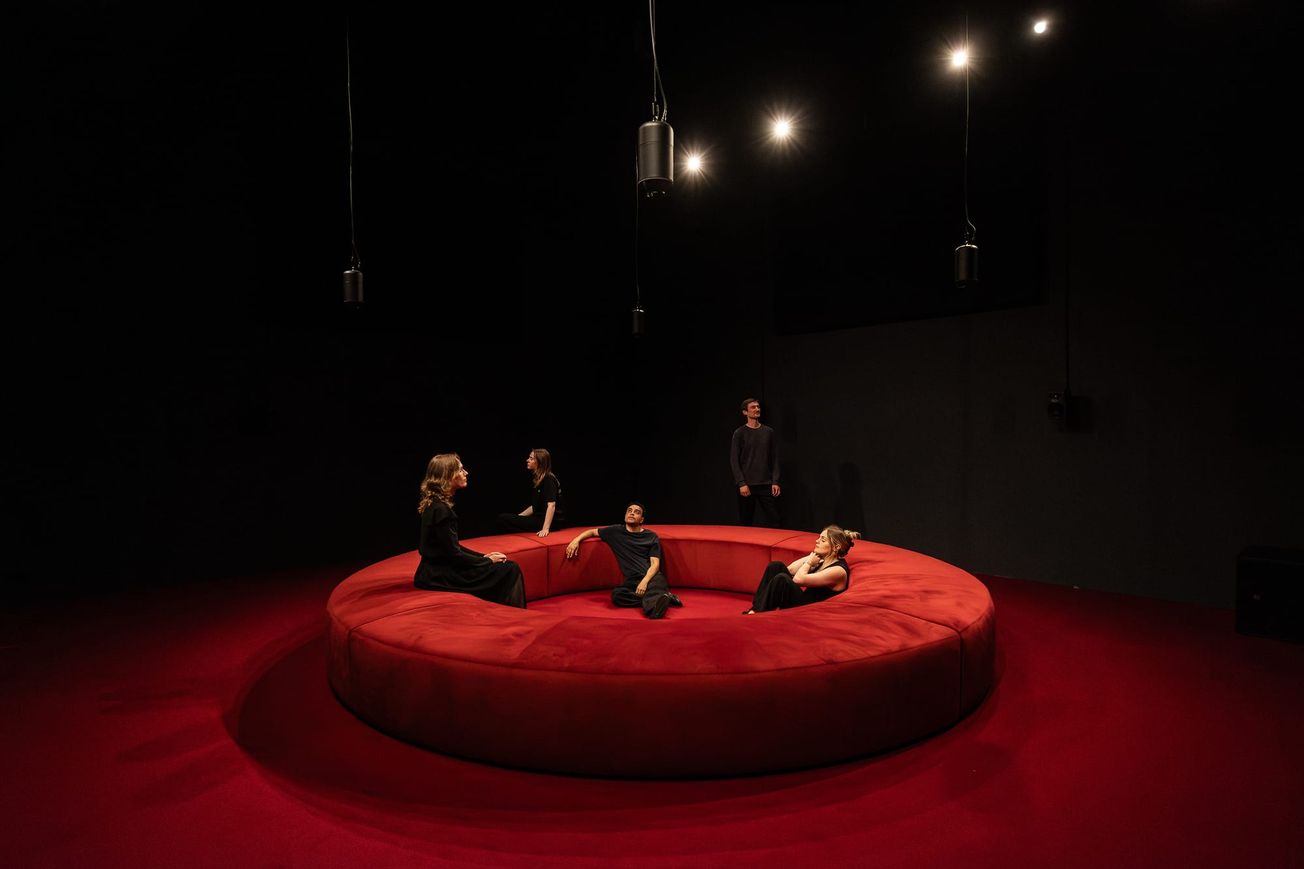
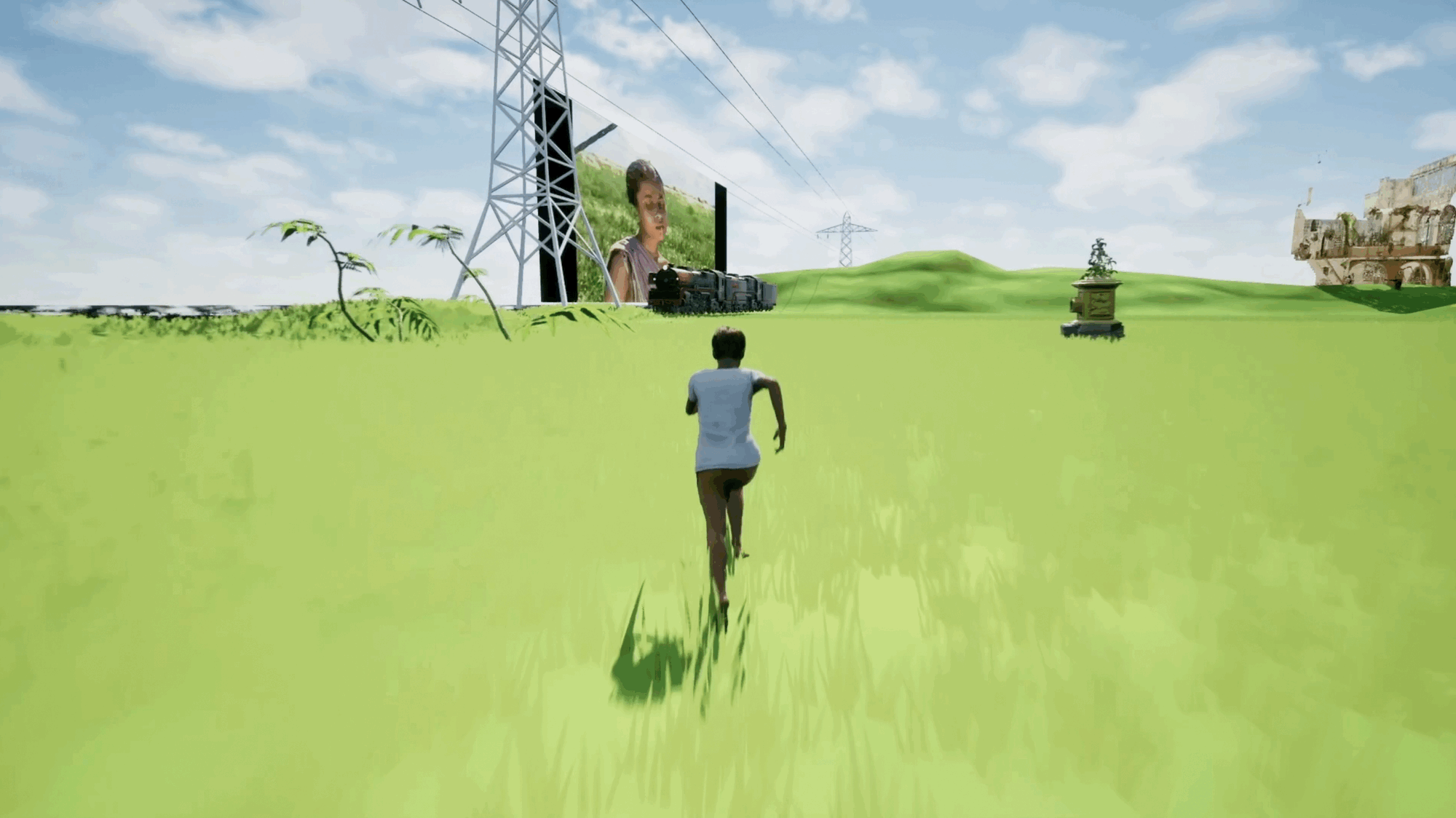
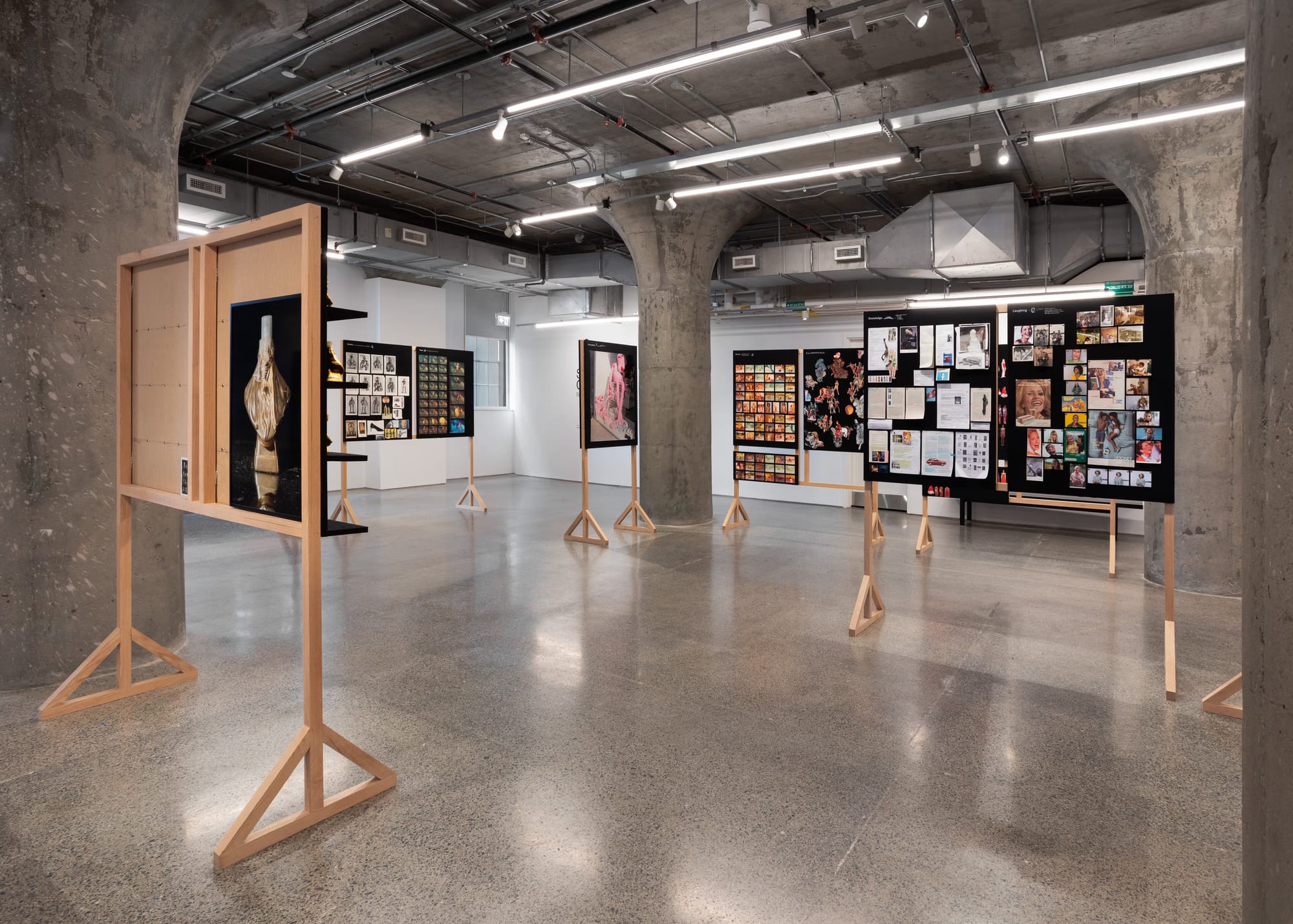
This tension is amplified in Baby Blue Benzo, Cwynar's current exhibition at The Approach as part of London Gallery Weekend. Taking as its point of departure a 1955 Mercedes-Benz 300 SLR, an object whose cultural value vastly exceeds its material function, the exhibition unfolds as a sprawling investigation into the production of desire under contemporary capitalism. Photography, collage, sculpture, moving image, wallpaper, found imagery, archival material, and AI-generated content converge into an environment where images circulate through multiple temporalities and systems of exchange. The automobile becomes less a subject than a node within a vast network connecting industrial production, advertising, collecting, social media, stock photography, and algorithmic visibility.
At first glance, such work may seem far removed from conventional understandings of craft. Yet Baby Blue Benzo invites a reconsideration of what making means in a post-digital culture. Craft has often been mobilised as a counterpoint to industrialisation: associated with manual labour, material intimacy, and resistance to mechanised production. Digital technologies have frequently been positioned as the latest threat to these values, accelerating the separation of maker from object. Cwynar's practice complicates this narrative. Rather than opposing hand and machine, analogue and digital, human and algorithmic production, her work demonstrates how contemporary forms of making emerge through their entanglement.
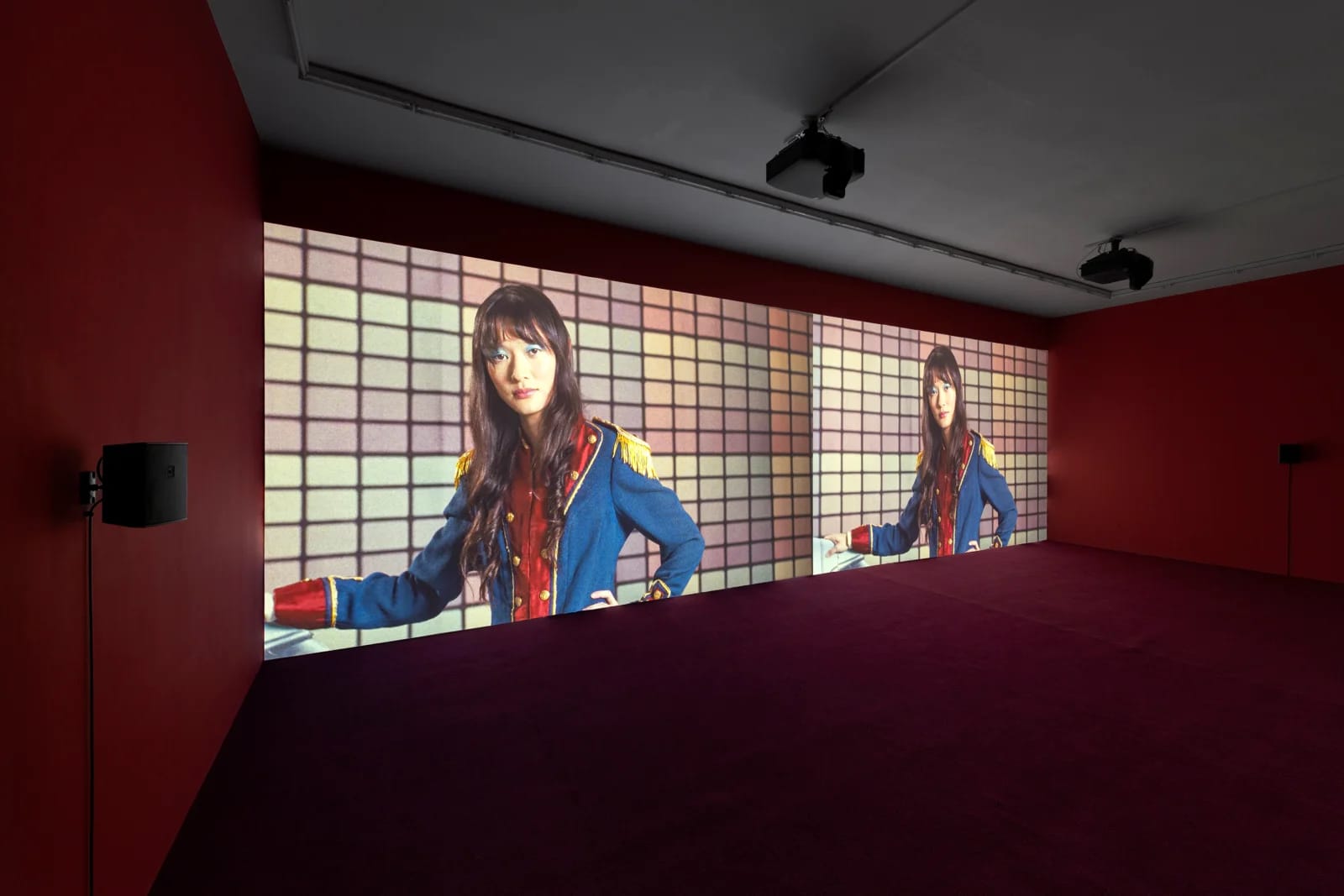
The labour visible throughout Cwynar's installations is not located solely in fabrication. It appears in acts of collecting, sorting, editing, archiving, scanning, compositing, arranging, and recirculating images. Her works are built from accumulations of visual material gathered from magazines, auction catalogues, museum archives, commercial photography, internet searches, and personal collections. Meaning is generated not through the production of entirely new images but through the careful orchestration of existing ones. In this sense, her practice resembles a form of post-digital craft: a mode of making in which technical knowledge, aesthetic judgment, and archival labour operate across physical and virtual environments simultaneously, where URL and IRL life merge, both becoming source material to (screen)grab.

The significance of this shift extends beyond artistic production. Historically, photography emerged alongside industrial capitalism as a technology uniquely suited to the circulation of commodities. Images allowed objects to travel beyond their material presence, creating markets organised around aspiration and fantasy. Today, that process has intensified. Commodities increasingly derive value through image economies before they enter physical circulation. Social media platforms, online marketplaces, recommendation algorithms, and advertising infrastructures transform visibility itself into a form of capital. What is produced is not simply an object but a field of desire surrounding it.
Cwynar's work repeatedly returns to this condition. Her photographs and videos reveal commodities suspended between material reality and their endless image (after)lives. Objects become desirable because they have already been photographed, catalogued, circulated, and vastly visually consumed. The Mercedes-Benz at the centre of Baby Blue Benzo functions precisely in this way. Most viewers will never encounter the vehicle in person, let alone own it. Its value resides largely in its status as an image: reproduced across magazines, auction records, archives, websites, and feeds. The car exists simultaneously as an object and as visual mythology.
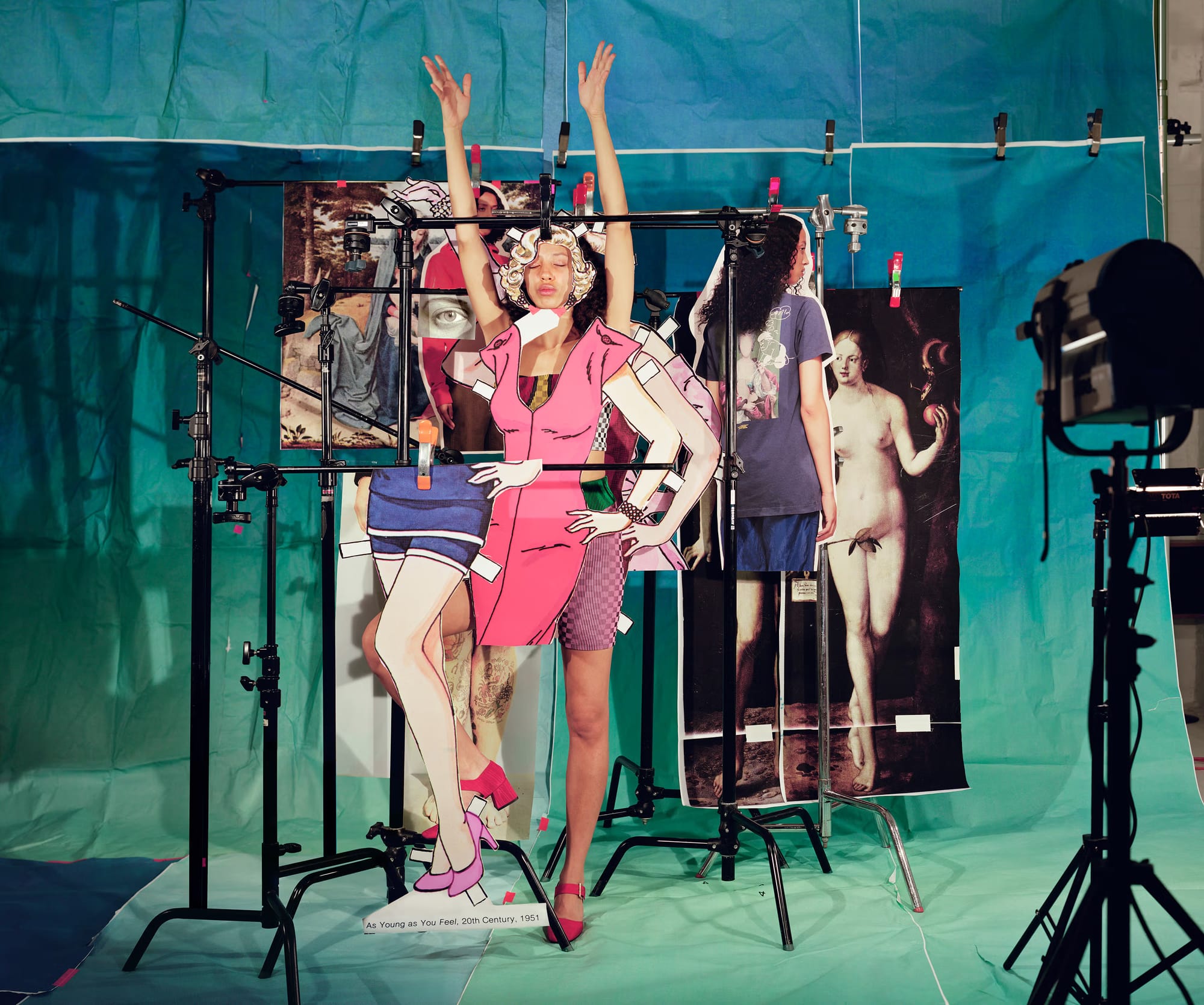
Seen through this lens, what kind of factory is Baby Blue Benzo if not one that produces desire itself, and what does that imply about the conditions we inhabit today? If production has moved beyond the industrial factory, where has it gone in a world saturated with circulating images, data, and attention? How do we understand the shift from Fordist assembly lines to networked image infrastructures, and what changes when labour is tied less to material goods and more to visibility and perception? If industrial capitalism once organised bodies around commodities, how are digital systems now organising subjectivity around being seen, and what does it mean when visibility itself becomes a form of value? When images are both tools and outcomes of production, has the distinction between making and made dissolved entirely?
Cwynar proposes a model of artistic practice adequate to a world in which making is distributed across hands, cameras, archives, software, databases, and networks. Her work suggests that the question is no longer whether images mediate reality, but how those mediations actively shape what we desire, what we value, and ultimately what we become through the systems that structure everyday, embodied life. If images are no longer stable representations but circulating materials constantly edited, recombined, and recoded, then what happens to experience itself when it is already pre-structured by visual repetition and algorithmic return?
In a present where images are endlessly regenerated, remixed, and increasingly produced by AI systems trained on other images, what remains of originality, and how do we locate meaning when it emerges less from singular authorship than from accumulation, repetition, and feedback loops of seeing and re-seeing? When AI learns to generate desire from the very visual culture it inherits, reproducing the aesthetics of consumption while accelerating their circulation, what happens to the “pleasure in buying things” that once felt personal, even intimate, and how do we understand desire when it is no longer simply organised by images, but actively co-produced by systems that never stop looking back at us through them?