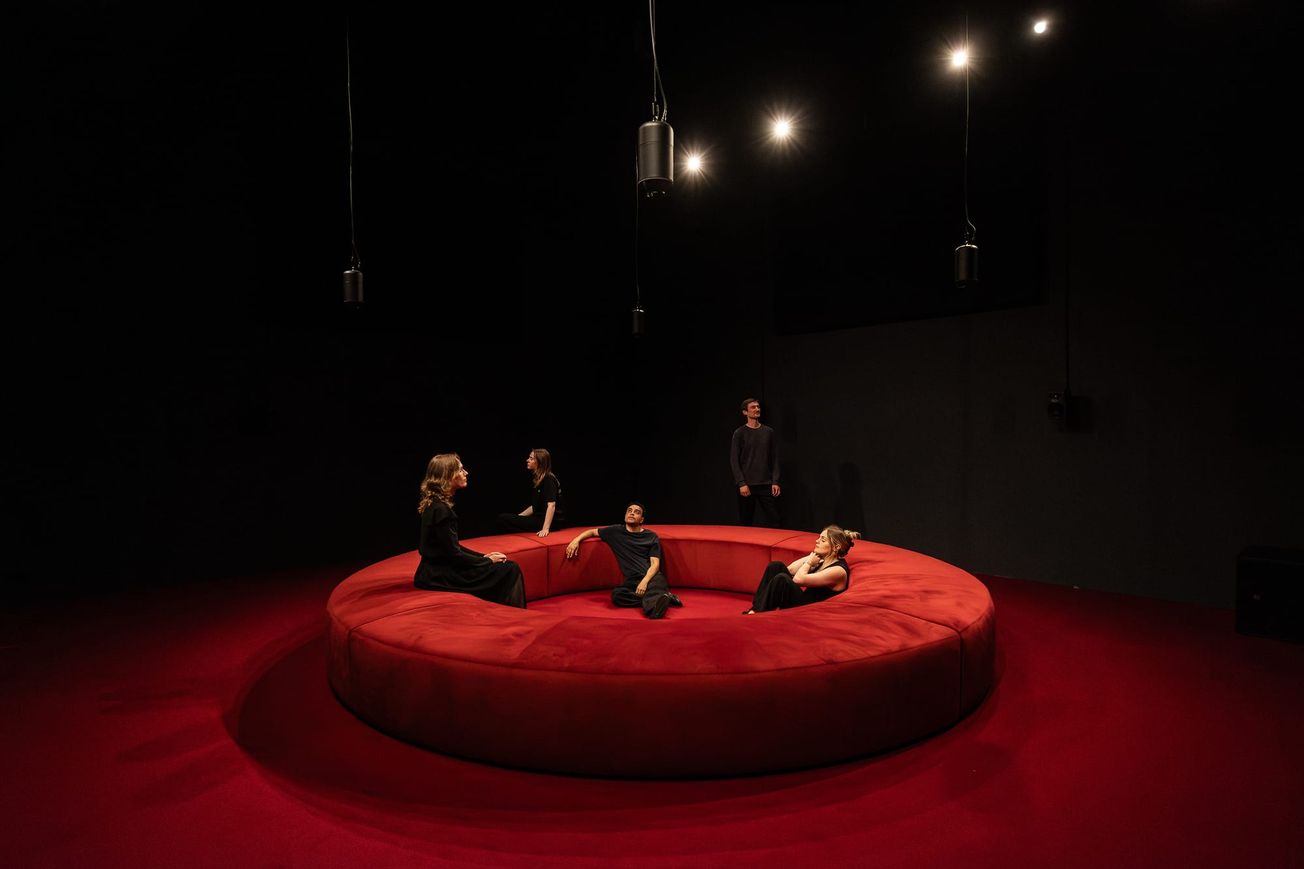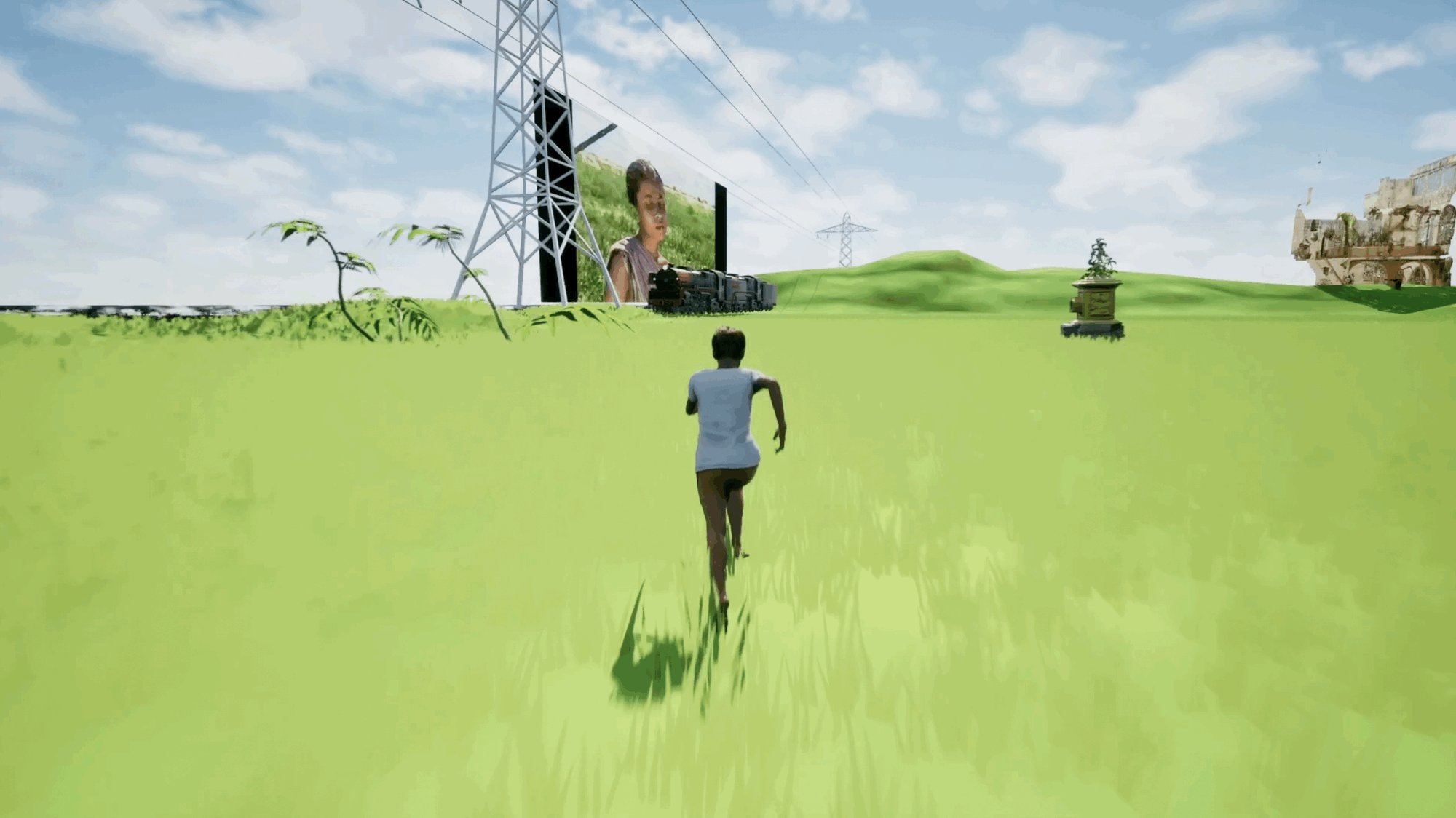
AI feels like light. A prompt entered, an answer returned: the instantaneous interface of artificial intelligence seems frictionless, immaterial, weightless. And yet the infrastructure behind the digital is often material, even geological. Behind every instant answer lies a vertical extraction axis: rare earth and critical minerals pulled from deep underground; data centers consuming water and energy at unprecedented scales; orbital satellites with remote sensing technologies reaching into unexploited territories, reorganizing matter at a planetary scale. The accumulation of data in unprecedented quantities requires further infrastructural expansion in storage, and data labeling workforces to train the system. These accumulation technologies layer onto existing ones, intensifying extractive logics rather than replacing them. The more data collected, the deeper the extraction required to sustain it.
There is a paradox at the heart of this expansion. AI is also positioned at the front edge of planetary sustainability discourse, as an instrument of climate engineering and clean energy infrastructure, where the need to respond to environmental crisis demands unprecedented volumes of Earth data to guide decisions, further driving the expansion of the very infrastructures that deepen extraction. Earth becomes a surface to be mapped, classified, optimized, extracted. Yet with every square meter of the Earth's surface documented by satellite, the sectional view remains untamed: what lies beneath, territories with ghosts and monsters, is still full of speculation.
Infrastructures are not only built and extracted but lived. They are produced through human labor, inhabited alongside more-than-human agents. Mining communities develop situated knowledge of land, materials, and environmental change through continuous bodily encounter with the ground, yet are often the first to bear its socioecological costs. Their knowledge, transmitted orally, practiced daily through the body, grounded in specific place, is underdocumented and often unpromptable, generating relations and consequences between territories that no dataset easily represents.
This is where hallucination enters the question of design. Working on extractive landscapes, energy transitions, and ecological crisis, one is always working with incomplete data. When we say AI hallucination, we mean the system fills that incompleteness by recycling the statistical past with plausible patterns. GenAI is fundamentally hauntological: cursed by the statistical ghost of what already exists, it approaches planetary challenges through cultural reasonableness, reproducing what is already dominant. But in human culture, incompleteness has always worked differently. Hallucination, particularly in embodied and Indigenous practice, has been unreasonable yet generative. A ghost vision becomes a myth shared by thousands, spread without cables, then a cosmology shaping how an entire culture understands land, ancestors, and the invisible underground, producing meaning rather than measurements. Facing the void, AI hallucination extracts, while human hallucination relates.
The planetary design question is therefore not how to collect better data. It is how to design from the void, to work with absences as methods rather than against them as problems. Not a replacement of computational infrastructure, but a counter-infrastructure: repositioning data within a broader ecology of knowledge, holding relations that no dataset captures.
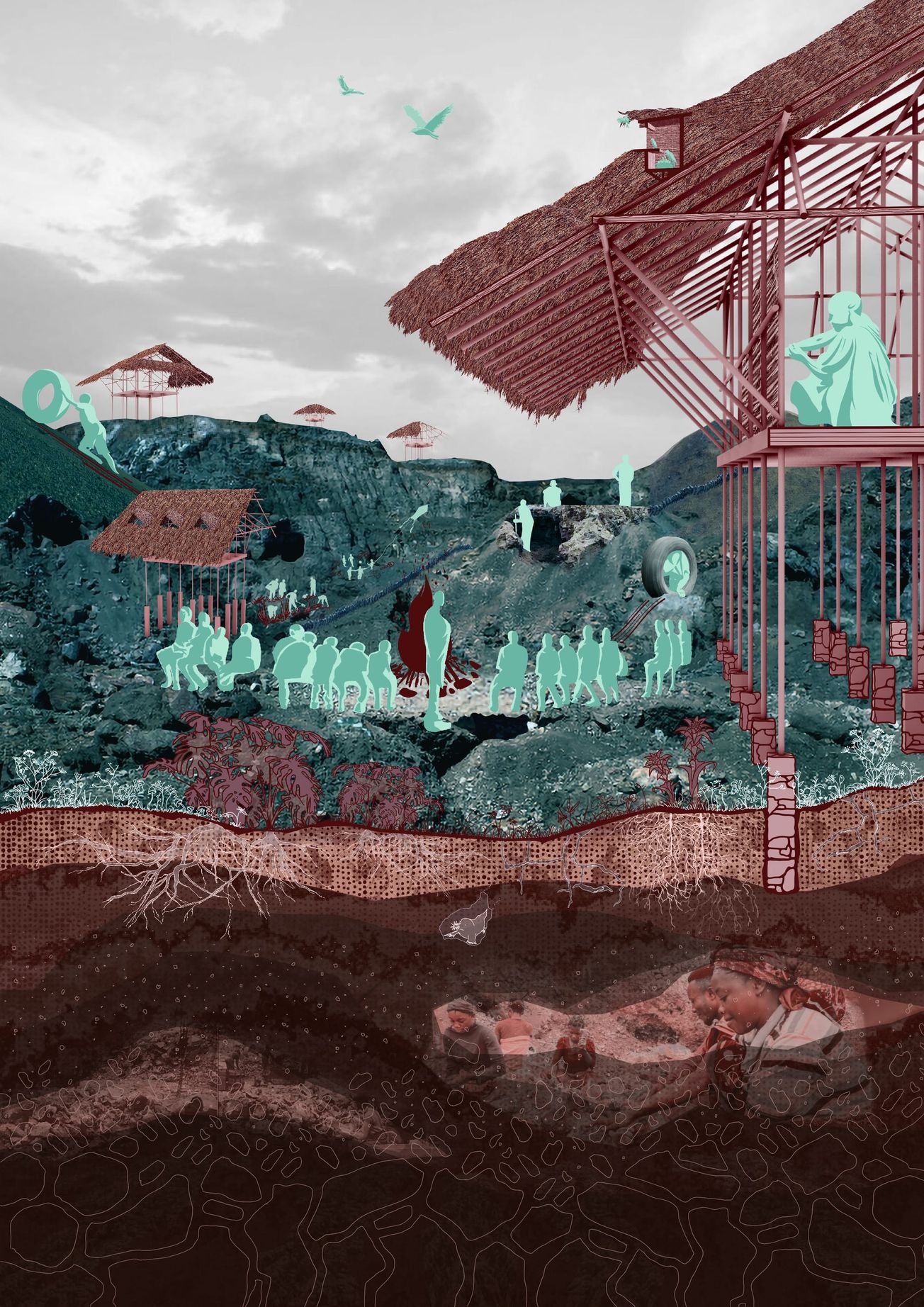
This approach is embodied in speculative visual research conducted in Lubumbashi, in the Katanga mining region of the Democratic Republic of the Congo, the next global capital of 'green' minerals supplying approximately 74 percent of the world's cobalt used in AI processors and data center cables. Using a computational and iterative method, words and drawings inflect each other simultaneously, mapping the invisible underground through qualitative and quantitative understandings at once. The work operates as counter-infrastructure: it does not extract the territory as resource, but holds it as interdependent relation, making legible what the dataset flattens, and providing a generative starting point for planetary design challenges.
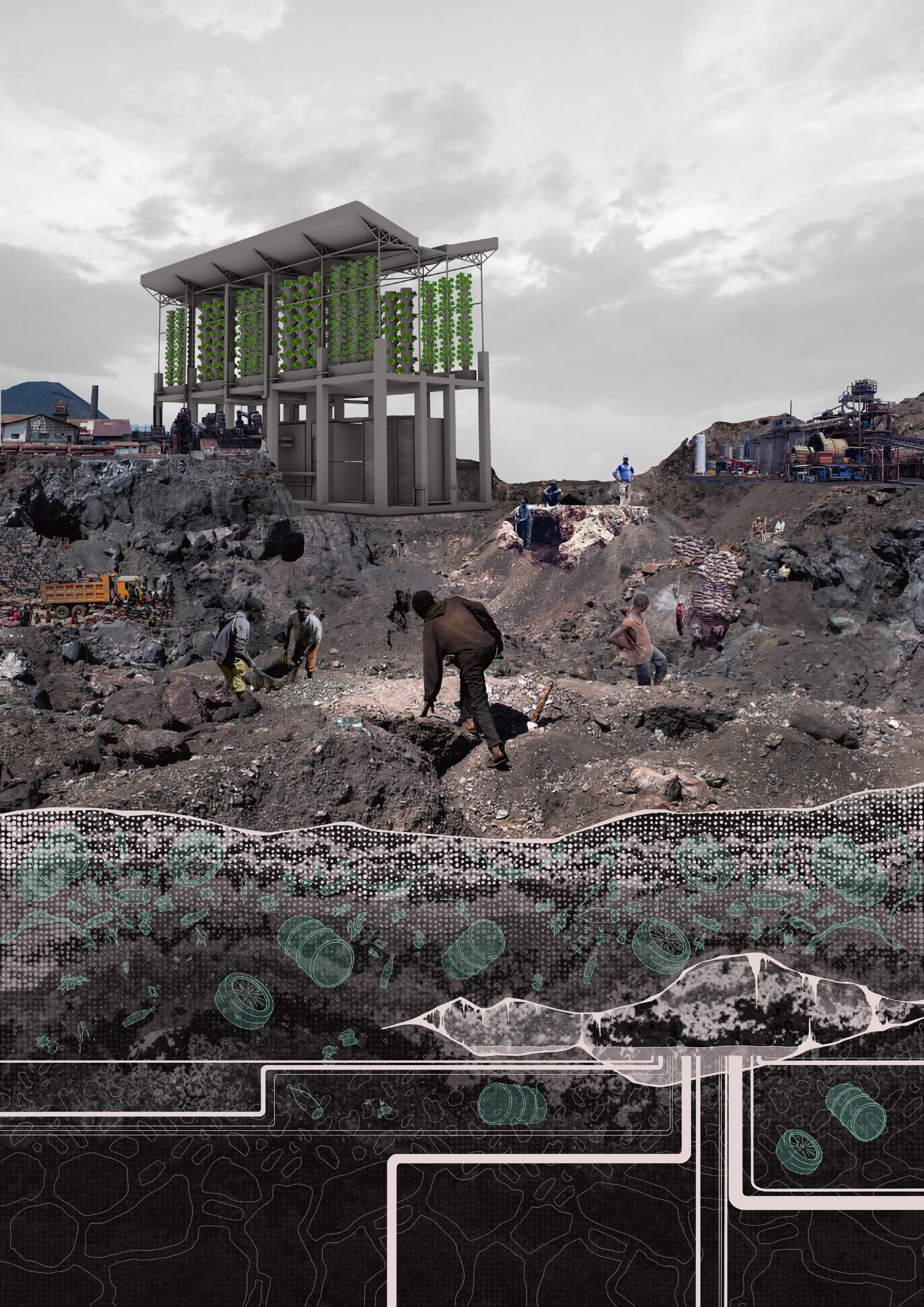
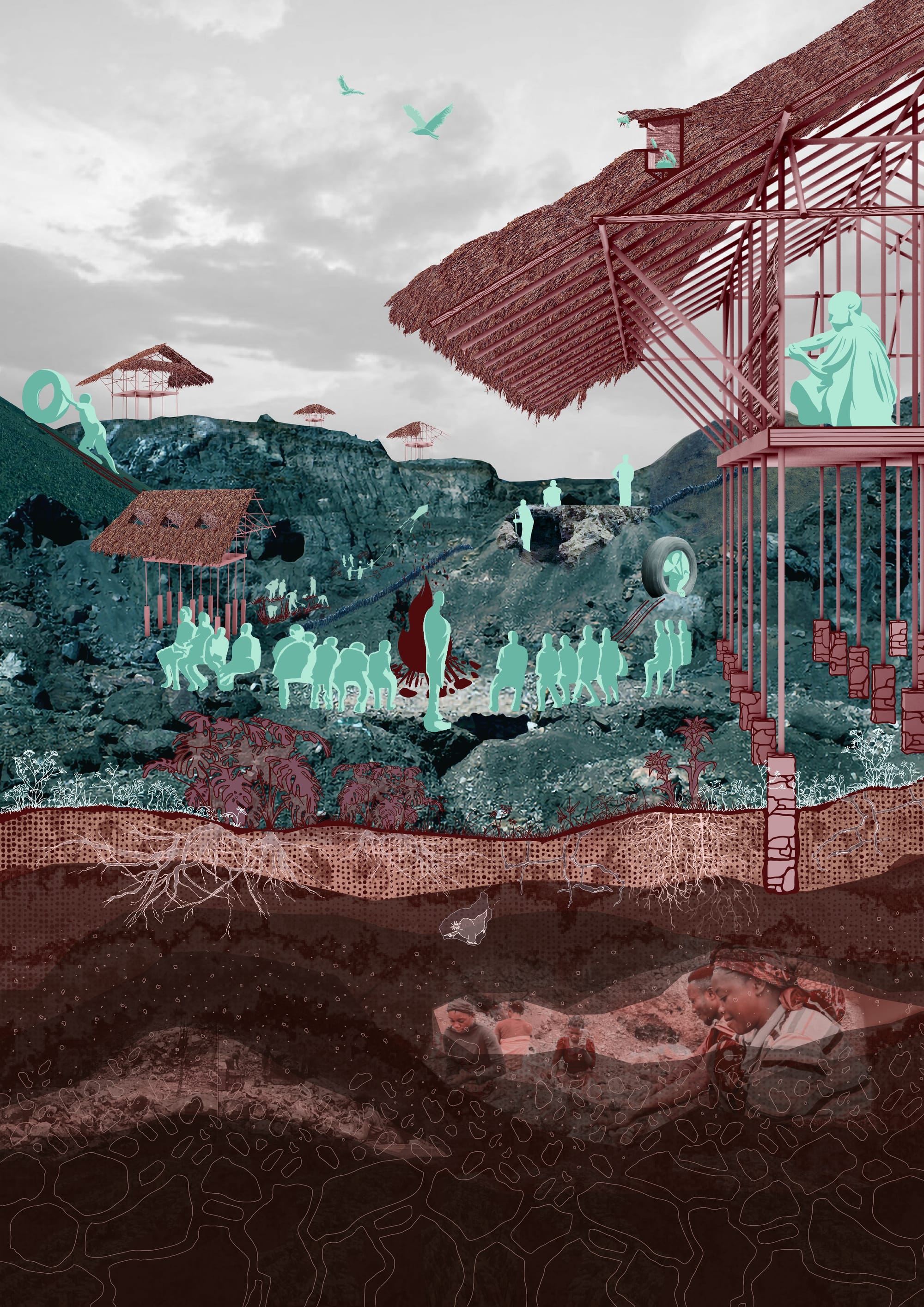
Image Credit: Two sectional cartographies of Lubumbashi's ground: metric-driven extraction vs. embodied, negotiated geological ghost matter, 2026 © HAAU architecture studio with Aleksandar Borissov
Sectional cartography becomes the critical instrument that makes this possible. Unlike the aerial photograph, whose clean geometries enable uniform logics of expansion, the section cuts through. It operates vertically, building stratifications and intrascalar relations between bodies, Indigenous knowledge, and what we call ghost matter: the relations, histories, and presences the ground holds that exist beyond the reach of any dataset. It spatializes territorial knowledge alongside geodata, using stratification rather than number to render situated knowledge visible without flattening its complexity. This is what we call geological intelligence: not smarter data collection, but a grounded intelligence of resistance and non-consensus that data alone cannot capture.
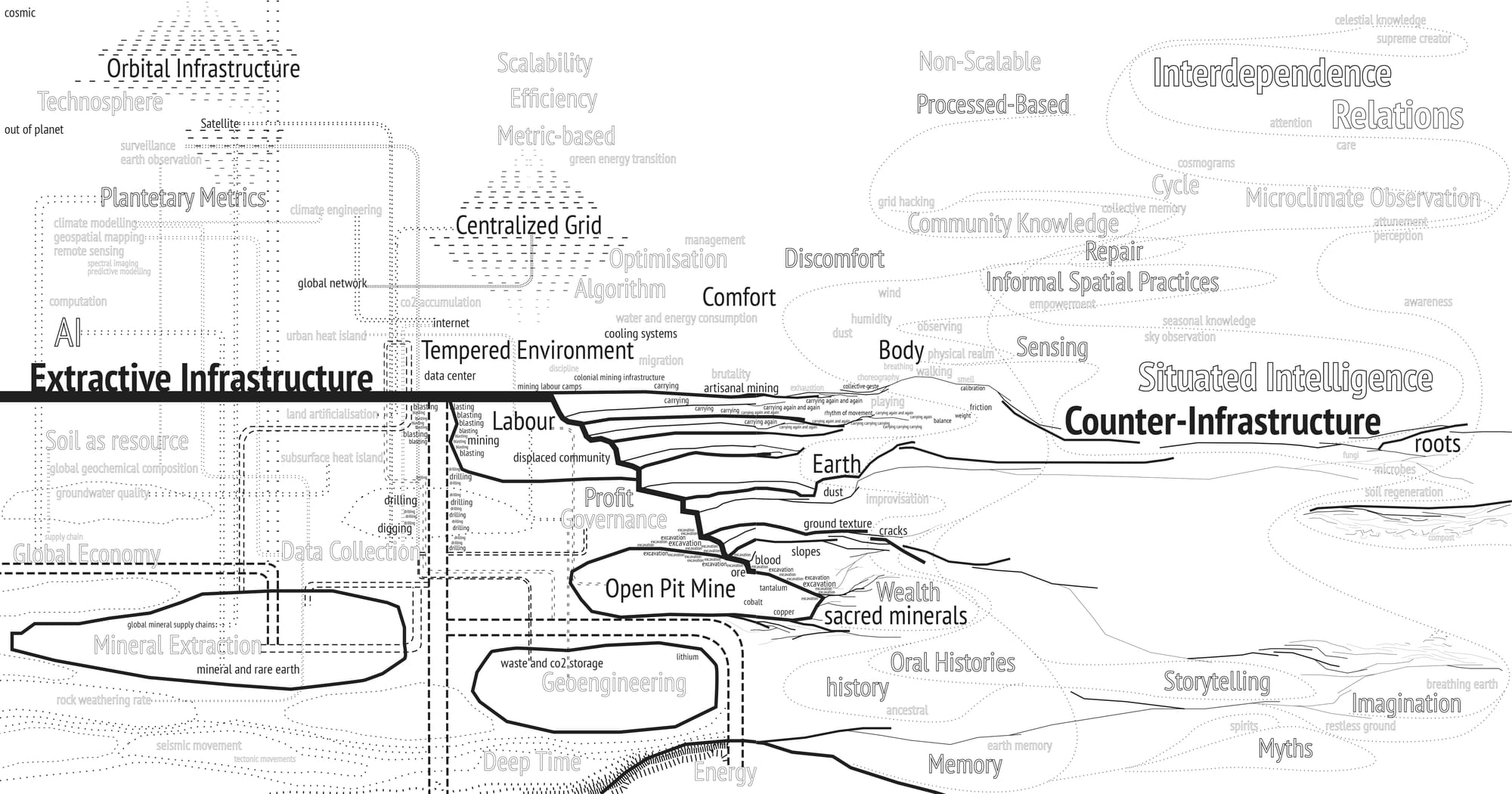
Two visual manifestos illustrate how different ways of looking into the ground shape our understanding of infrastructure and intelligence, and how this shapes the built environment we make emerge. The first treats the ground as resource, measurable and optimizable, and architecture responds with efficiency: clean energy technologies, performance targets. The second treats the ground as relation, temporal, communal, alive with collective histories, and architecture responds not as a finished product to be delivered but as an incremental process open to the community that inhabits it, built slowly, collectively, in progress.
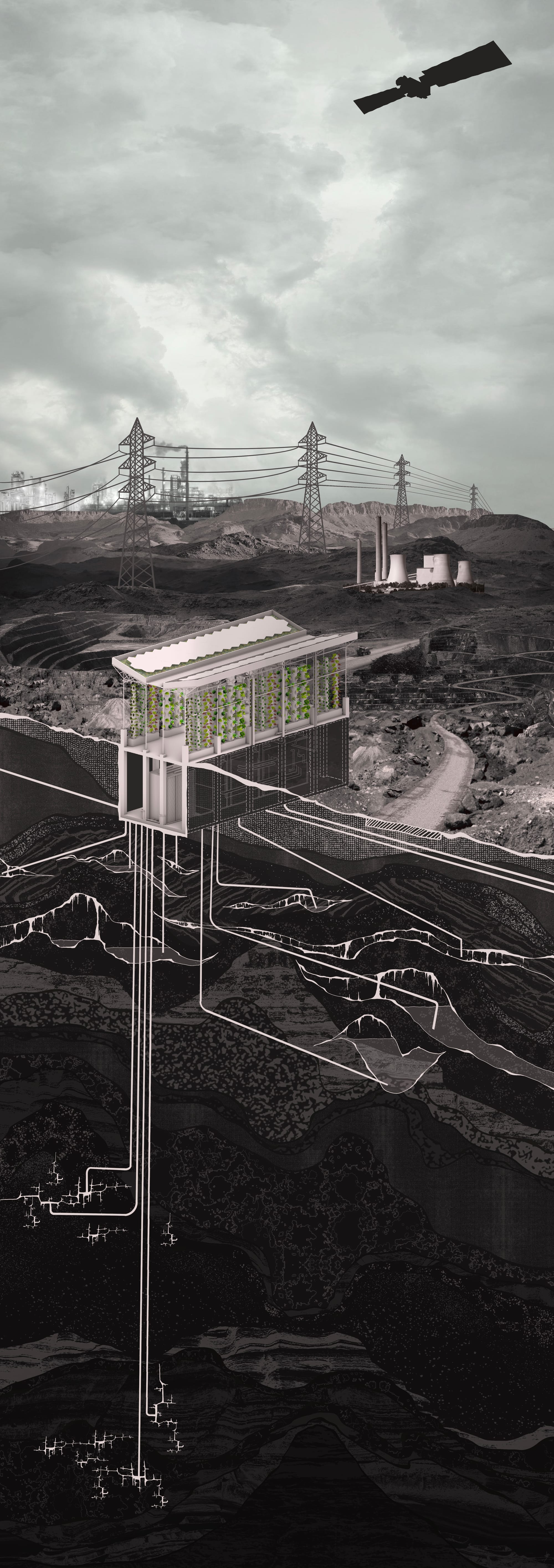

Image Credit: Visual manifestos: ground as resource vs. ground as relation, 2026 © HAAU architecture studio with Aleksandar Borissov
To design with the planetary in the age of AI is not a technical or statistical question but a social, ecological, ethical, and epistemological one. Intelligence, as defined not by algorithm but by the CIA of all places, does not necessarily mean smarter: it means the necessary information to inform decisions. The question then becomes whether more data collection is actually producing better decisions, or simply deeper extraction. The sectional approach proposed here does not refuse computation. It places computation in relation to what it cannot see. The void is not a problem to be solved. It is where design intelligence begins.