Eric Lu, founder of AI typography platform Mixfont, has released Ghost Font, an experimental motion-based typography system that investigates a growing question in human-computer interaction: can written communication be designed for human perception while proving difficult for current AI vision models to interpret?
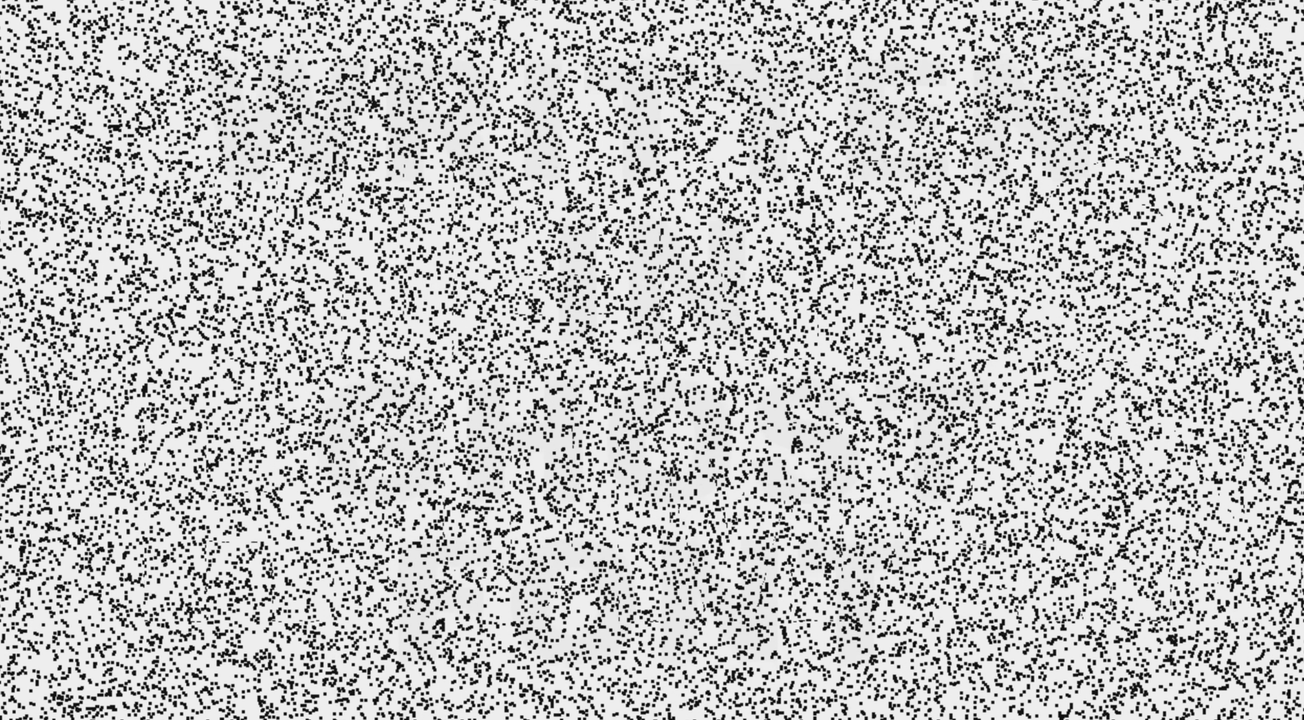
Despite its name, Ghost Font is not a conventional font file. Instead, it generates short videos in which letters emerge only through motion. Thousands of black-and-white dots fill the frame, with dots inside each letter moving differently from those in the surrounding background. The result is a message that human viewers can typically recognize while the animation is playing but which disappears into visual noise when paused.
Image Credit: Ghost Font, Eric Lu, Mixfont
The project also incorporates a decoy message intended to mislead AI systems attempting to identify hidden text. According to Lu, many current multimodal AI systems primarily analyze video by sampling individual frames rather than reasoning directly over motion, making Ghost Font difficult for many leading models to interpret without additional guidance or custom analysis. (mixfont.com)
Lu is careful not to present Ghost Font as an encryption or security tool. The project documentation notes that a sufficiently capable computer vision pipeline using optical flow or other motion-analysis techniques can recover the hidden message. Instead, Ghost Font is positioned as an experiment exploring differences between human and machine perception. Lu also suggests the project could serve as a way to observe how future video-native AI systems improve at interpreting motion.
The project also revisits ideas explored by Sang Mun's 2013 ZXX typeface, which attempted to prevent optical character recognition by disguising letterforms with visual noise. Lu argues that modern AI models can readily read static adversarial typography, prompting a shift toward motion as the primary carrier of information.