South Korean artist Beak Jungki works across sculpture, photography, material research, and environmental systems. In his long-running is of series, Jungki extracts pigments from leaves, flowers, and plant matter collected directly from the landscapes he photographs, producing images that remain materially connected to the environments they depict.
First initiated in 2007, the is of series includes works such as is of Naejangsan, is of Palgongsan, is of Dumulmeori, is of Boseong Green Tea Field, and is of Songnisan. Because the organic pigments gradually fade and oxidize over time, the works treat photography as a changing material process rather than a fixed visual archive. Acrylic chambers, oxygen-removal devices, and environmental control systems slow that transformation without fully stopping it, connecting the work to broader conversations around embodiment, biosensing, and post-digital creative practice.
Printing Landscapes With Their Own Material
Jungki’s process begins with site-specific collection. In mountain regions such as Naejangsan, Palgongsan, and Songnisan National Parks in South Korea, he gathers fallen leaves and other organic material directly from the landscapes he photographs. These materials are processed into pigments and used in inkjet printing systems to produce the final image.
The process changes the photograph from a stable recording into a material extension of the landscape itself. Conventional photography translates reflected light into industrially standardized pigments or pixels. Jungki instead constructs images from material extracted directly from the sites being depicted.
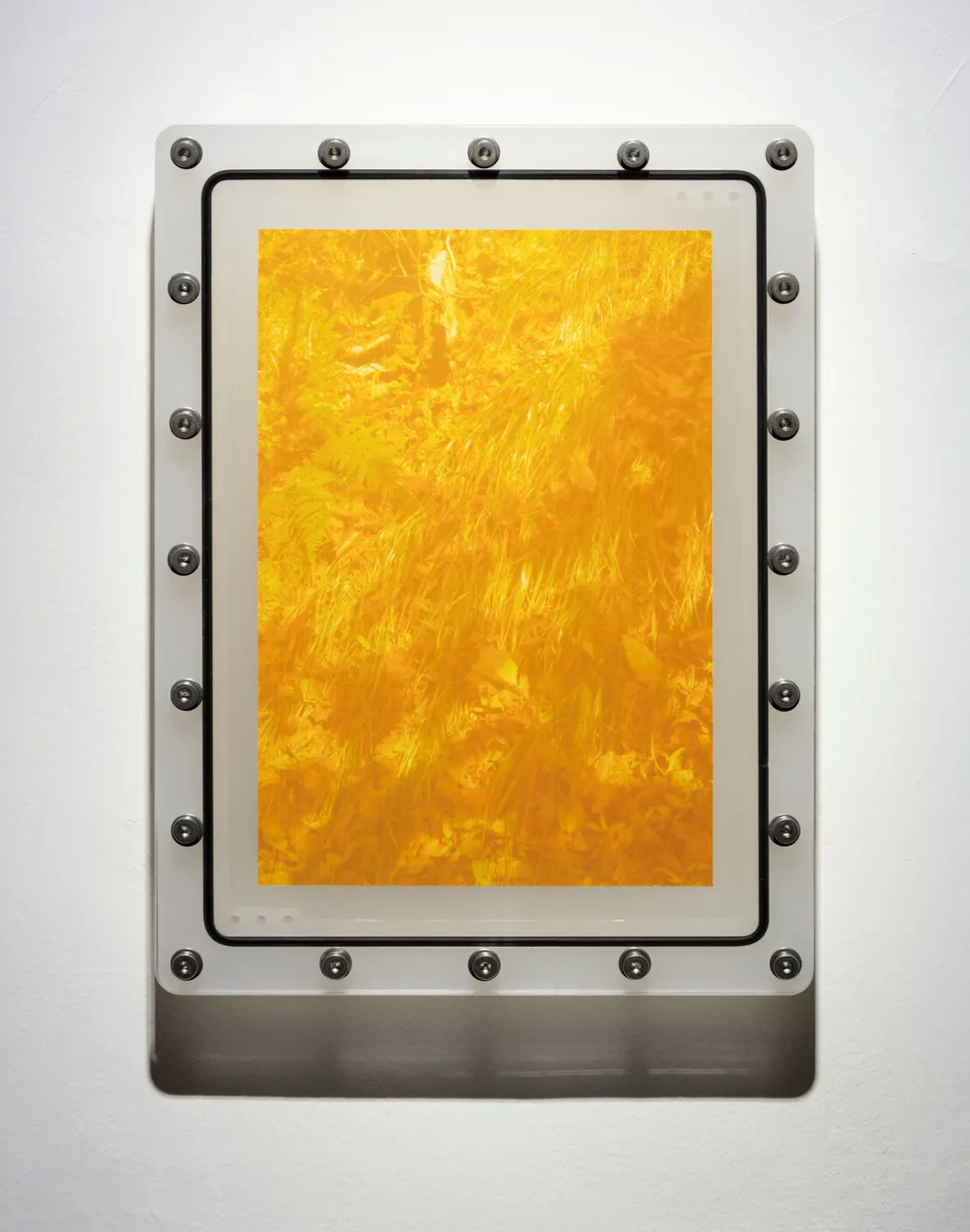
Works such as is of Naejangsan 2024-5 and is of Palgongsan 2024-3 carry visible traces of seasonal variation through pigments extracted from autumn foliage. The colors are chemically derived from the landscape itself, introducing instability into the image from the moment it is produced. Organic pigments gradually shift through exposure to oxygen, humidity, temperature, and light.
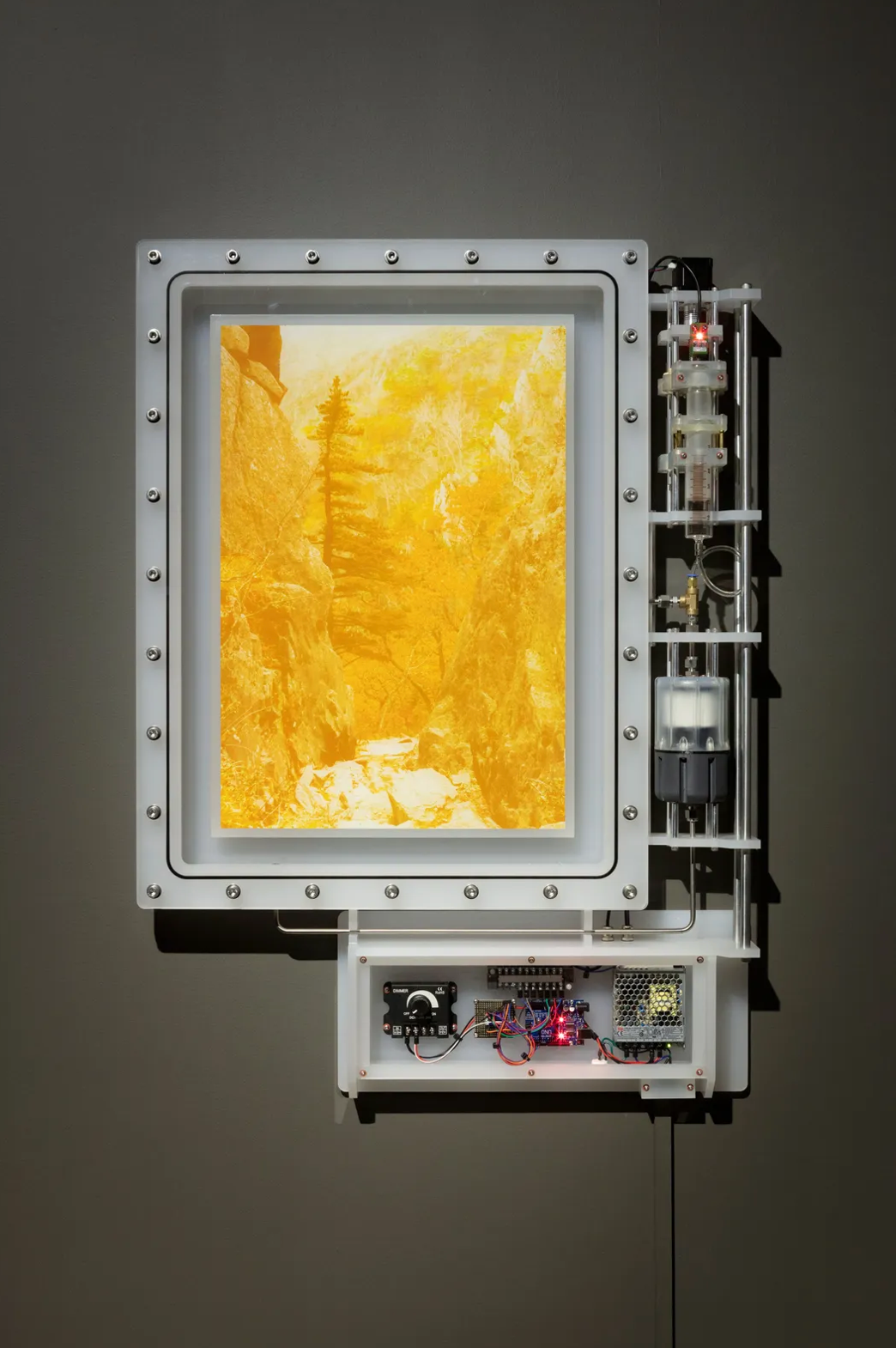
One of the clearest examples is is of Naejangsan 2023-1, which was intentionally exhibited without a preservation chamber. By the time the work reappeared in later exhibitions, substantial fading had already occurred. The altered surface became evidence of elapsed time and material transformation rather than damage requiring restoration.
Preservation as Artistic Infrastructure
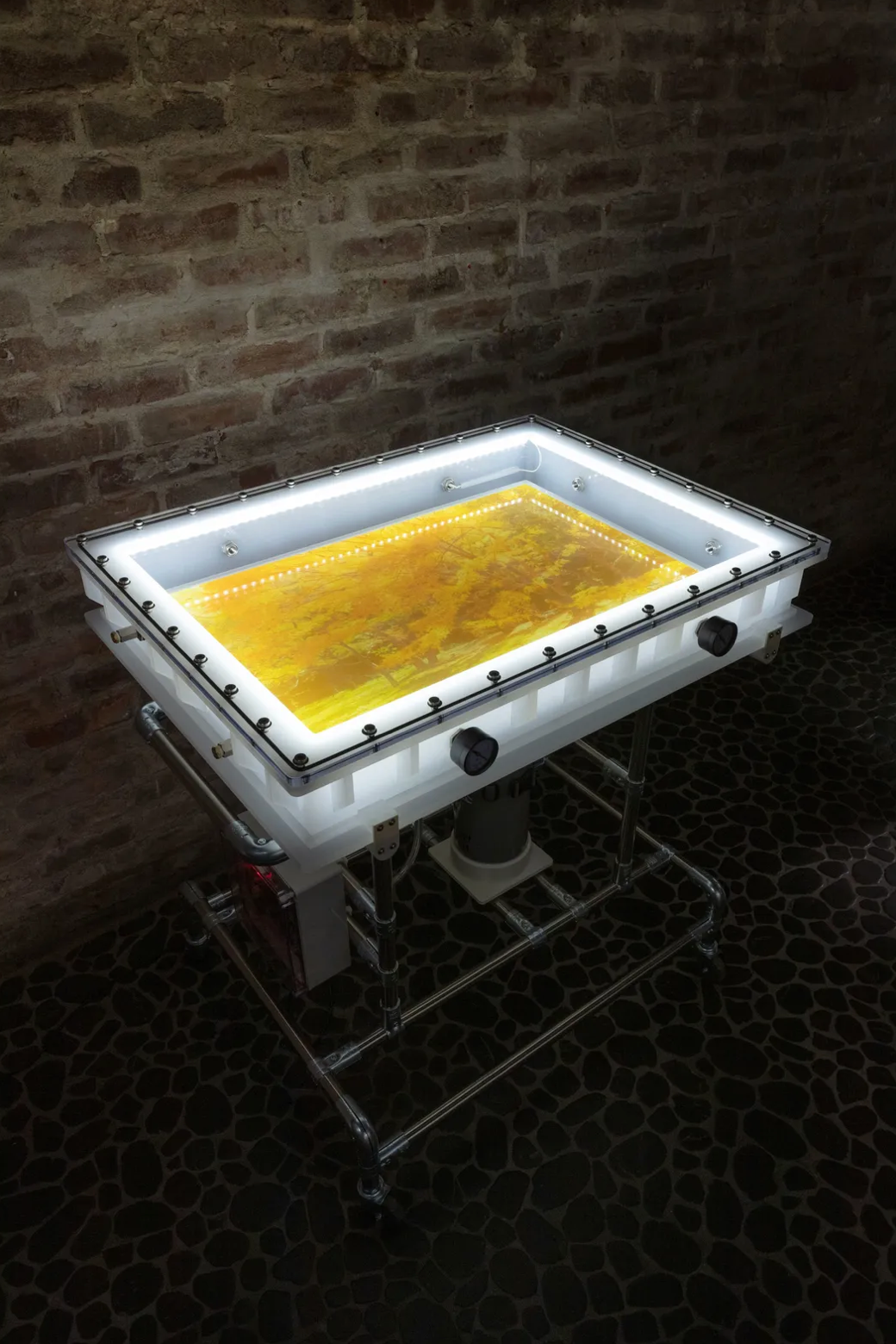
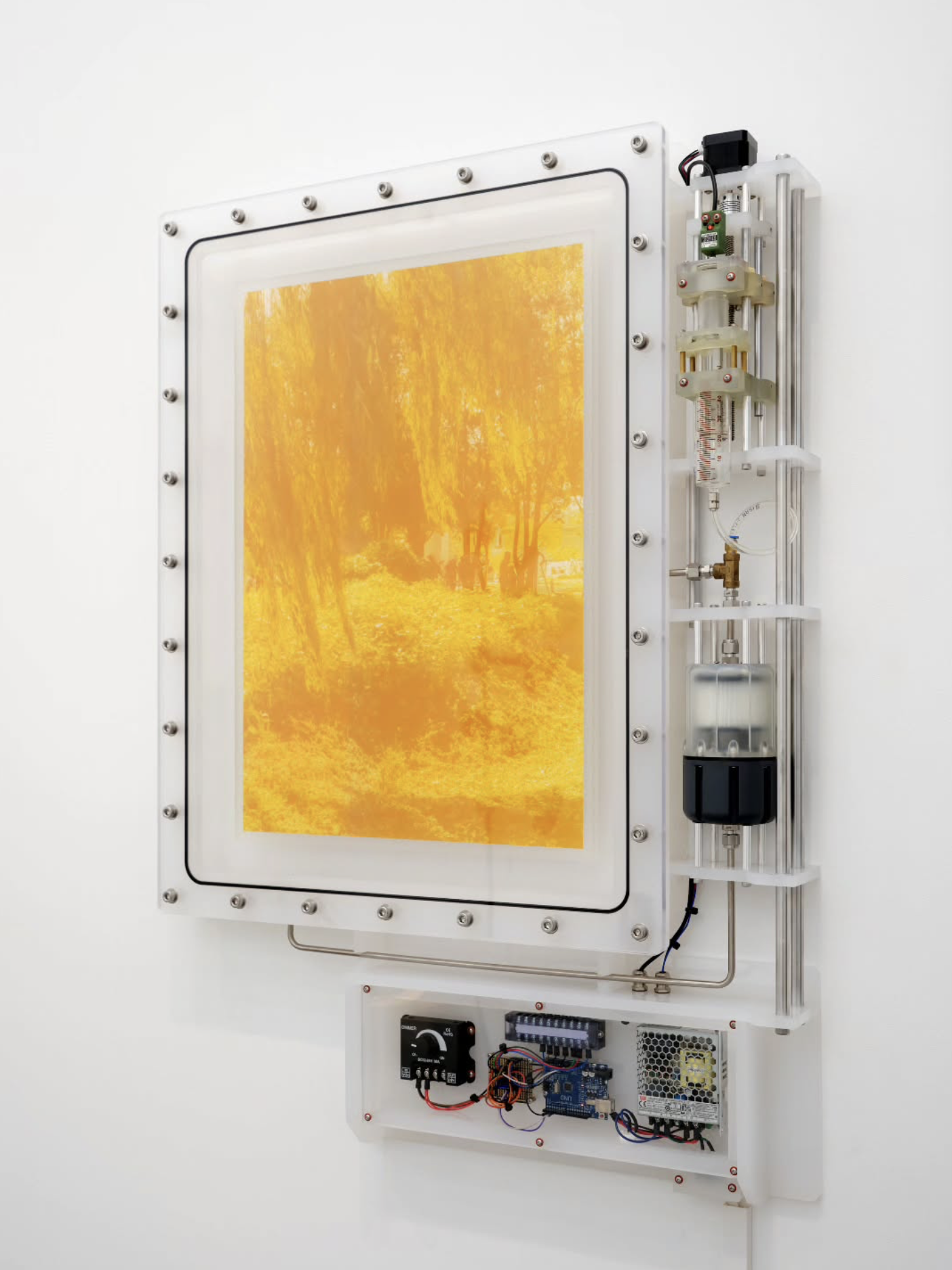
Many of the is of works are displayed within acrylic chambers containing oxygen-removal devices, nitrogen systems, vacuum pumps, and environmental controls. These mechanisms are not hidden. Tubes, pumps, hoses, and sealed structures remain visibly integrated into the installations.
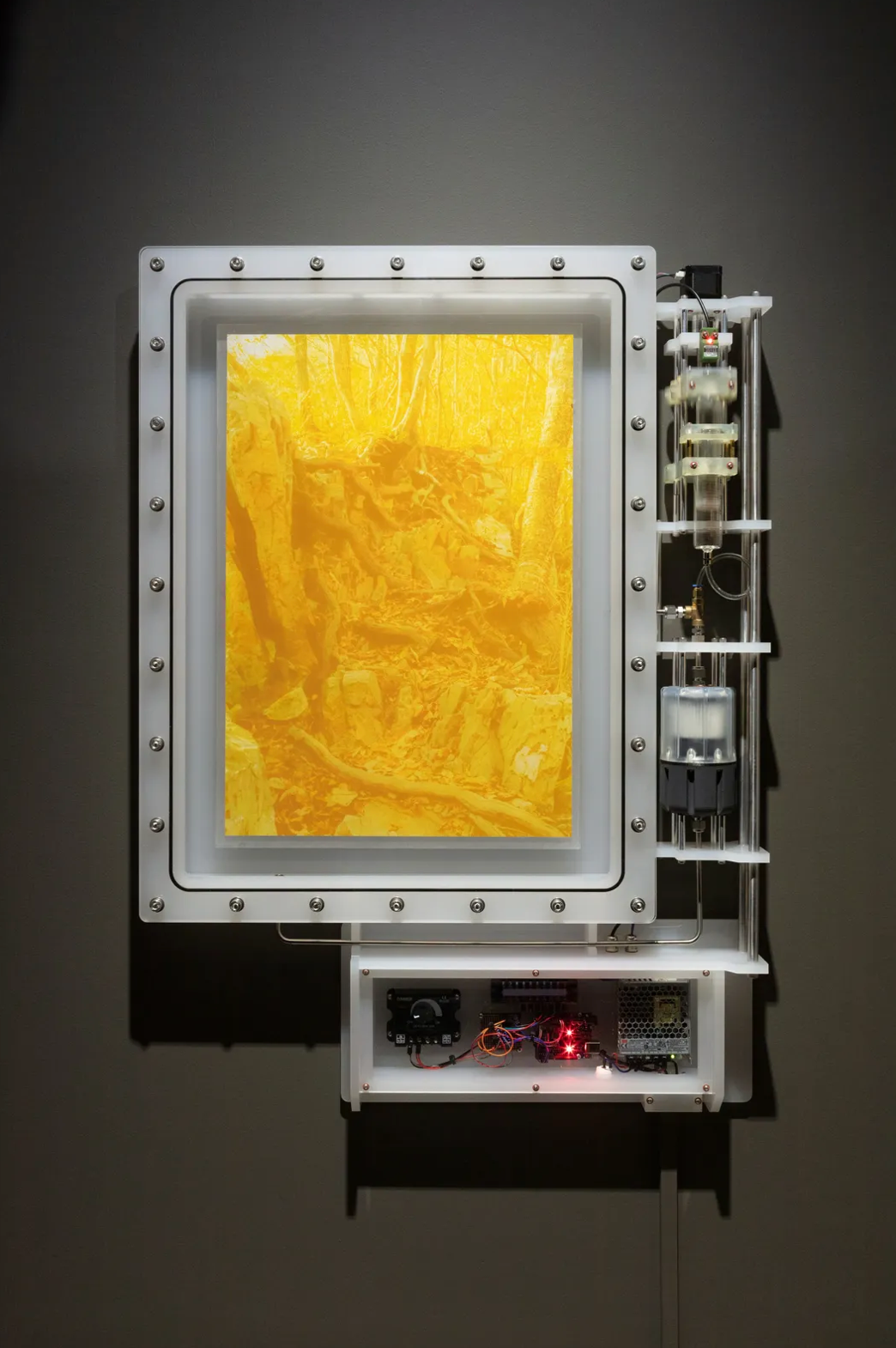
In works such as is of Songnisan 2024-4, the preservation apparatus becomes inseparable from the image itself. Acrylic chambers and environmental control systems regulate oxidation and slow the fading of the organic pigments, making the conditions required to sustain the image part of the work itself. The installation combines photographic display, preservation technology, and environmental control into a single system.
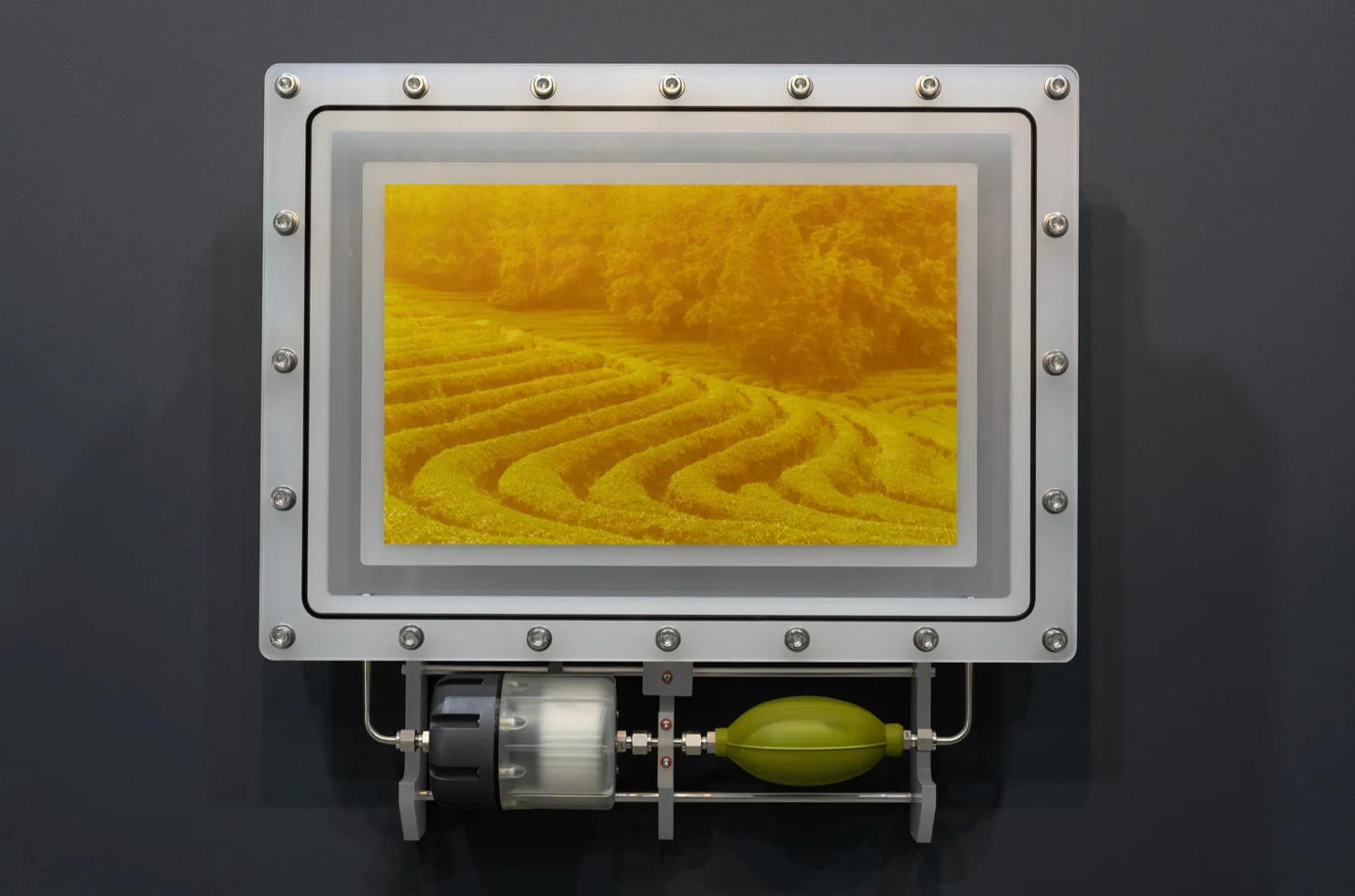
The systems operate quietly in the background, managing atmosphere, exposure, and decay. This shifts attention away from technological novelty and toward the material conditions shaping how the image changes over time. The chamber systems frame preservation as an ongoing environmental process rather than a permanent solution. The pigments continue to fade, even under controlled conditions, keeping the focus on duration, transformation, and the instability of the image itself.
Biological Time and the Post-Digital Image
The is of series ultimately challenges one of photography’s core assumptions: permanence. Since the nineteenth century, photographic technologies have largely pursued stabilization, reproducibility, and archival durability. Jungki moves in the opposite direction. His images are designed to change.
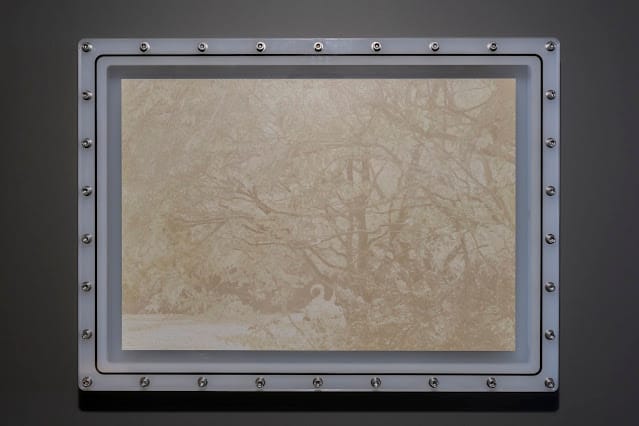
Jungki’s installations do not present nature as scenery to be consumed visually. Instead, they stage direct encounters with material change over time. The images slowly fade while pumps, sealed chambers, and oxygen-removal systems work continuously to delay their deterioration. The chambers slow entropy but cannot eliminate it. The image remains temporary.
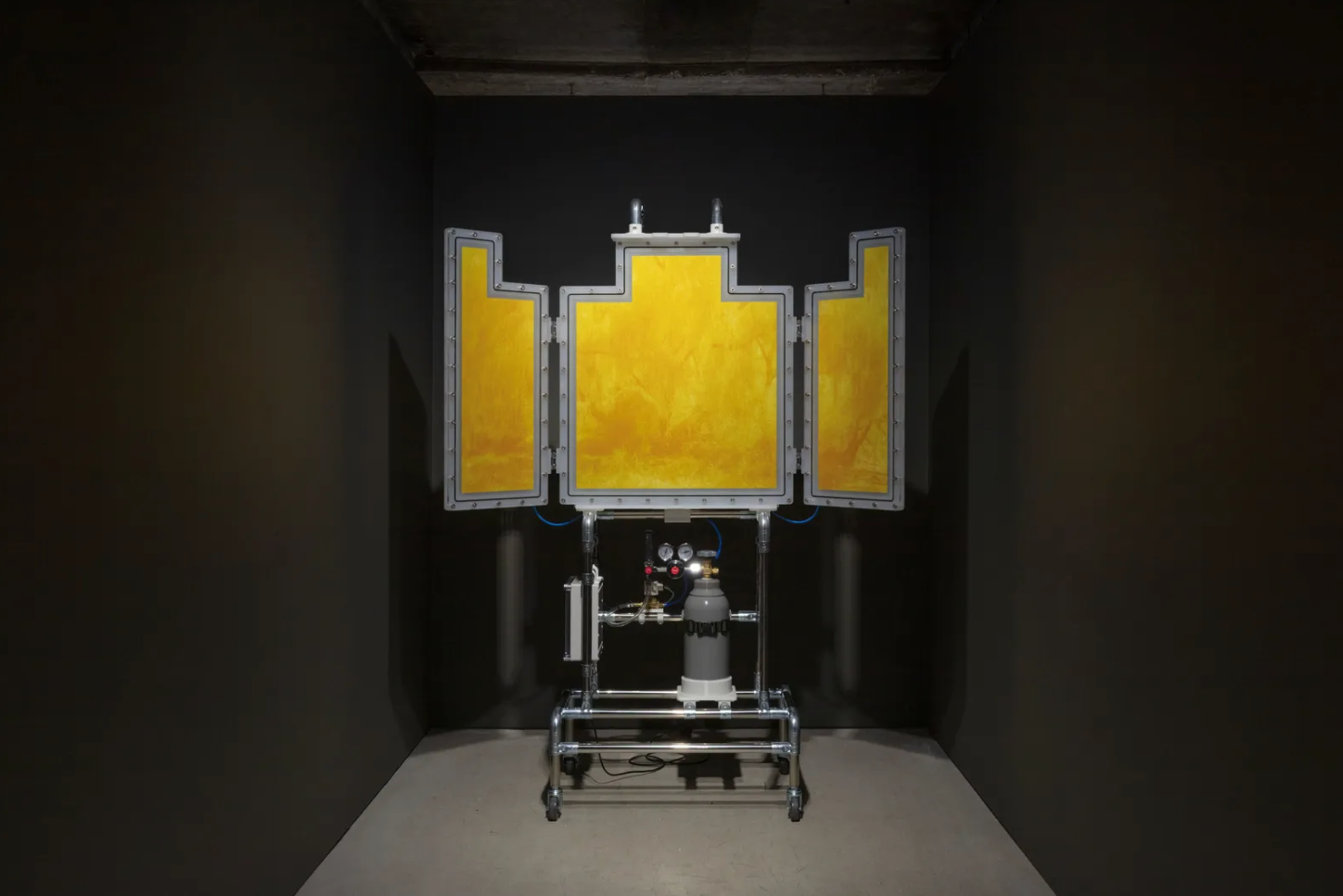
Instability becomes part of the image itself. Atmosphere, chemistry, maintenance, and biological decay all shape how the works continue to evolve after production. The photographs are therefore less about capturing a landscape than participating in its ongoing material life. Mountains become pigments. Pigments become images. Images gradually return to environmental process. By embedding ecological transformation directly into photographic production, Beak Jungki expands what a photograph can be: not a fixed representation of the world, but a material system continuously shaped by biological time.