Ava Hudson’s work moves between sculpture, wearable systems, biosensing, and embodied interaction. Using textiles, circuitry, hardware materials, and sculptural forms, she builds objects that examine how bodies move through physiological, technological, and environmental systems. In works that use electronics, such as Pulse, sensors and circuitry remain visibly embedded within the wearable structure rather than disappearing behind seamless fabrication. Drawing from backgrounds in cognitive science and architecture, Hudson approaches wearable technology as sculptural and spatial practice. This takes different forms across works including Pulse, a heartbeat-responsive wearable that transforms cardiac activity into light; Lucent Body, an ornamented wearable sculpture layered with materials associated with adornment, industry, and nature; and Anti-Surveillance Helmet, a speculative wearable examining visibility, monitoring, and bodily exposure within networked environments.
The Heartbeat as Raw Material
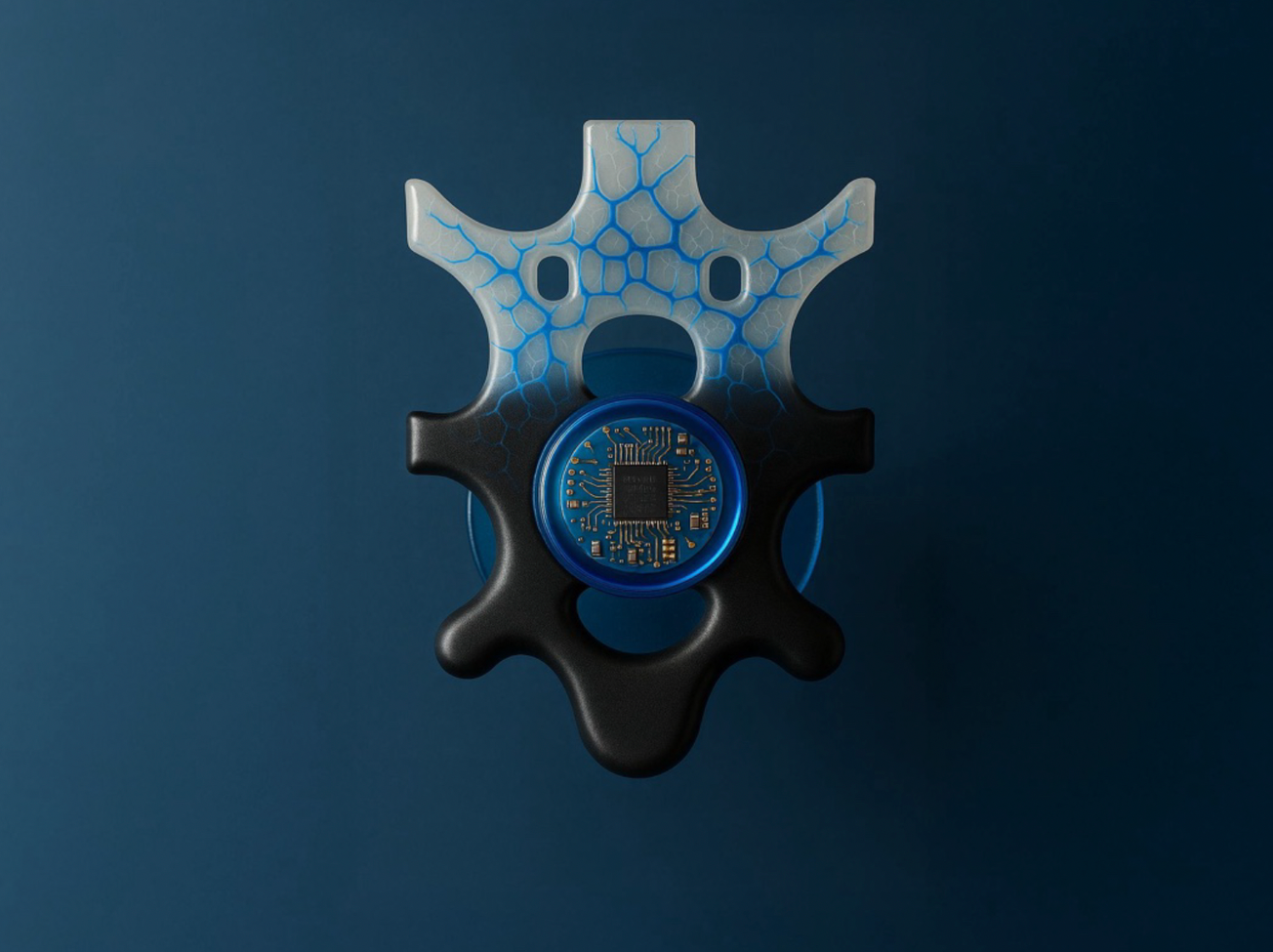
At the center of Pulse is a relatively simple interaction. A heartbeat sensor connected to a custom circuit board causes light embedded within the wearable object to fluctuate in real time according to changes in the wearer’s pulse. The project is built from LEDs, magnetic sensors, recycled circuitry, crystals, textiles, and 3D-printed brain hemispheres.

Circuit boards and electronic components remain exposed rather than concealed beneath polished fabrication. Scrap computer chips sit directly against fabric and sculptural surfaces. Sensors are embedded into the wearable structure itself rather than separated into hidden technical layers. The result feels closer to a constructed artifact than a finished consumer device. Nothing disappears into seamlessness. Light moves unevenly across the object’s surface as the body shifts and the pulse changes.
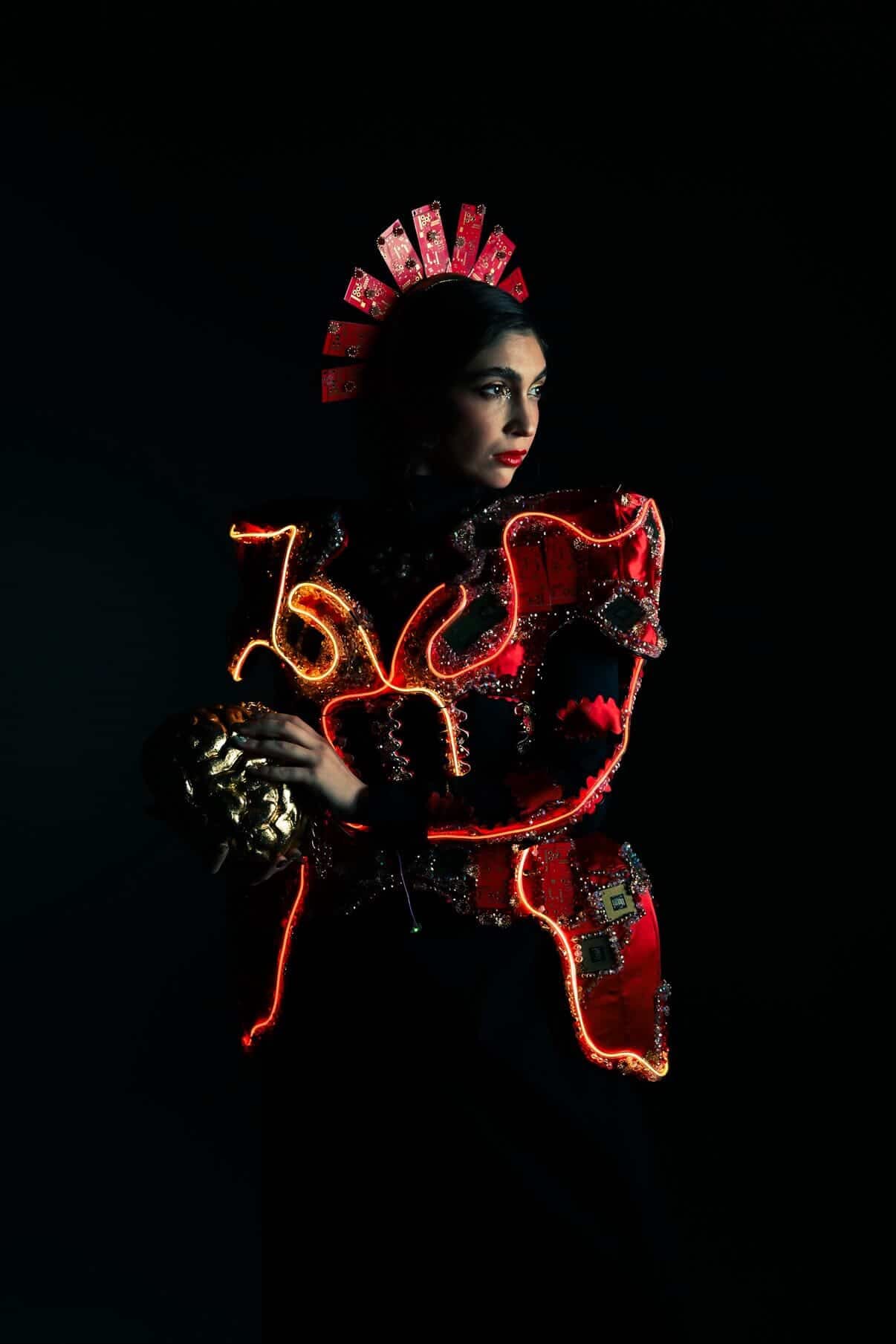
There are no dashboards, biometric readouts, or quantified visualizations translating the body into data streams. The heartbeat appears instead as changing luminosity moving through material form. That distinction gives the work much of its tension. In Hudson’s practice, biosignals behave less like information than raw material.
Wearables After the Wellness Interface
Most contemporary biosensing technologies are built around optimization. Smart watches measure recovery scores, sleep cycles, heart rate variability, and physical performance, converting bodily activity into measurable outputs designed for monitoring and improvement.
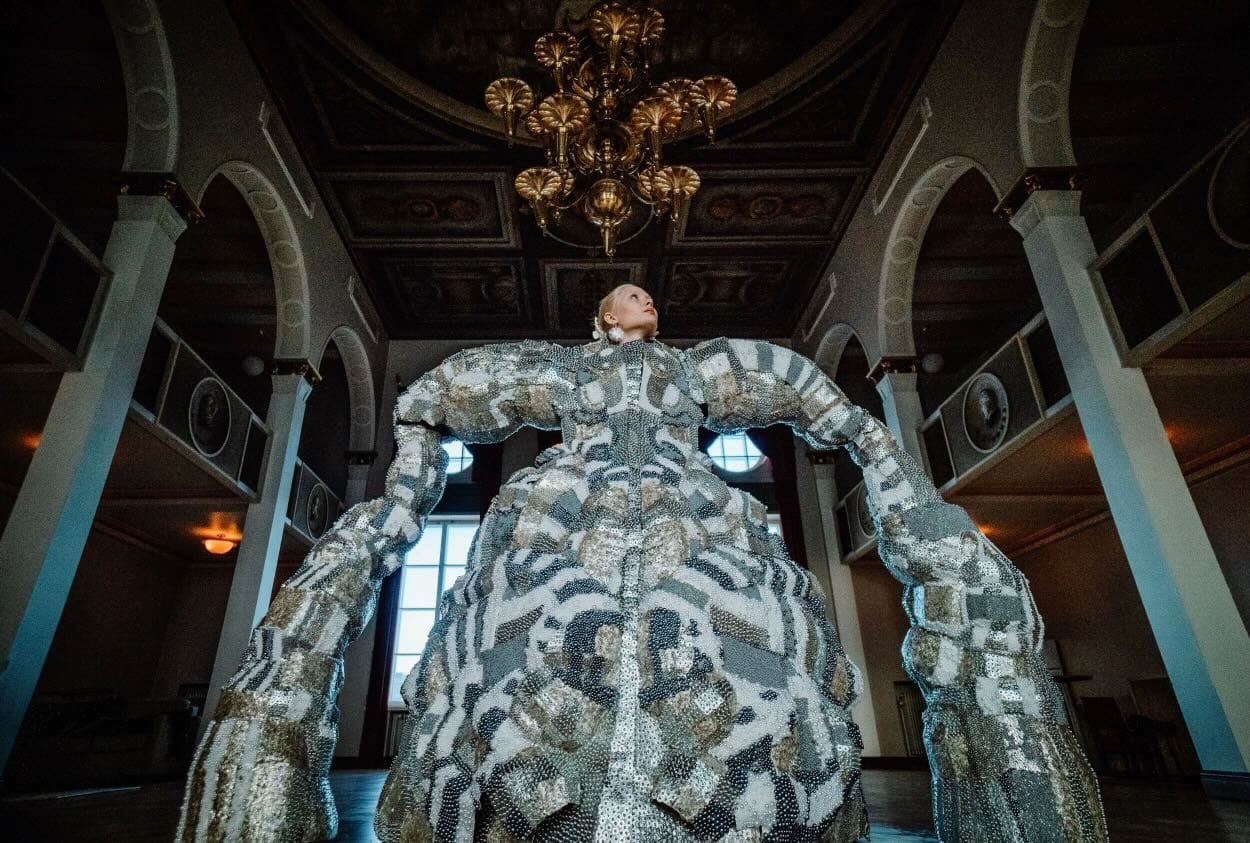
Hudson’s wearables do not frame the body as something to quantify or refine. Instead, sensing systems trigger changes in light, texture, and spatial response that remain perceptual rather than informational. That relationship between body and material also appears in Lucent Body. The wearable sculpture expands outward from the body through layered forms and materials associated with adornment, industry, and nature. Its armor-like structure frames the body through protection, visibility, and physical presence rather than technological seamlessness.
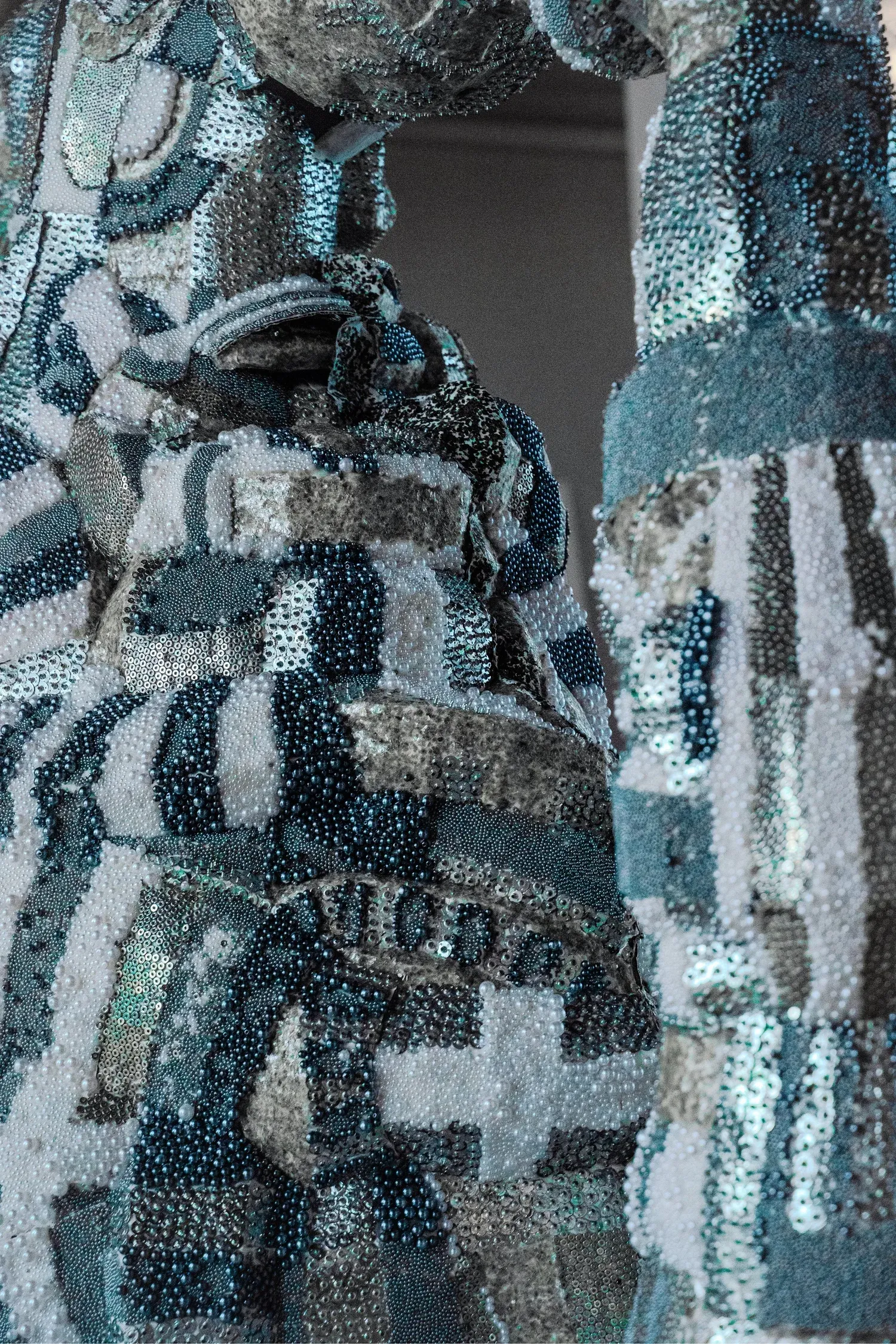
Fabric plays an important role throughout this work. Textiles soften the hard visual logic typically associated with electronics and sensing systems, introducing tactility and bodily proximity into structures built from circuitry and light. The materials never fully resolve into either garment or machine.
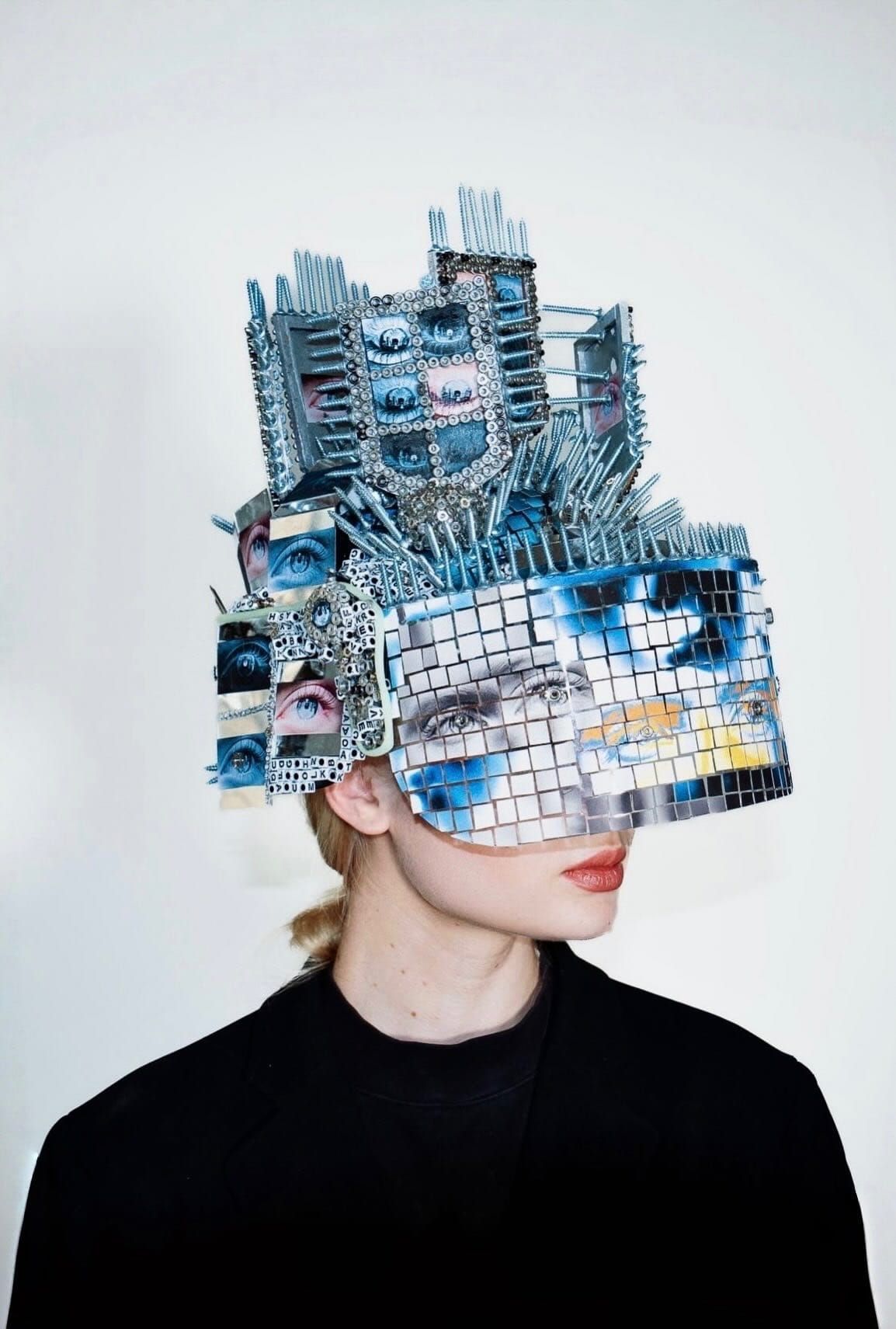
The same tension runs through Anti-Surveillance Helmet, a speculative wearable examining the aesthetics and politics of visibility within networked surveillance systems. The helmet evokes both protective equipment and technological apparatus, exaggerating the body’s relationship to monitoring and exposure rather than attempting to hide it.
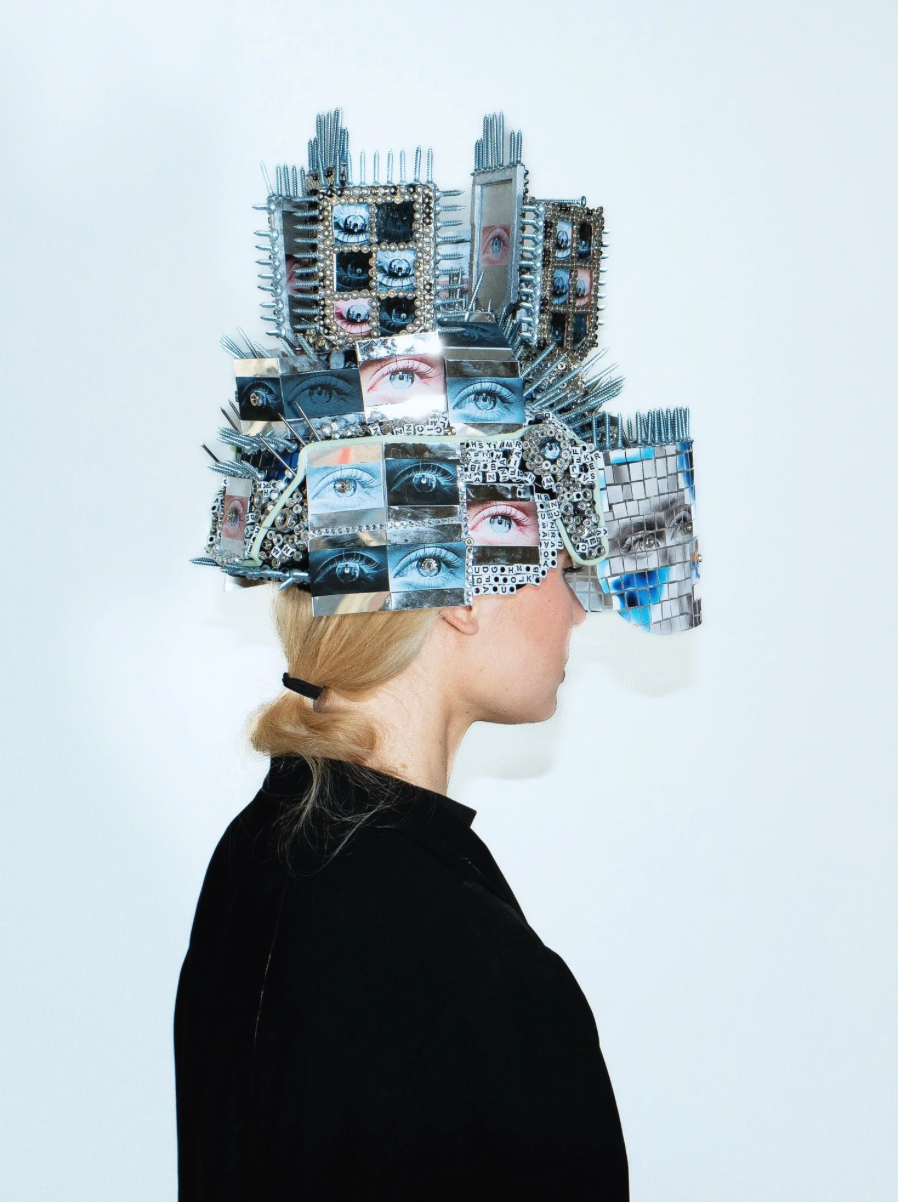
Like Pulse, the work keeps its technological structure materially legible. Electronic components remain visible within the object instead of disappearing behind frictionless industrial design. Hudson’s wearables consistently resist the visual language of seamless consumer technology, opting instead for layered surfaces, exposed systems, and visible construction.
Embodiment, Exposure, and Responsive Systems
Hudson’s work connects to longer histories of wearable sculpture, embodied art practices, and technologically informed material experimentation. Sensors, circuitry, textiles, and bodily movement operate together within the same physical structure. Hudson does not stage technology as spectacle. The interactions remain relatively minimal: pulses of light, exposed circuitry, responsive surfaces, shifting material conditions. Attention stays focused on the relationship between the body and the object rather than on immersive technical effects.
Across these projects, the body operates as both subject and site — shaped by systems of sensing, visibility, protection, and technological mediation. Physiological activity becomes visible through light and material response without collapsing entirely into metrics or data visualization. Her work does not reject sensing technologies, nor does it romanticize them. Instead, Hudson treats responsive systems as material structures capable of shaping perception through light, circuitry, touch, and bodily presence.
Hudson’s upcoming solo exhibition will open June 8 at Gallatin Galleries in New York City. Centered on wearable art and technology, the exhibition explores the body as a conduit between human, technological, and ecological systems — a theme running consistently throughout Hudson’s practice.