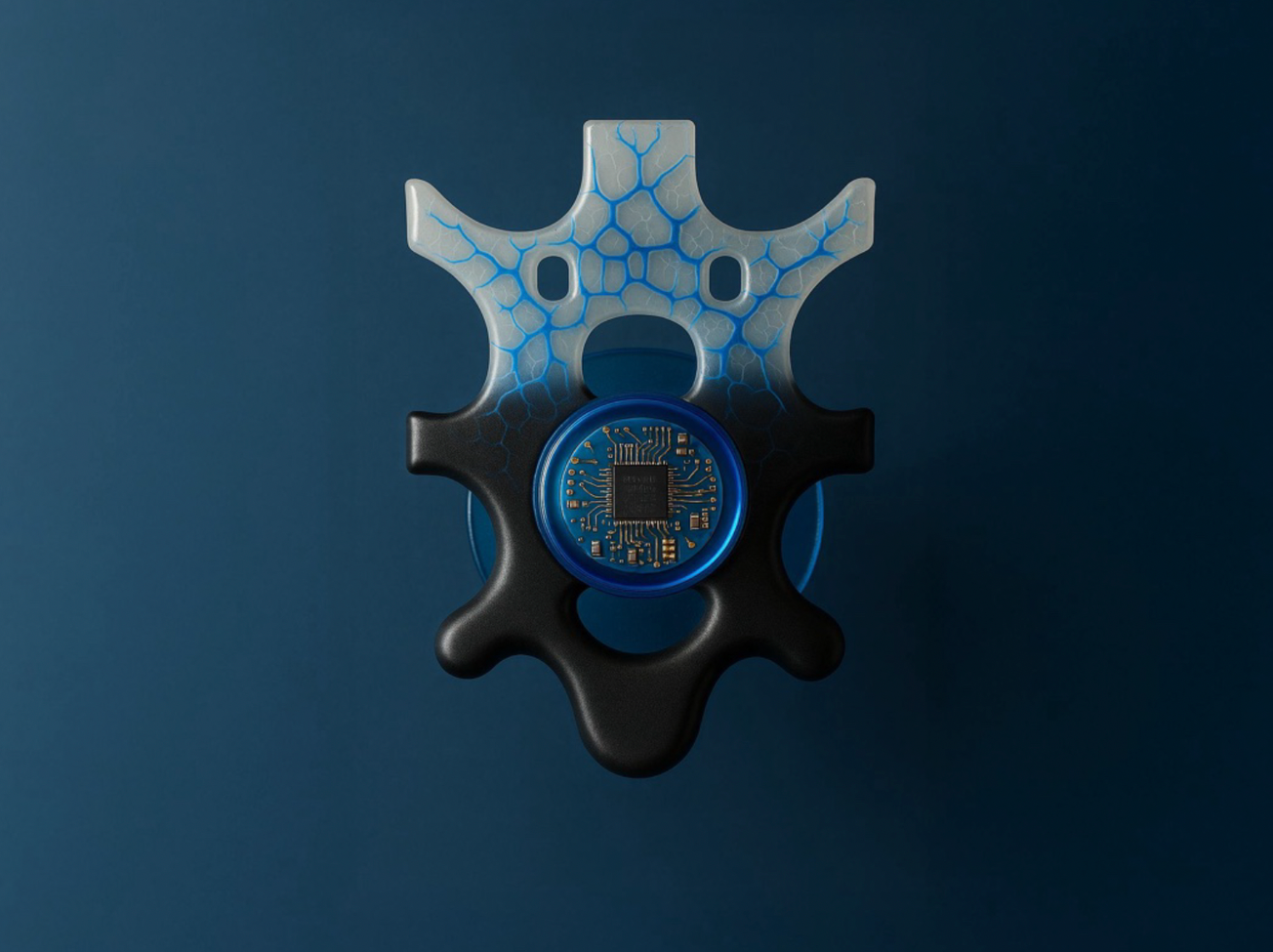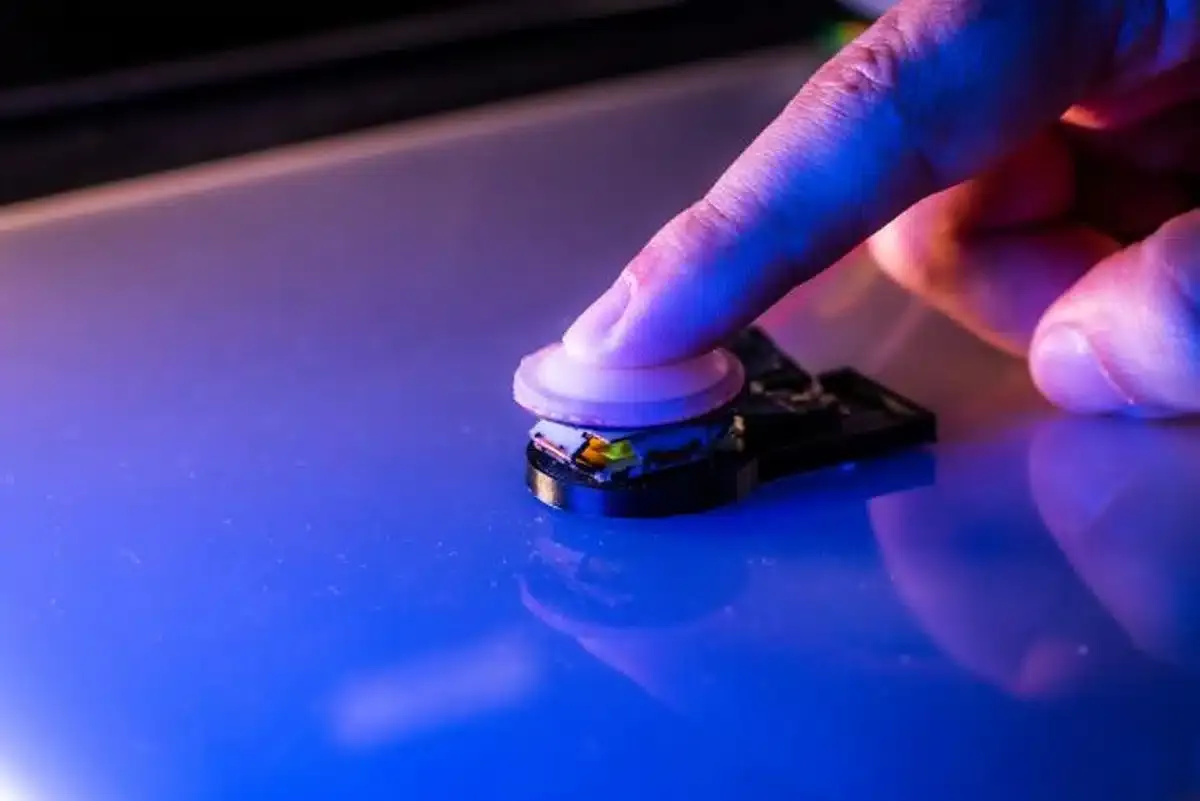
Researchers at the École Polytechnique Fédérale de Lausanne (EPFL) and Hanyang University have developed a wearable haptic interface that reproduces the sensation of softness by independently controlling two key tactile cues: contact area and force. Called the Softness-Rendering Interface (SORI), the device offers a new platform for studying human touch while expanding the capabilities of virtual and remote interaction systems.
Unlike many existing haptic devices, which couple force and contact area, SORI separates these variables to more accurately recreate how humans perceive soft materials. The fingertip-mounted prototype combines a soft pneumatic actuator that adjusts contact area with an origami-inspired mechanism that regulates force. Together, these components allow the device to simulate a wide range of tactile experiences without relying on physical materials.
The researchers demonstrated that SORI can reproduce the perceived softness of both homogeneous materials and layered objects with varying stiffness. In laboratory tests, the system recreated tactile characteristics associated with everyday items including marshmallows, bread, salmon, and beef, as well as dynamic surfaces such as a beating heart model. These demonstrations highlight the device's ability to render tactile information beyond simple pressure feedback.
The work, published in the Proceedings of the National Academy of Sciences (PNAS), is intended primarily as a research tool for investigating how the nervous system interprets softness. The authors note that understanding these perceptual mechanisms could improve future haptic technologies used in virtual reality, teleoperation, robotic manipulation, medical simulation, and remote palpation.
SORI remains a laboratory prototype rather than a commercial product. However, its ability to quantitatively reproduce softness represents a notable advance in haptic engineering, addressing one of the longstanding challenges in digital touch: reproducing not only force, but the nuanced tactile cues that shape how people distinguish between hard, soft, and layered materials.