Most AI tools are built around a logic of optimization. You ask a question, the system generates an answer, and the interaction moves toward resolution as quickly as possible. Interfaces compete on latency. Iteration is instant and unlimited. The assumption is that the point of “thinking” with a tool is to arrive at an outcome, and that the faster you get there, the better. But there is a longer tradition of tools designed around a different logic: not optimization but orientation. These systems don’t give you answers to just accept. They instead give you material to think with.
A Counter-Tradition
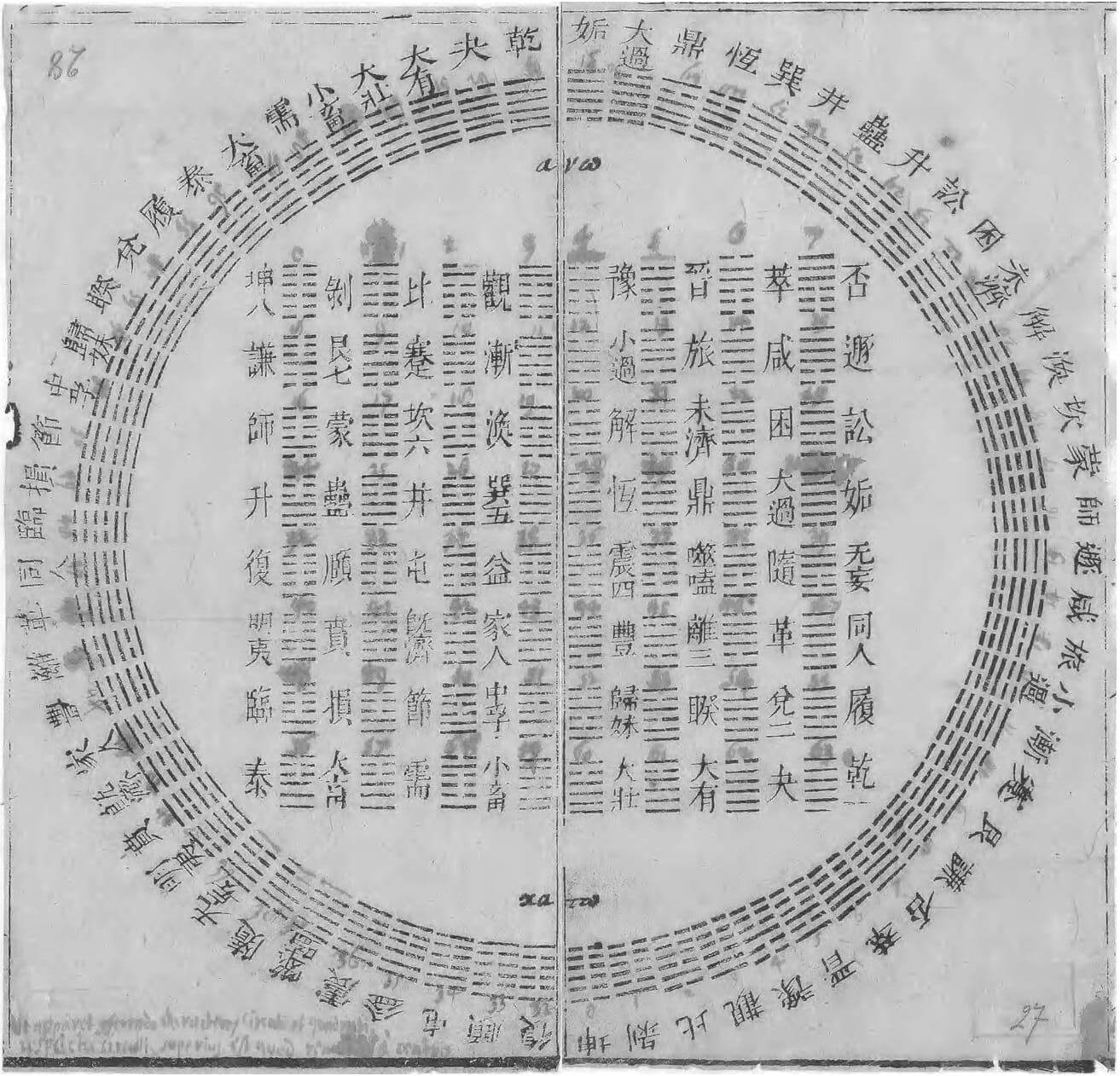
The I Ching is an ancient Chinese system of divination and cosmology. You cast coins or sort yarrow stalks to generate one of sixty-four hexagrams–a figure of six lines paired with a text–and interpret it against whatever question you brought. You might receive “Fire over the lake: the image of Revolution,” but what that means for your situation is yours to work out.
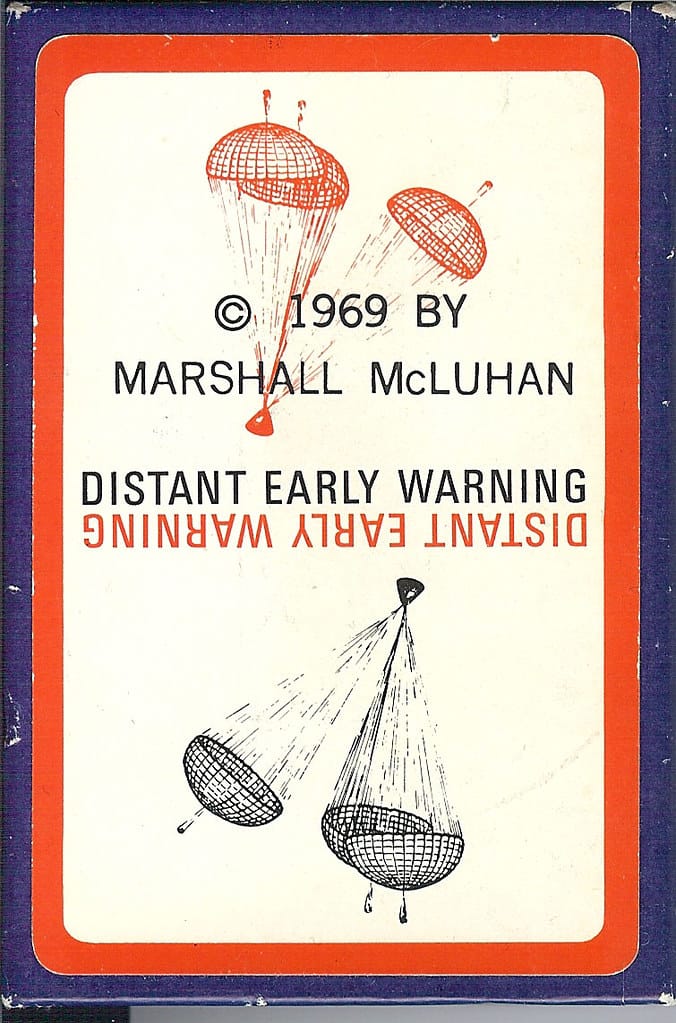
In 1969, Marshall McLuhan produced the Distant Early Warning deck (known as the DEW Line deck), named after the Cold War early warning radar network. It looked like a standard deck of playing cards, but each card carried what McLuhan called a “probe”: a compressed, often cryptic aphorism. You would draw a card and read it against whatever problem you were working through. A card might read “The law of averages will clobber you every time.” You wouldn’t take that as advice. You would sit with the friction between the probe and your situation until something shifted, not because the card explained anything, but because it disrupted whatever frame you had brought to the problem.
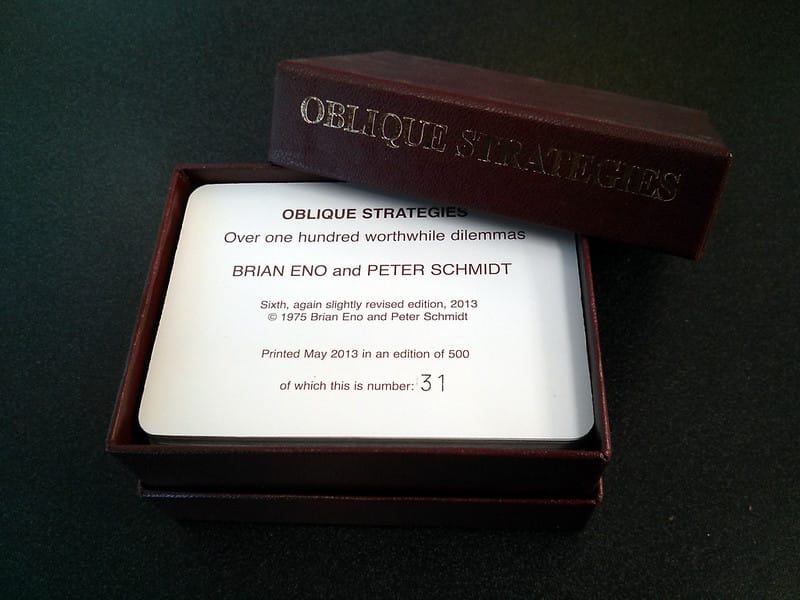
Brian Eno and Peter Schmidt’s Oblique Strategies, first published in 1975, applied a similar logic to creative practice. Each card in the deck carries a cryptic directive, such as “Honor thy error as a hidden intention,” or “Do nothing for as long as possible.” You draw a card and work with what you get. The productive friction is in making the provocation relevant to whatever you’re working through; the card interrupts your habitual thinking and redirects your attention toward something you may not have considered on your own.
These systems–the I Ching, DEW Line deck, and Oblique Strategies–are easy to dismiss as mystical, but I find it more productive to think of them as something closer to algorithms: an input, a procedure, an output. What makes them different from the algorithms that increasingly shape our thinking is what the output is for. In these systems, the output does not tell you what to do. It gives you material that becomes meaningful only through your interpretation. The computation isn’t complete when the system produces its output. It's complete when you’ve made sense of it.
These systems also ask you to engage with intention. Consulting the I Ching is a deliberate act; you bring a real question, you approach with sincerity, and you commit to working with what you receive rather than shopping for a different answer. Oblique Strategies carries the same expectation: you draw a card and trust it, even if its relevance isn’t immediately clear. There is a ritual weight to the encounter that distinguishes it from the casual, infinitely repeatable interaction most AI interfaces are designed around.
These qualities produce a distinctive relationship between system and user–one built around orientation rather than optimization. An optimizing system treats an unresolved situation as a problem: compress the time between question and answer, converge on a solution, move on. An orienting system does something different. It gives you a way to see your situation that you did not have before. And because the output requires your interpretation, there is often a period of sitting with it, where you don’t yet know what to do with it. That isn’t a bug. It’s a feature of a system that asks you to do the thinking rather than have it done for you.
Prompted
Prompted is an exploration of what happens when you bring these values–orientation over optimization, interpretation over resolution–into an AI interaction. Rather than designing for speed and answers, I wanted to see what an AI tool would look like if it were designed not to do the thinking for you but to expand your thinking.
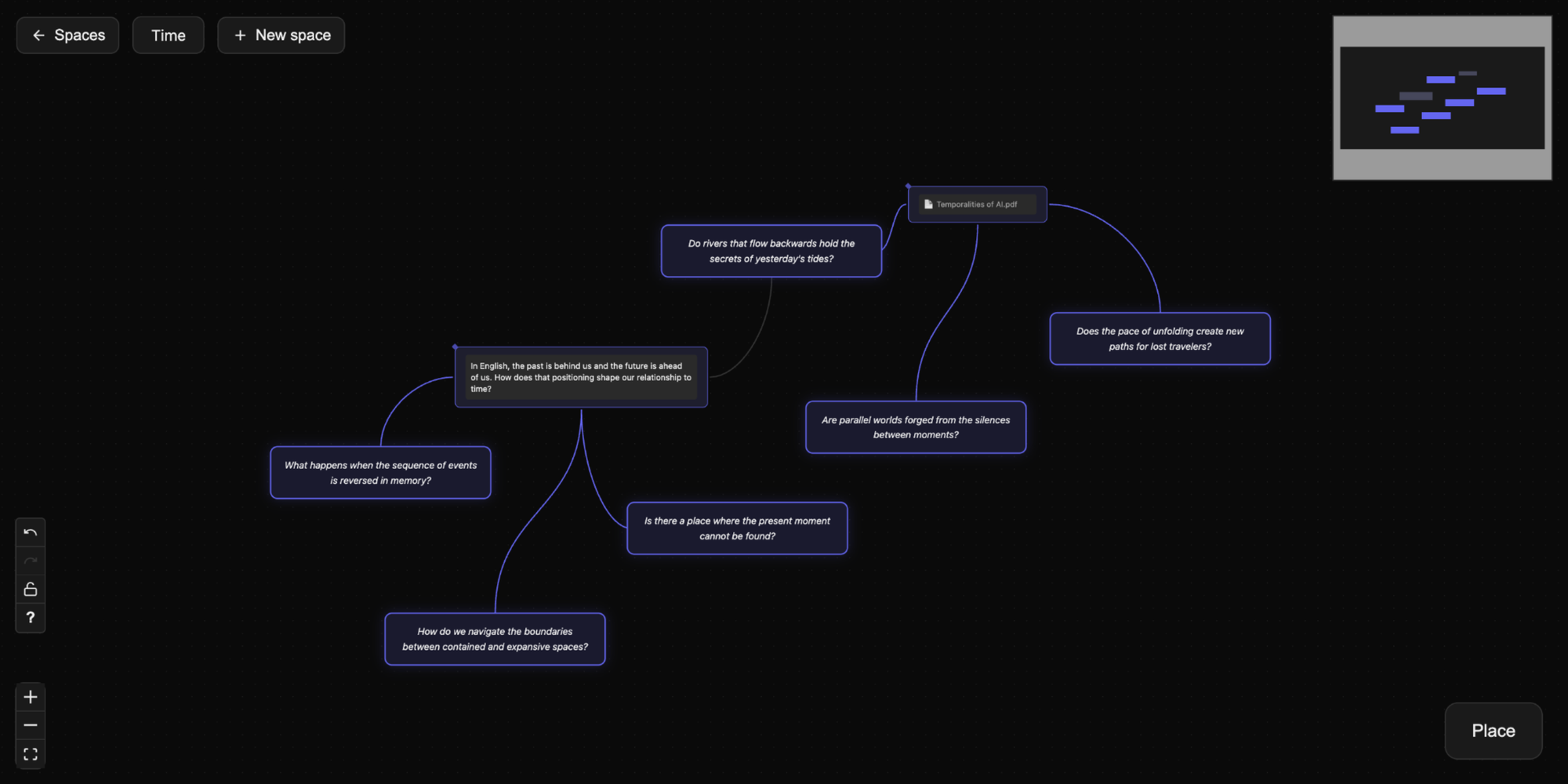
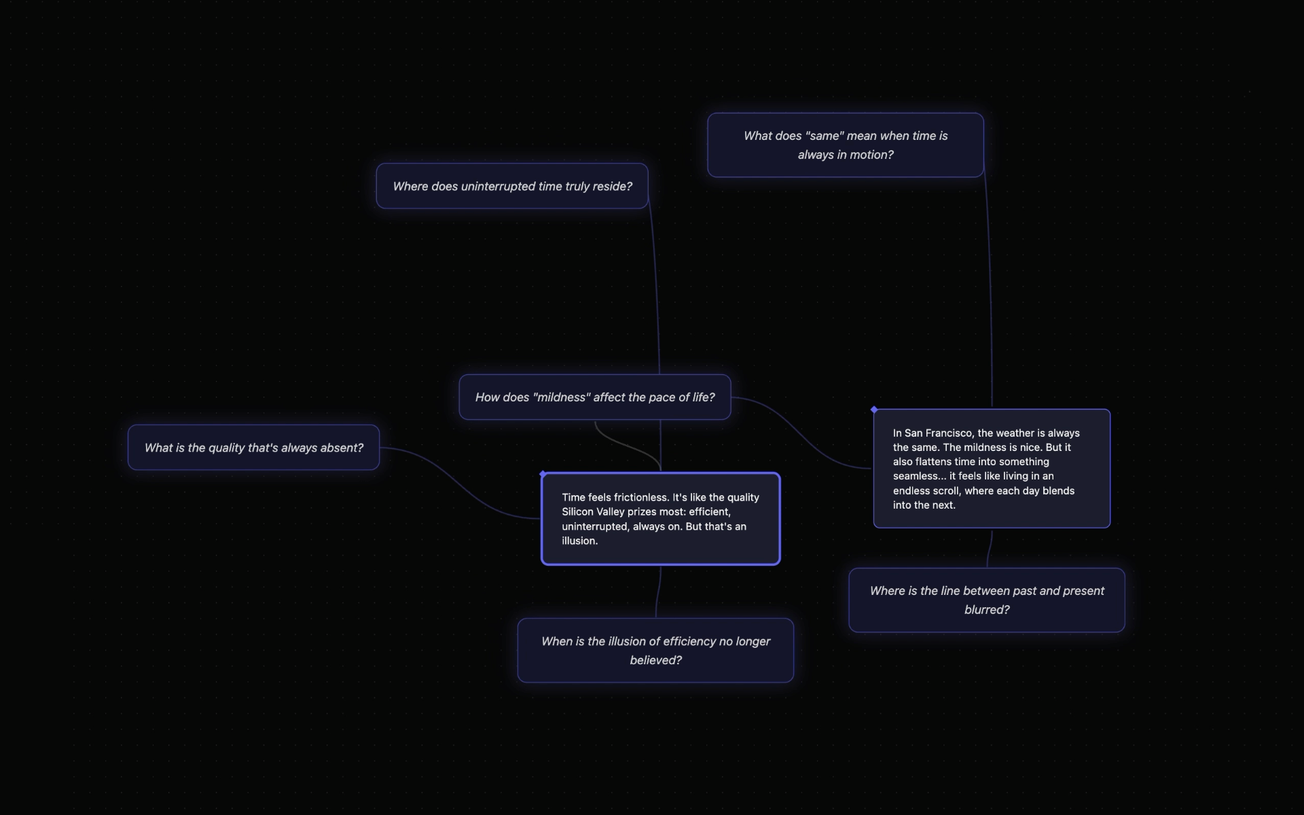
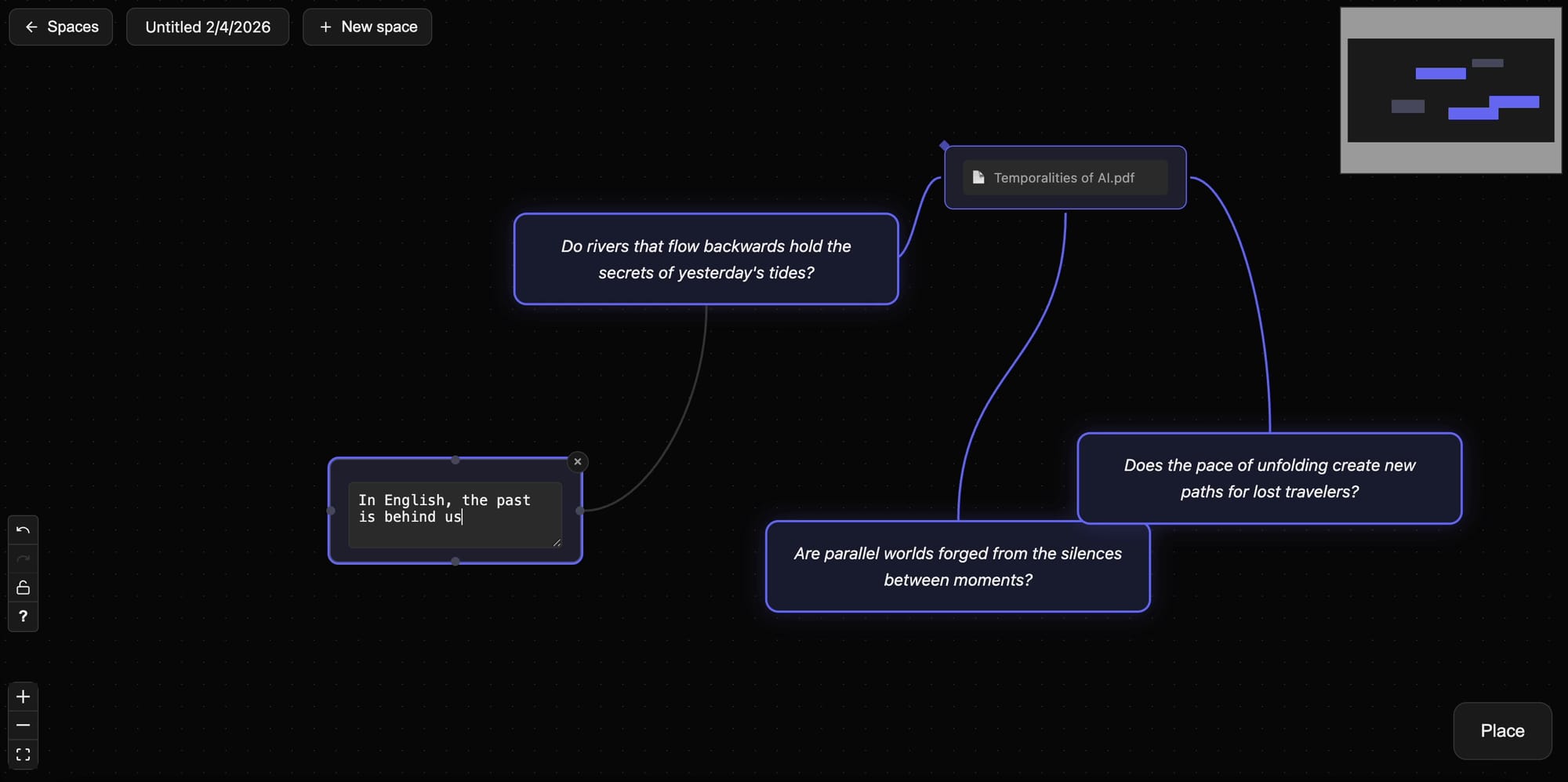
Prompted generates only questions: oblique provocations designed to reframe, complicate, or redirect thinking rather than resolve it. Users bring something they’re sitting with–a piece of writing, an image, a question–and place it on an open canvas. To initiate a consultation, they hold rather than click. Where most AI interfaces make it easy to fire off a prompt without much thought because you can always revise your input or regenerate the output, the hold here asks you to mean what you place. What follows is a delay you cannot predict or plan around. When the system is ready, a second hold is required to receive the response: three to five oblique questions that appear as connected nodes on the canvas. These questions cannot be regenerated or revised. What appears is what you work with. To get anything further, you have to bring more of your own thinking.
The canvas grows as a spatial record of this process. Unlike chat interfaces that scroll past earlier exchanges, the canvas preserves everything, including branches, dead ends, returns. Over time it becomes a map of where your thinking has been: not a log of answers received but a topology of questions encountered. The thinking stays with the user. The system provides provocations; you do the sensemaking.
What AI adds
The I Ching’s hexagrams are fixed. The DEW Line deck and Oblique Strategies draw from the same cards regardless of what you’re working through. Their generality is part of what forces the interpretive work onto you. But AI adds something these systems can’t: responsiveness to the specific language you bring.
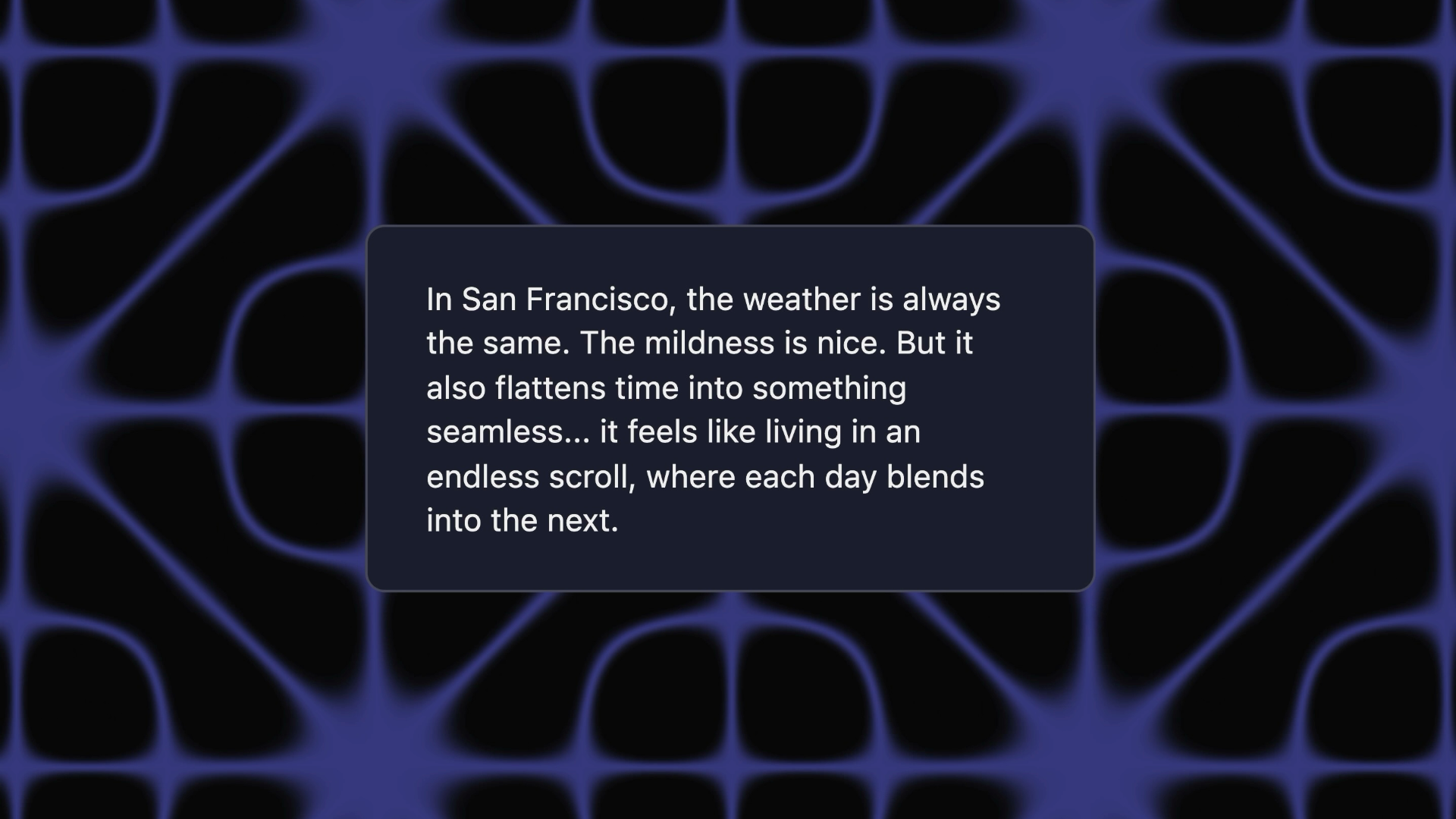
Large language models have no genuine understanding, but they are good at pattern-matching and rearranging your language into something not quite what you meant, angled in a direction you didn’t intend. For most AI applications, that’s a problem to engineer around; you want the model to be correct, relevant, reliable. For sensemaking, those aren’t necessarily the point. The provocation doesn’t need to be “correct.” It doesn’t even need to be relevant in any obvious way. It just needs to be oblique enough to make you think again about what you meant, and AI is adept at creating a kind of strangeness informed by the language you offer it.
The lineage from the I Ching through Oblique Strategies to tools like Prompted suggests that an AI interface can be designed for something other than speed or correctness; it can be designed to keep a question open, to give you material that sustains your thinking rather than replaces it. The kind of thinking that needs open time, that builds through sitting with uncertainty, that arrives somewhere you couldn’t have planned for.