Real-time systems promise immediacy. In AI interfaces, gaming engines, financial markets, and live media, lower latency is equated with intelligence, efficiency, and control. Response time becomes a proxy for authority: the system that answers fastest appears most capable.
Latency, however, is not simply a technical metric. It is a distribution of responsiveness. It determines who speaks, who waits, and what counts as recognition. In contemporary performance and computational art, delay becomes material—staged, modulated, and made perceptible. Rather than treating latency as error, artists work with it as structure.
Across theater, immersive environments, and live electronic performance, Annie Dorsen, OpenEndedGroup, and Myriam Bleau and Myriam Bleau demonstrate how real-time systems redistribute agency through computational mediation.
Latency as Dramaturgy
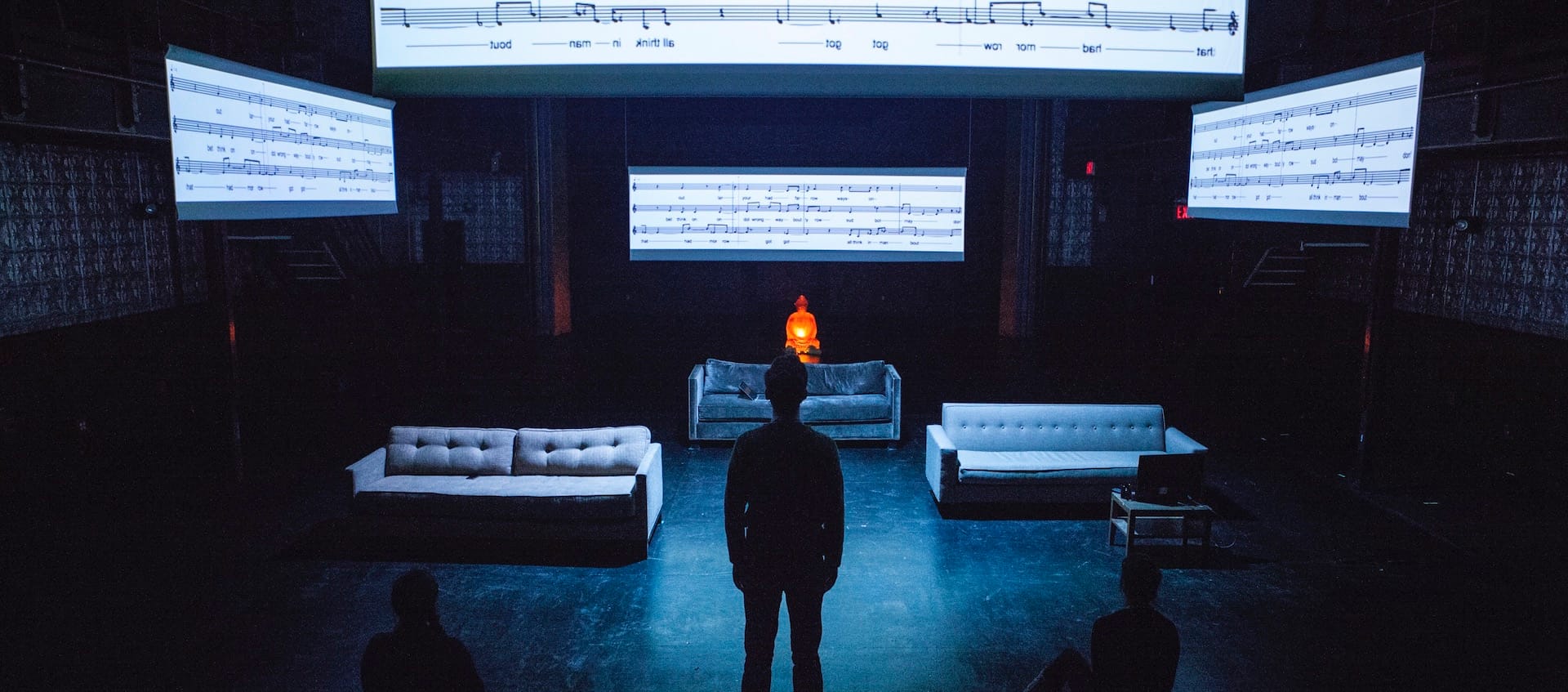
Annie Dorsen’s theater projects foreground computation in real time. In Hello Hi There (2010), a live performance structured around algorithmically recombined philosophical debate, text is generated and delivered on stage through software systems drawing from pre-authored corpora. In The Slow Room (2018), Dorsen employed machine-learning systems trained on canonical dramatic texts to generate dialogue live, shaping each performance through probabilistic output rather than fixed script.
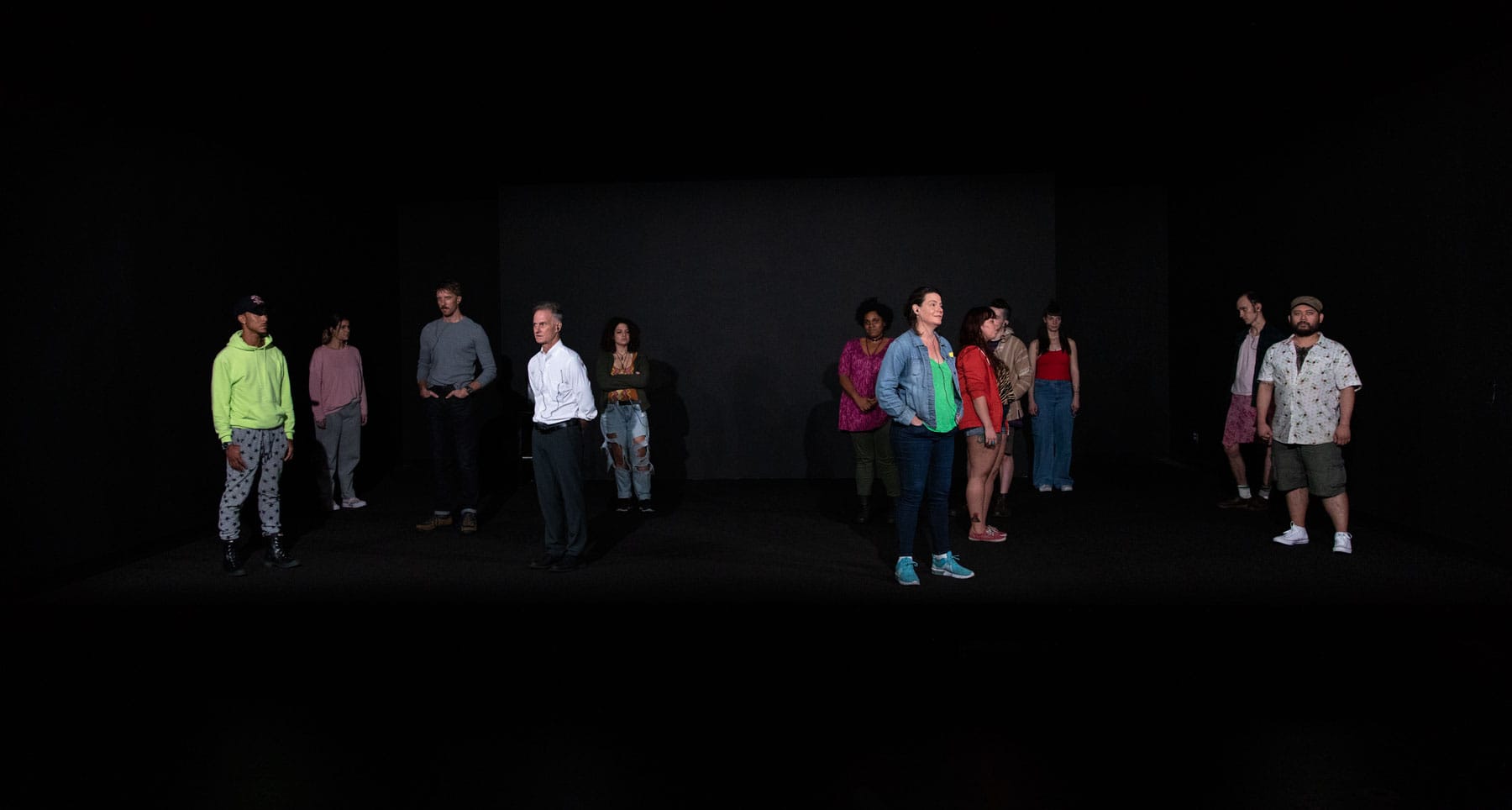
More recently, in Yesterday Tomorrow (2023), Dorsen incorporated large language models into a live performance structure, allowing text to be generated dynamically rather than performed from a predetermined script. The work extends her long-standing investigation of machine-authored speech as a theatrical condition.
Across these projects, language unfolds through computational processing rather than predetermined sequence. The audience witnesses dialogue emerging from a system in operation. Pauses between exchanges are structured not only by performers but by the processing dynamics of the software itself. Speech is selected, assembled, and delivered in real time.
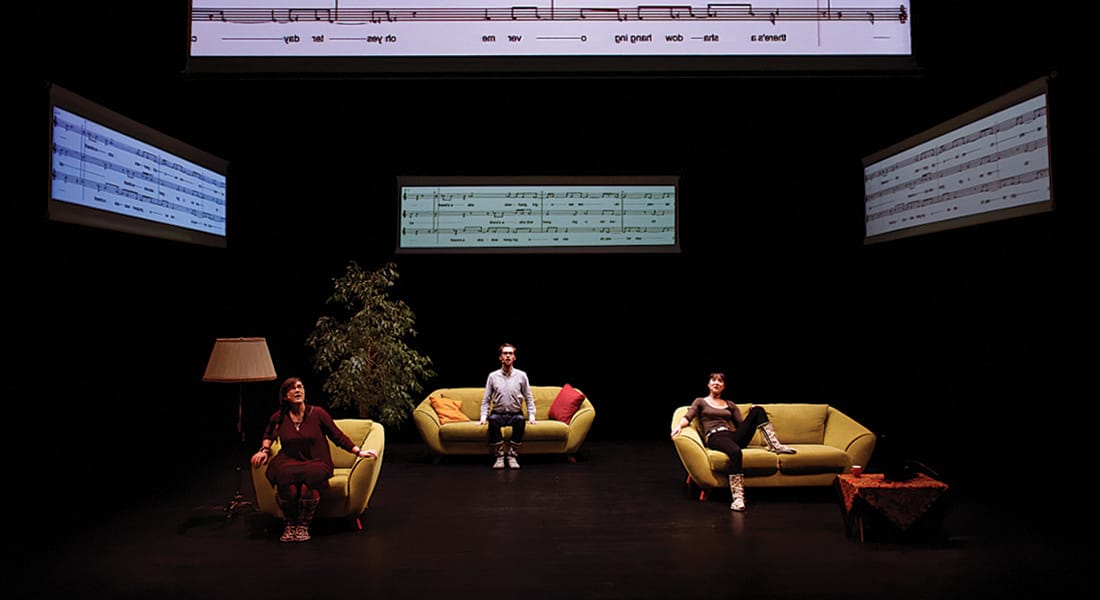
Timing shifts authority on stage. The performer does not fully determine pacing; system response participates in shaping rhythm and tension. Silence becomes infrastructural rather than purely psychological. When language is generated live, the interval between prompt and output becomes part of the performance’s architecture. Consumer AI platforms are engineered to minimize visible delay in order to simulate fluency. Dorsen’s work instead keeps mediation legible. Response time is shown to be conditional and shared. Latency becomes dramaturgy.
Latency as Environmental Intelligence
If Dorsen stages latency as dialogue, OpenEndedGroup spatializes it. Founded by Marc Downie and Paul Kaiser, the collective works at the intersection of dance, computation, and immersive projection. Their installations and performances employ motion capture and real-time rendering systems that interpret human movement and generate visual response.
Gesture is captured, translated algorithmically, and returned as light, image, or spatial transformation. The response unfolds in near real time, though never without mediation. Action and output are coupled, but not fused. Tracking systems operate through predefined thresholds and parameters. Recognition depends on configuration. What appears seamless is structured by computational limits and decision rules.

This logic extends beyond the gallery. In biometric authentication, autonomous vehicles, and surveillance systems, response time governs classification and access. Speed often signals certainty; delay can register as ambiguity. OpenEndedGroup’s environments render that structure perceptible. The space responds—but on the basis of system interpretation. Latency here is not spectacle. It is the condition of interaction..
Latency as Kinesthetic Feedback
Myriam Bleau’s performance systems make computational response tangible. In Soft Revolvers (2014), she performs with a set of translucent, illuminated discs that function as both instrument and interface. Each object contains embedded sensors that track rotation and gesture, transmitting data to custom software that generates and modulates sound in real time.
Movement is translated into signal. Signal becomes audio output. The response is immediate but mediated through software interpretation. Unlike acoustic instruments, where vibration directly produces sound, Bleau’s system depends on computational mapping. Gesture must be read, processed, and rendered.
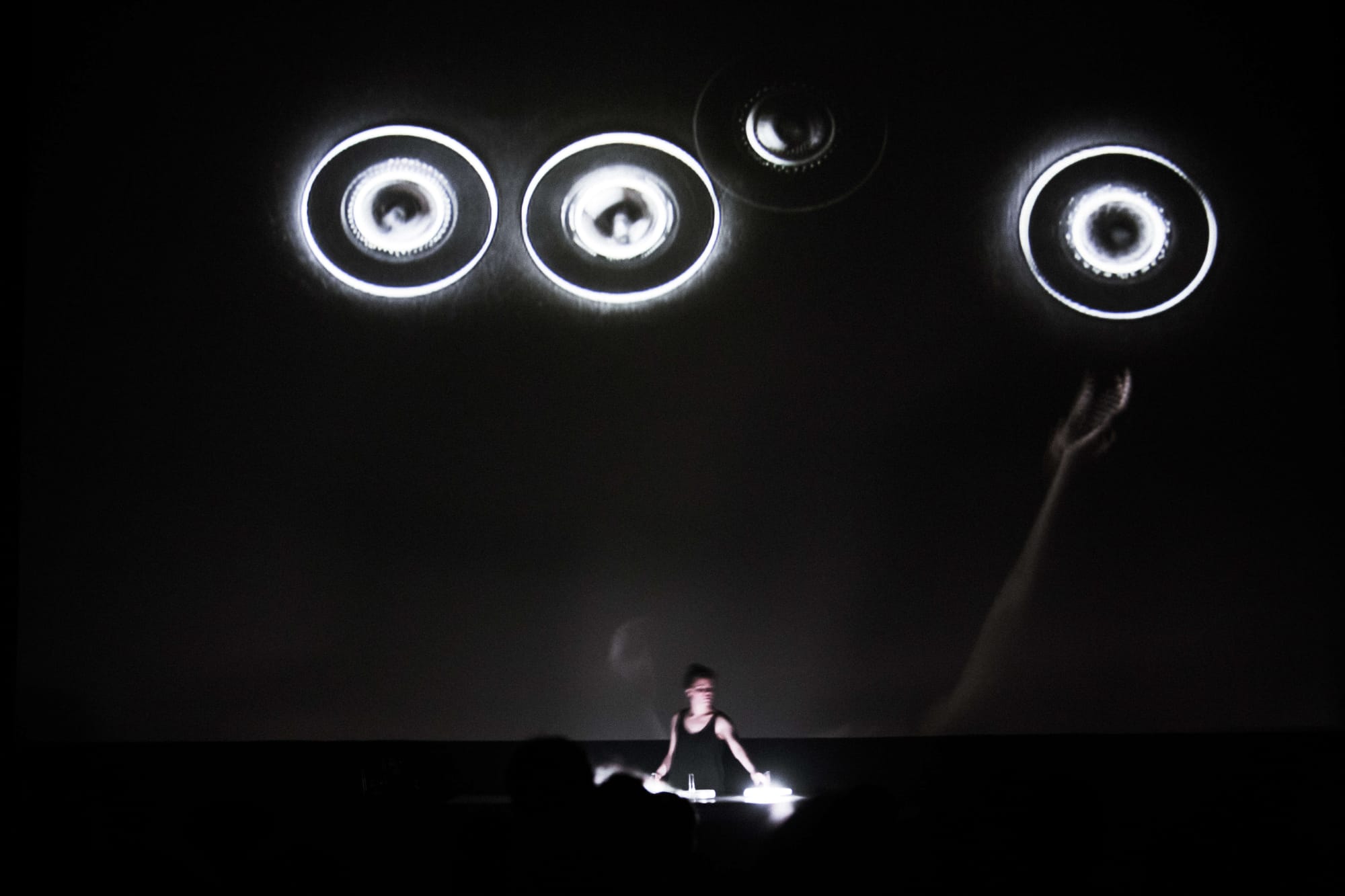
That interpretive layer structures timing. The performer adjusts not only to rhythm and composition, but to the responsiveness of the system itself. Expressivity emerges from the interplay between body and computational response.
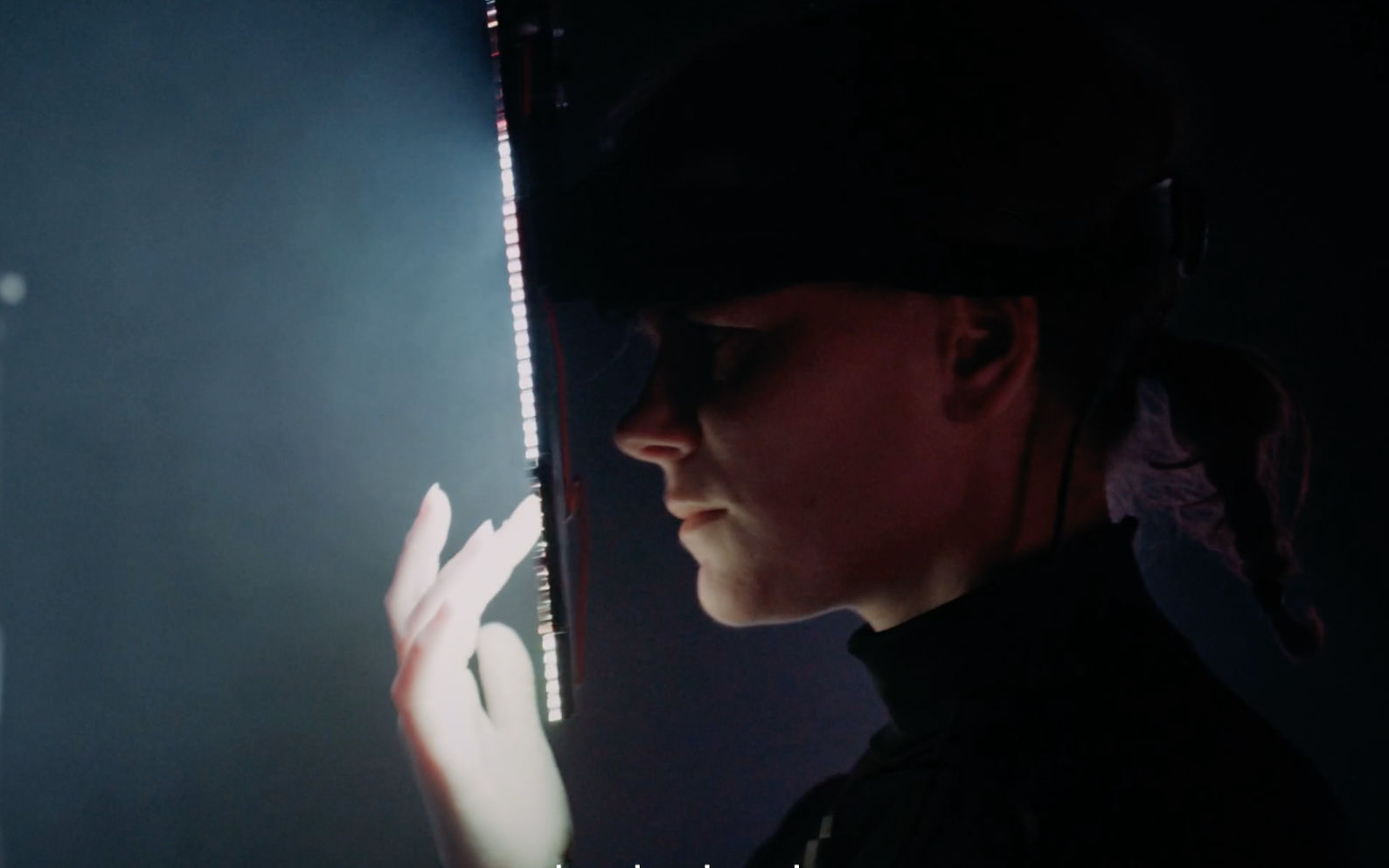
In Second Self (2024), created with Nien Tzu Weng, Bleau extends this exploration of responsive systems through portable interactive LED screens. Inspired by Sherry Turkle’s concept of the “second self,” the work treats the interface as a bodily extension. Each gesture alters sound and visual output in real time, staging an audiovisual dialogue between human movement and technological mediation.
Here, latency is not framed as delay but as the condition of exchange. Timing shapes interaction, and interaction shapes authority.
Timing as Power
Across these practices, latency is not inefficiency. It is structure. In technical discourse, low latency is framed as progress. Edge computing reduces network delay by bringing computation closer to users. High-frequency trading firms compete on microseconds. AI inference optimization accelerates model response times. In many contexts, faster systems gain competitive advantage. Performance and computational installation complicate that narrative. Rather than eliminating delay, they foreground mediation. Response time becomes visible. Interaction is shown to be organized by timing.
Who receives immediate feedback? Who waits? Who determines the pace of exchange?
By foregrounding computational timing, Dorsen, OpenEndedGroup, and Bleau shift attention from output to responsiveness. The encounter becomes a study of how systems listen, process, and reply. Latency shapes rhythm, choreography, and perception. It also influences how authority is read. As real-time AI increasingly mediates speech, movement, and image, timing extends beyond performance. Every “real-time” interaction is structured by decisions about speed.