Nxt Museum’s Still Processing is a group exhibition that interrogates the mechanics of perception in a mediated world — a space where datasets and algorithms no longer sit behind screens but directly shape what we see, hear, and feel. Curated by Belgrade-born Bogomir Doringer and on view at Nxt Museum in Amsterdam from 7 February to 5 October 2025, the exhibition assembles seven contemporary artists whose works make tangible the often invisible processes of image generation, transformation, and interpretation.
At its core, Still Processing operates with a dual premise: first, that technological systems — from compression algorithms to AI synthesizers — materially shape the images and sounds circulating in our culture; second, that human sensory mechanisms themselves are active processors of information, constructing meaning through a complex interplay of cognition, expectation, and sensation.
The Exhibition’s Structural Logic: Algorithm and Embodiment
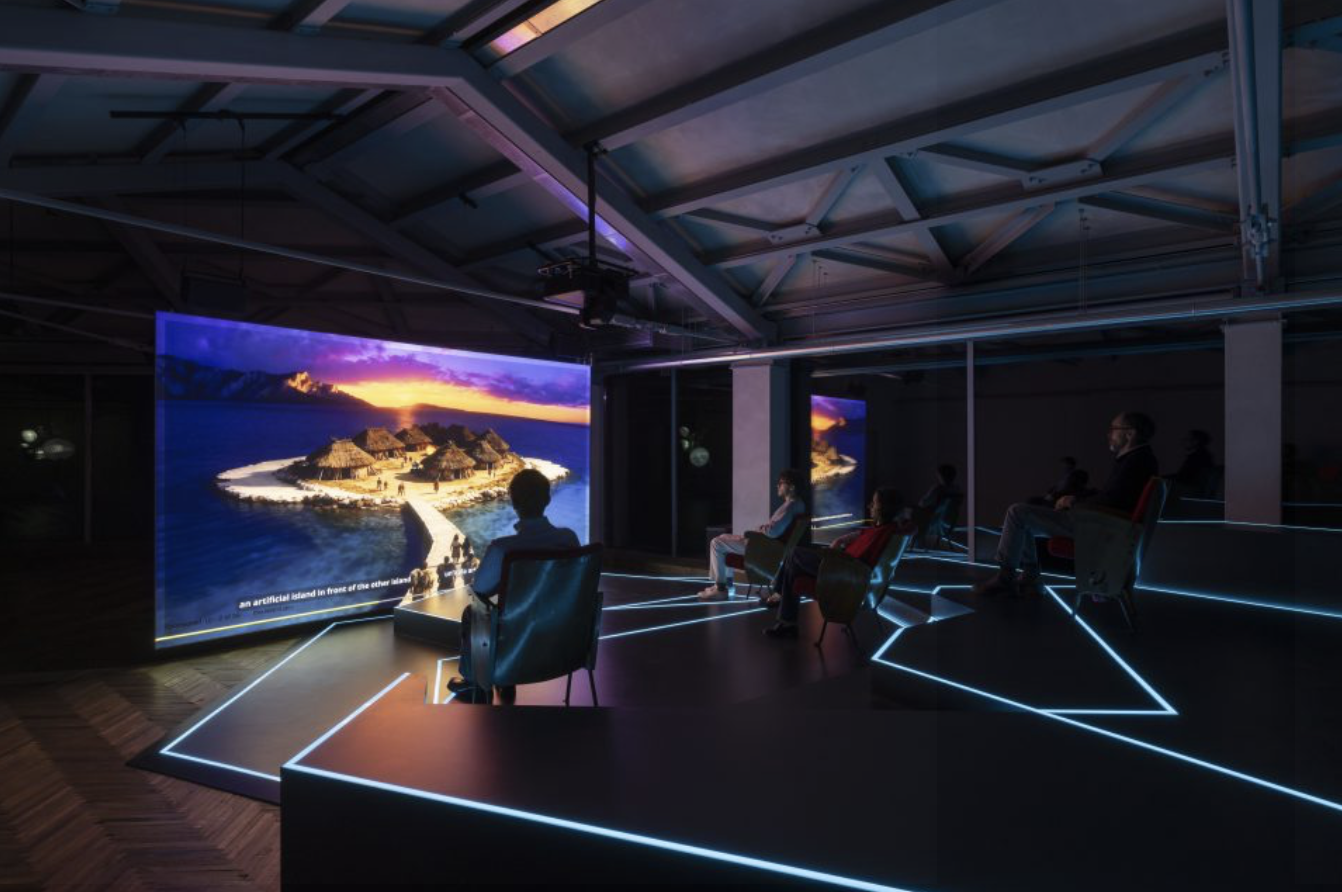
Rather than presenting a linear narrative, Still Processing is organized around staged encounters with work that foregrounds computational logic as a shaping force. Across seven large installations and transitional spaces, visitors move through perceptual registers where light, sound, motion, and digital representation are not just exhibited but activated.
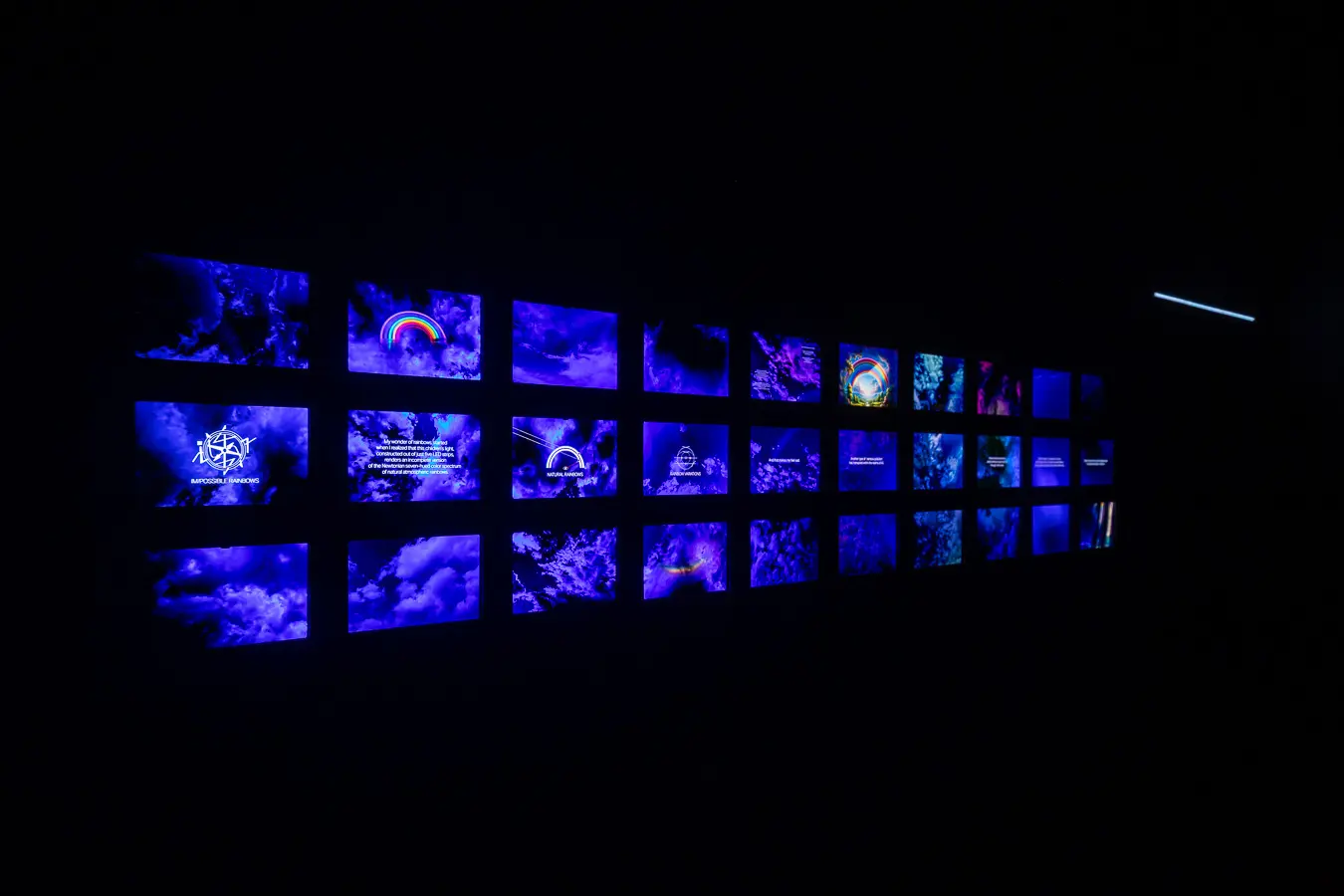
A foundational strand in the show is Rosa Menkman’s suite of research-based works, which trace pivotal moments in the history of image technologies. Spanning pieces such as The Collapse of PAL and IM/POSSIBLE RAINBOWS, Menkman’s practice unpacks how standards, compression, and visual protocols influence what is preserved — and what is lost — when images are encoded, transmitted, and decoded digitally. These works perform a kind of archaeology of visual media, revealing the compromises and hidden biases that underlie seemingly neutral technical systems.
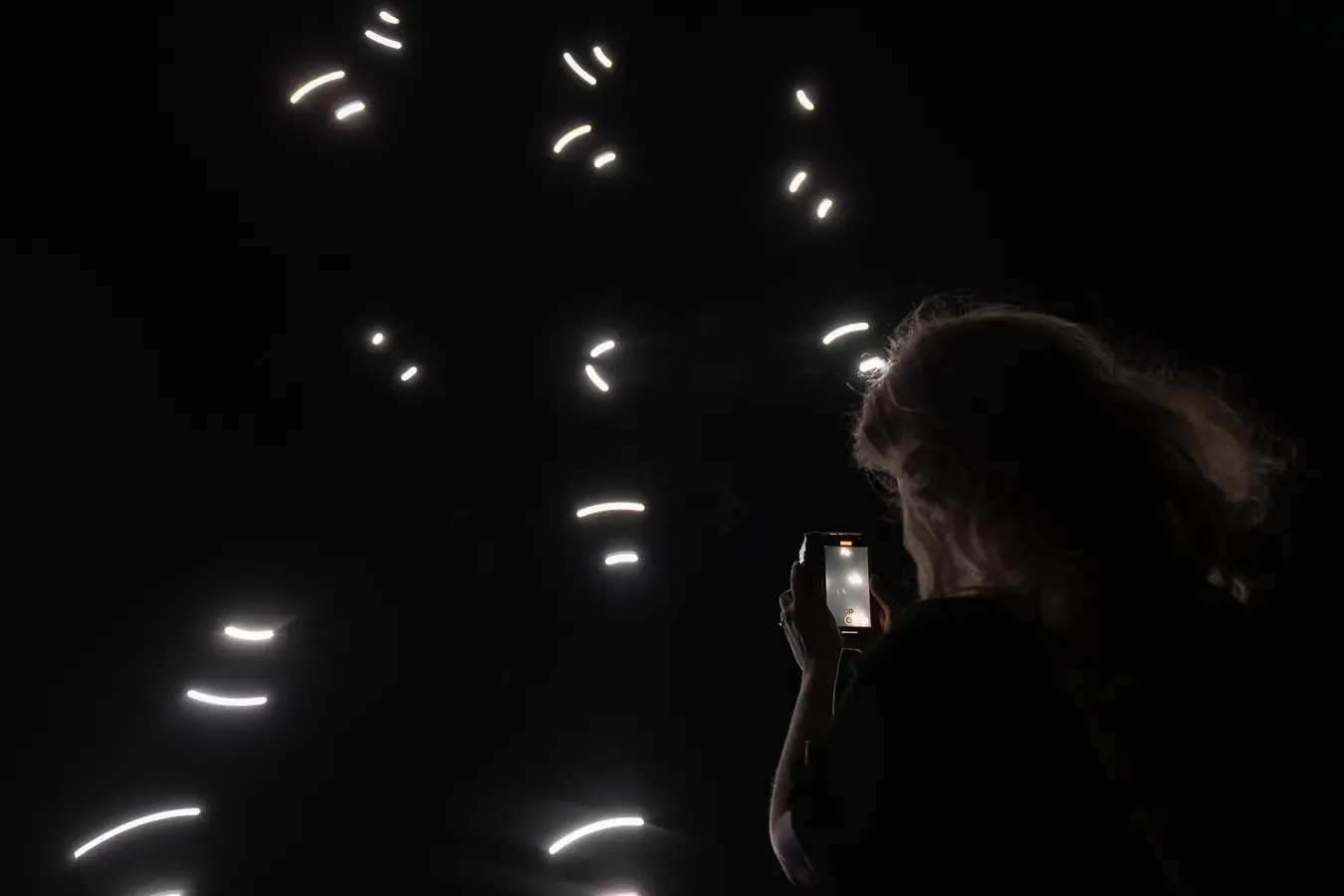
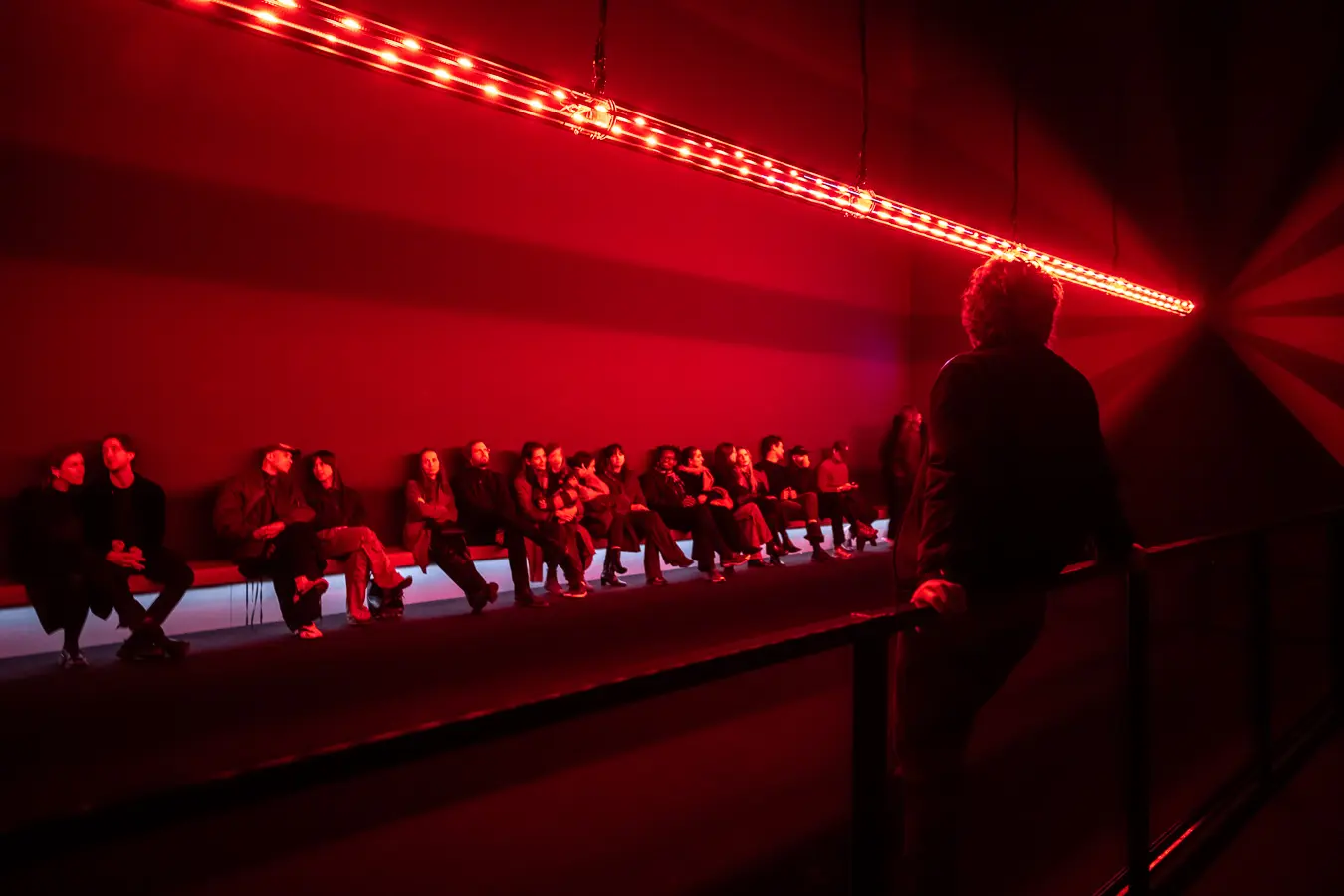
The exhibition also places computational aesthetics in dialogue with the body’s physical reception of stimuli. Gabey Tjon a Tham’s Red Horizon uses kinetic pendulums and light to generate patterns that produce afterimages on the viewer’s retina — a direct intersection of mechanical motion and human visual memory. Lumus Instruments’ Polynode XI similarly translates audiovisual data into an ambient field that continually evolves in response to environmental cues, collapsing the subject/object distinction between viewer and machine signal.
Between Synthetic Worlds and Sensory Conditions
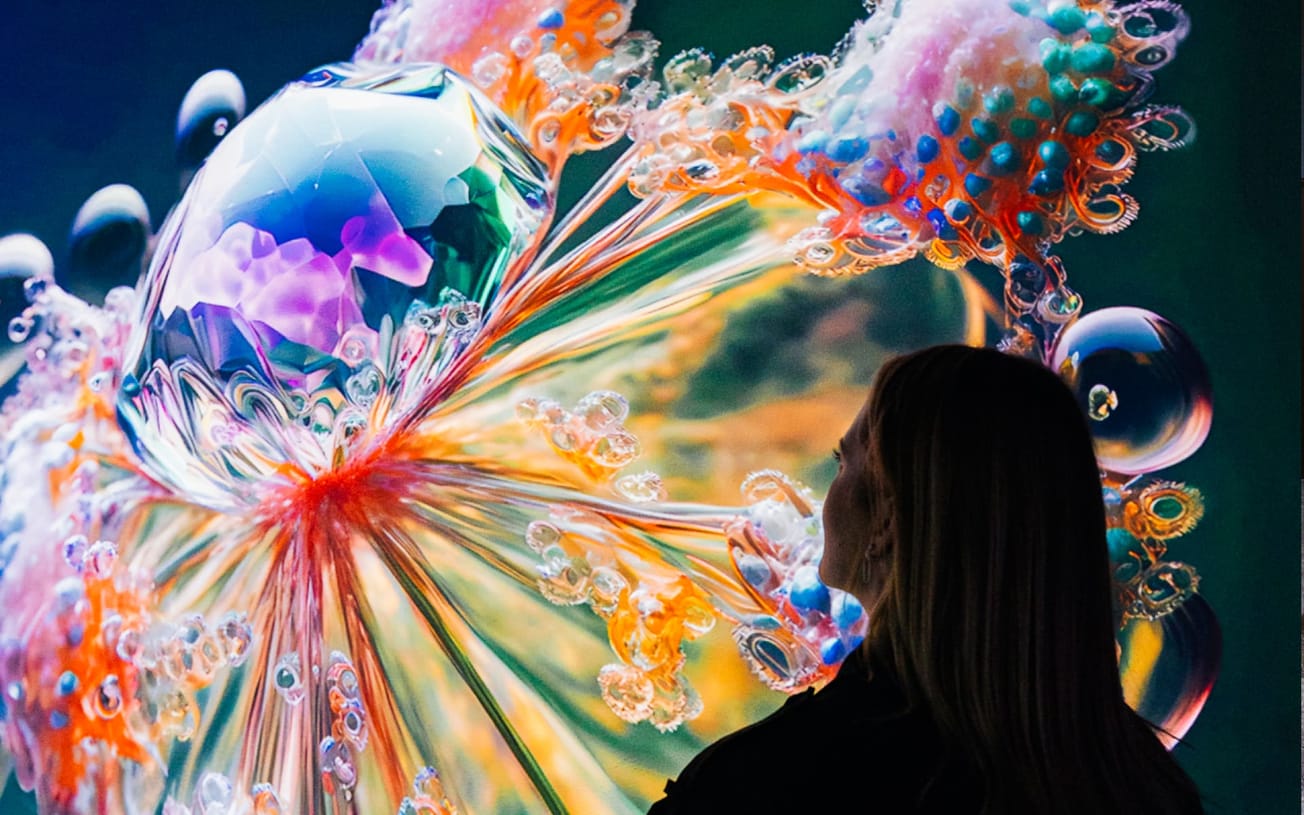
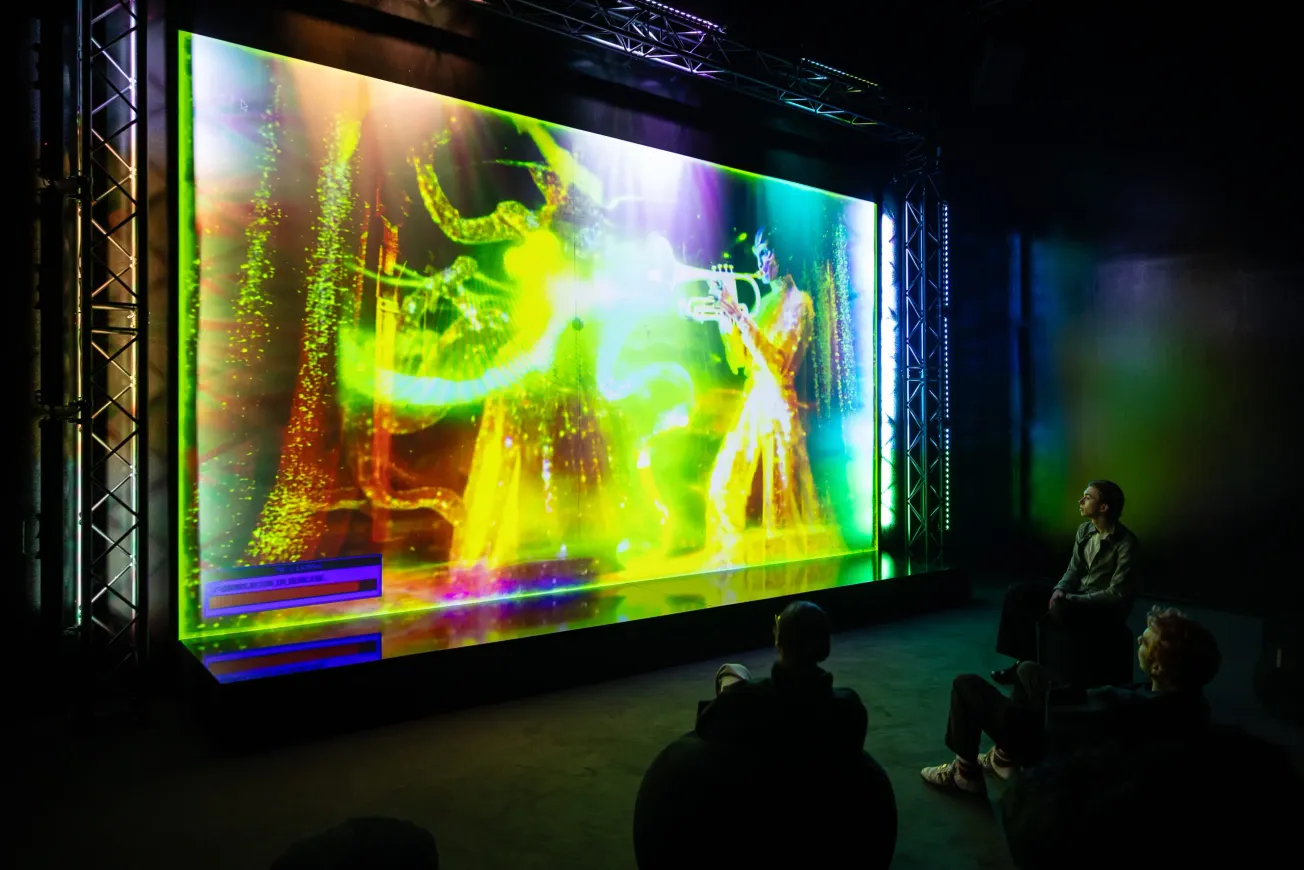
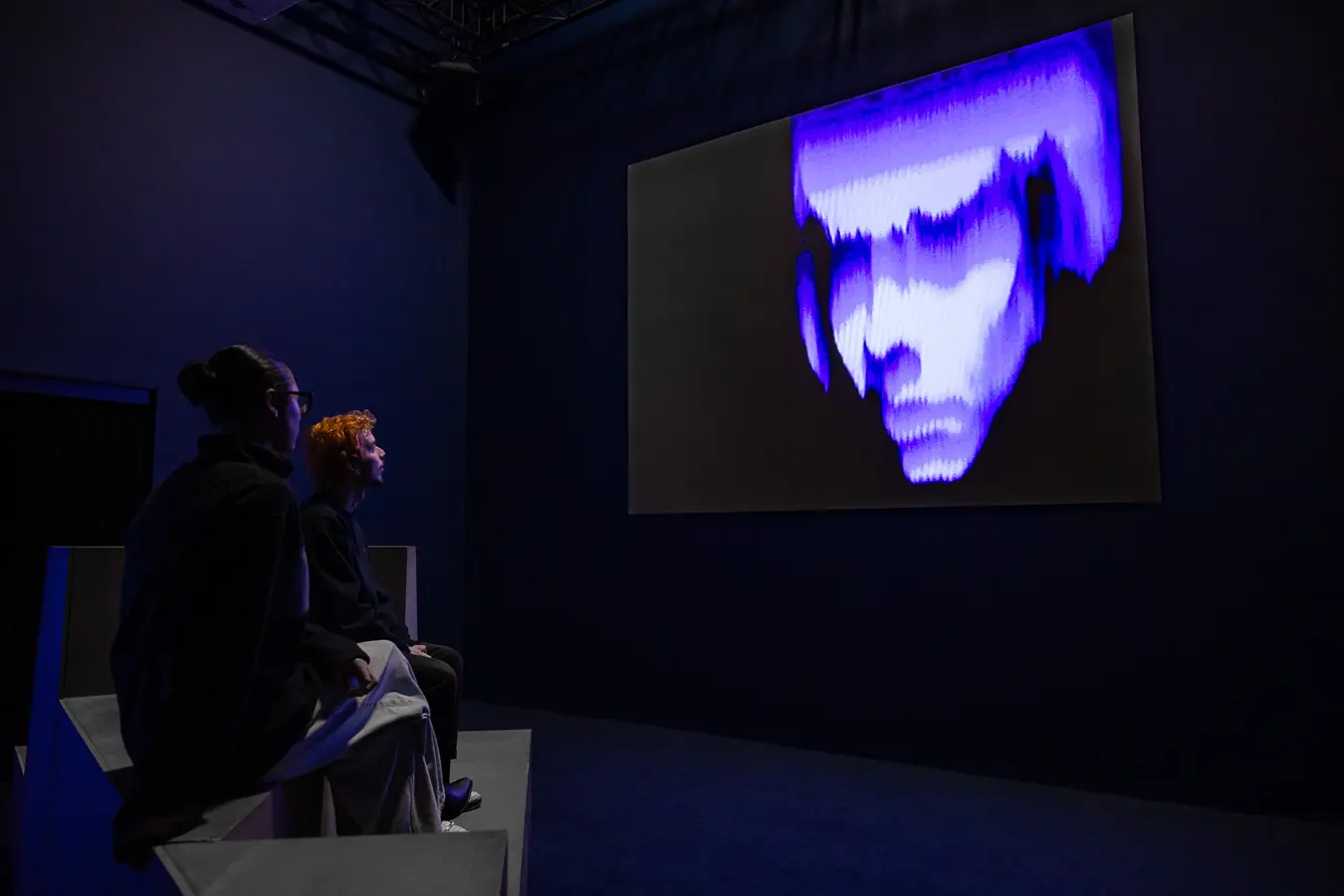
In several works, the technologies of image and sound generation are more than instruments — they become subjects of inquiry. Geoffrey Lillemon’s Simulation in Blue situates AI-generated figures in an evolving audiovisual environment, where CGI and algorithmic choreography produce a hybrid form that defies conventional categorization.
Using tools associated with both entertainment and generative art, the piece raises questions about authorship and agency in synthetic media.
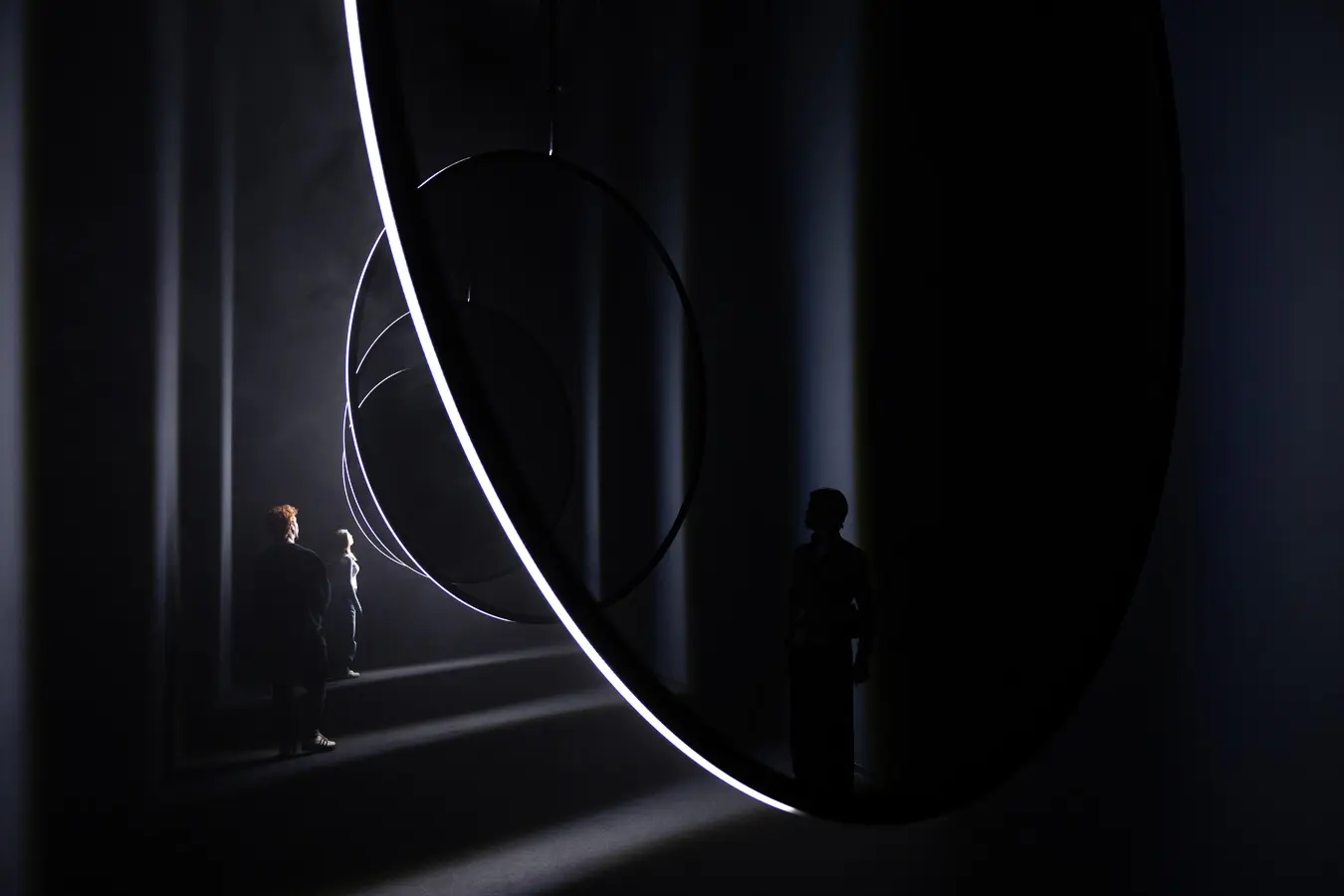
A contrasting spatial intervention comes from Children of the Light, whose ALL-TOGETHER-NOW creates a constellation of floating luminous rings inspired by the first iconic image of a black hole. Here, the interplay of light and spatial perception foregrounds the limits of visualization — especially when confronting phenomena that sit at the margins of human sensory capacities.
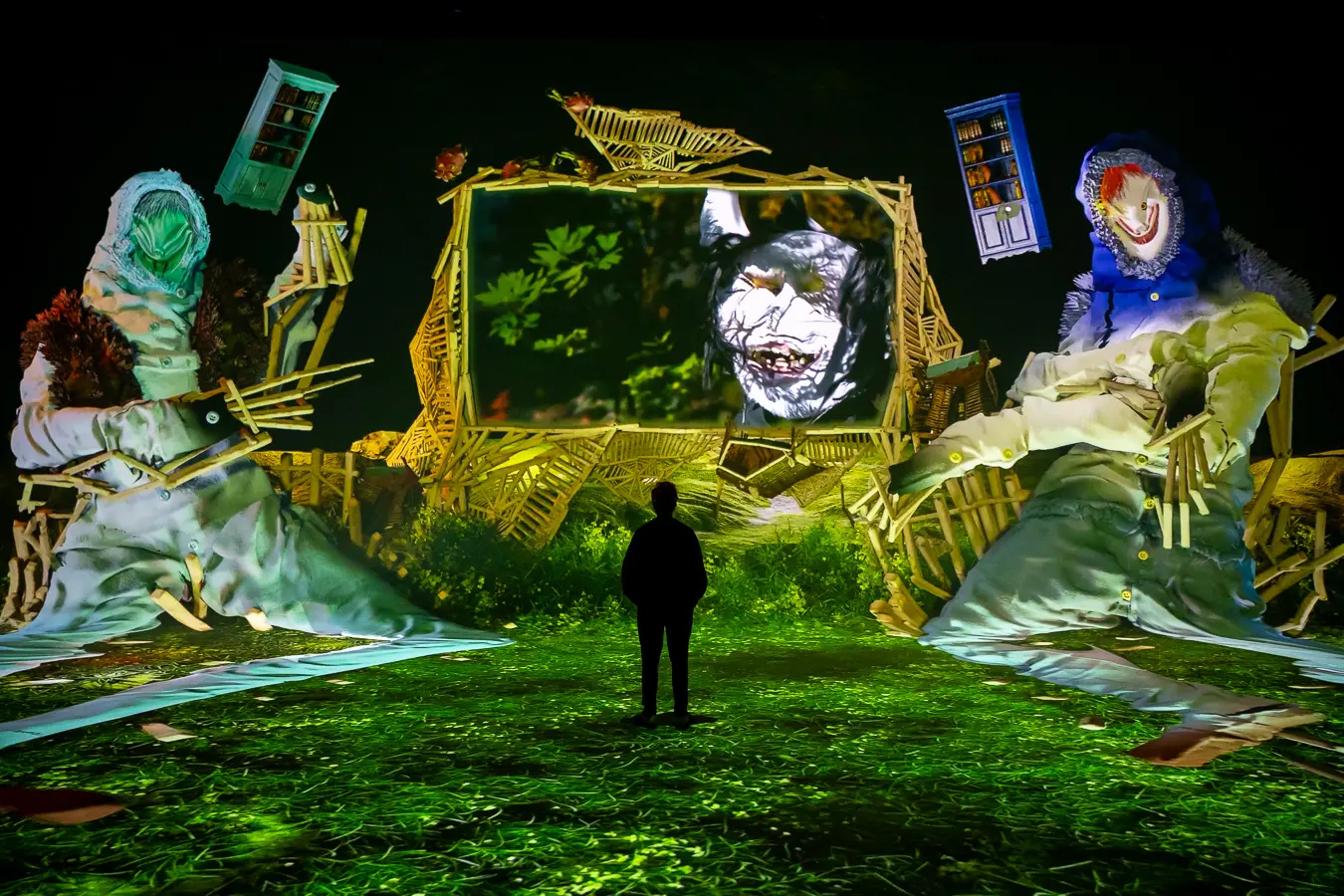
The exhibition’s commissioned project by Balfua, The Slollaleia, occupies a dedicated stage in the museum, deploying AI and digital world-building to evoke a speculative ecology of synthetic beings. Drawing on animation and algorithmic behaviour, this work positions machine logic not as an external force but as a generative partner in the creation of new forms.
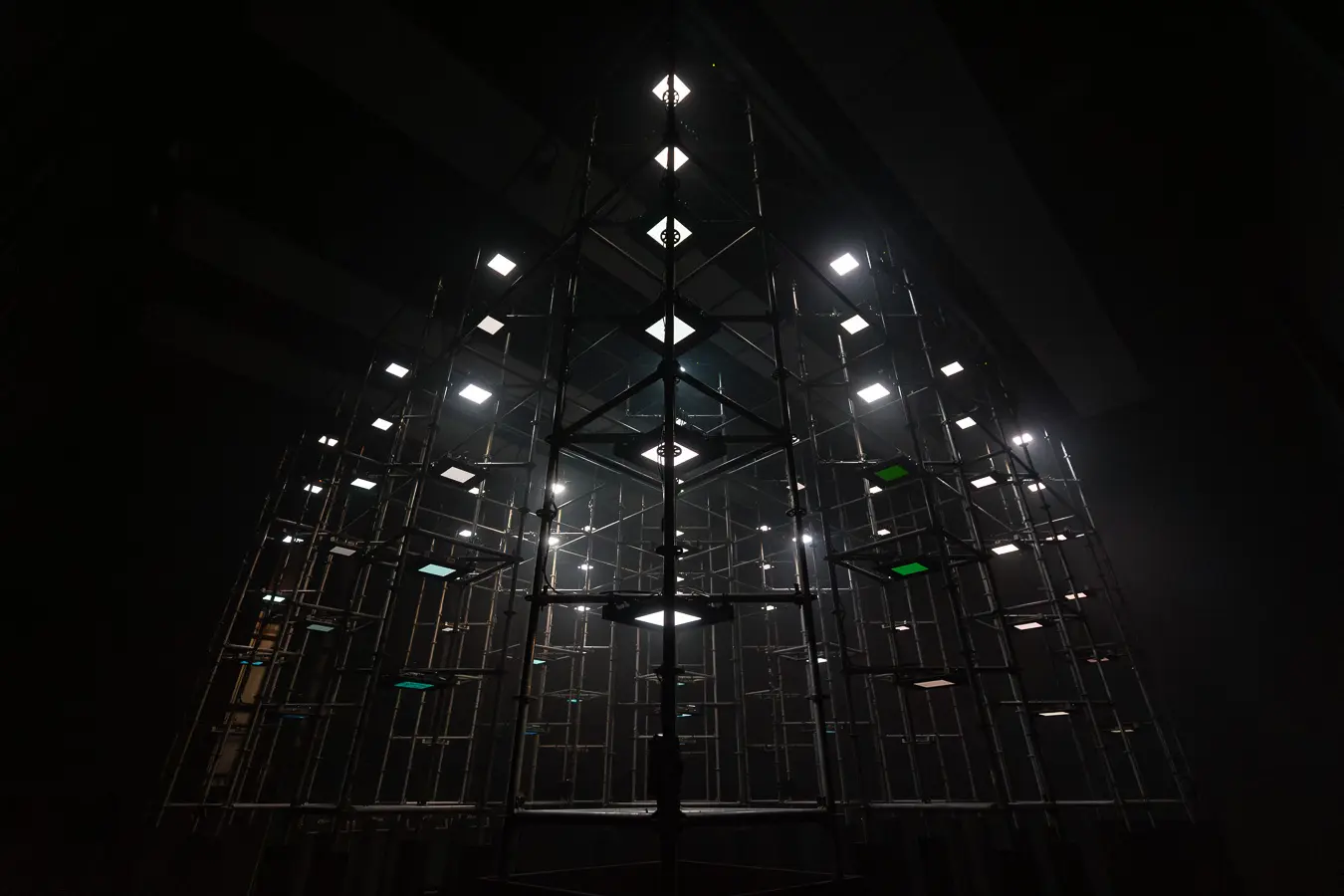
Finally, Boris Acket’s Duration uses sound and light in a room-scaled structure that questions our experience of time itself. Instead of linear sequencing, the installation generates patterns that expand and collapse in real time, revealing how perceptual time — like image processing — is contingent, constructed, and continually re-negotiated.
Processing as Reflection, Not Metaphor
What distinguishes Still Processing from more typical tech-centric exhibitions is its insistence on processing as an active condition rather than a metaphor. The works do not simply illustrate technological influence; they materialize the act of translation between encoded signals and human interpretation. This emphasis on material processes — whether through algorithmic generation, kinetic motion, or sensory feedback — foregrounds the active, iterative nature of perception itself.
Across the exhibition’s trajectory, visitors can perceive how machine logic does not operate in isolation: it infiltrates standards, expectations, and even cognitive habits. Likewise, the human nervous system is shown not as a passive receptor but as part of a continuous loop of interpretation and re-interpretation.
Still Processing thus situates the question of meaning not in static representation but in ongoing coupling between human systems and technological media. While the works diverge in media and mode — from archival probes into compression histories to speculative simulations of imaginary ecosystems — they share a focus on the seams where processing becomes visible, where data ceases to be inert and begins to shape experience. For a contemporary audience attuned to the ubiquity of digital mediation, the exhibition provides frameworks for understanding how meaning remains contingent, negotiated, and still very much under construction.