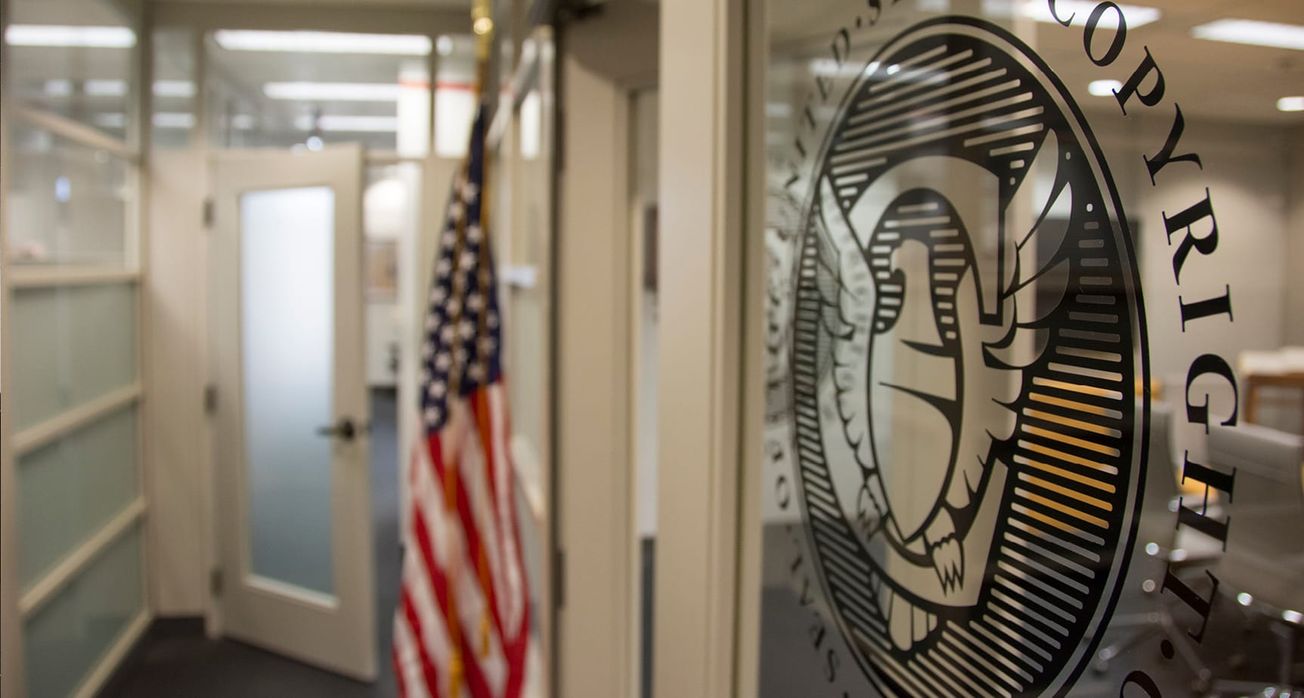
In a newly released report, the U.S. Copyright Office has clarified how U.S. copyright law applies to works created using generative artificial intelligence, reinforcing that copyright protection requires sufficient human creative control over the expressive elements of the work.
Published in January 2025 as Part 2 of the Office’s ongoing study on artificial intelligence, the report focuses specifically on the copyrightability of works that incorporate AI-generated material. Its central conclusion is consistent with prior Office decisions: content generated entirely by an AI system, without sufficient human creative input, is not eligible for copyright protection under existing law.
Crucially for designers, artists, and creative technologists, the report draws a distinction between using AI as a tool and delegating authorship to an automated system. The Office explains that simply entering prompts or selecting from AI-generated outputs does not, by itself, meet the threshold for human authorship. To qualify for protection, a human must exercise creative control over the expressive elements of the work—such as through selection, arrangement, modification, or integration of AI-generated material into a broader human-authored composition.
The guidance does not introduce new law, but it consolidates and formalizes principles that have emerged through recent registration decisions and public consultations. For creative professionals working with generative systems, the implications are practical rather than theoretical: copyright claims will depend on how AI tools are embedded within a broader creative process, and how clearly human contribution can be demonstrated.
The Office also emphasizes that its conclusions are grounded in current U.S. copyright statutes, leaving broader policy questions—such as whether the law should evolve to address AI authorship—to Congress. Additional parts of the Office’s AI study, including analysis of training data and fair use, are expected to follow. For a creative industry increasingly shaped by generative systems, the report underscores a clear message: AI may accelerate production, but authorship—and the legal rights attached to it—still hinges on human agency.