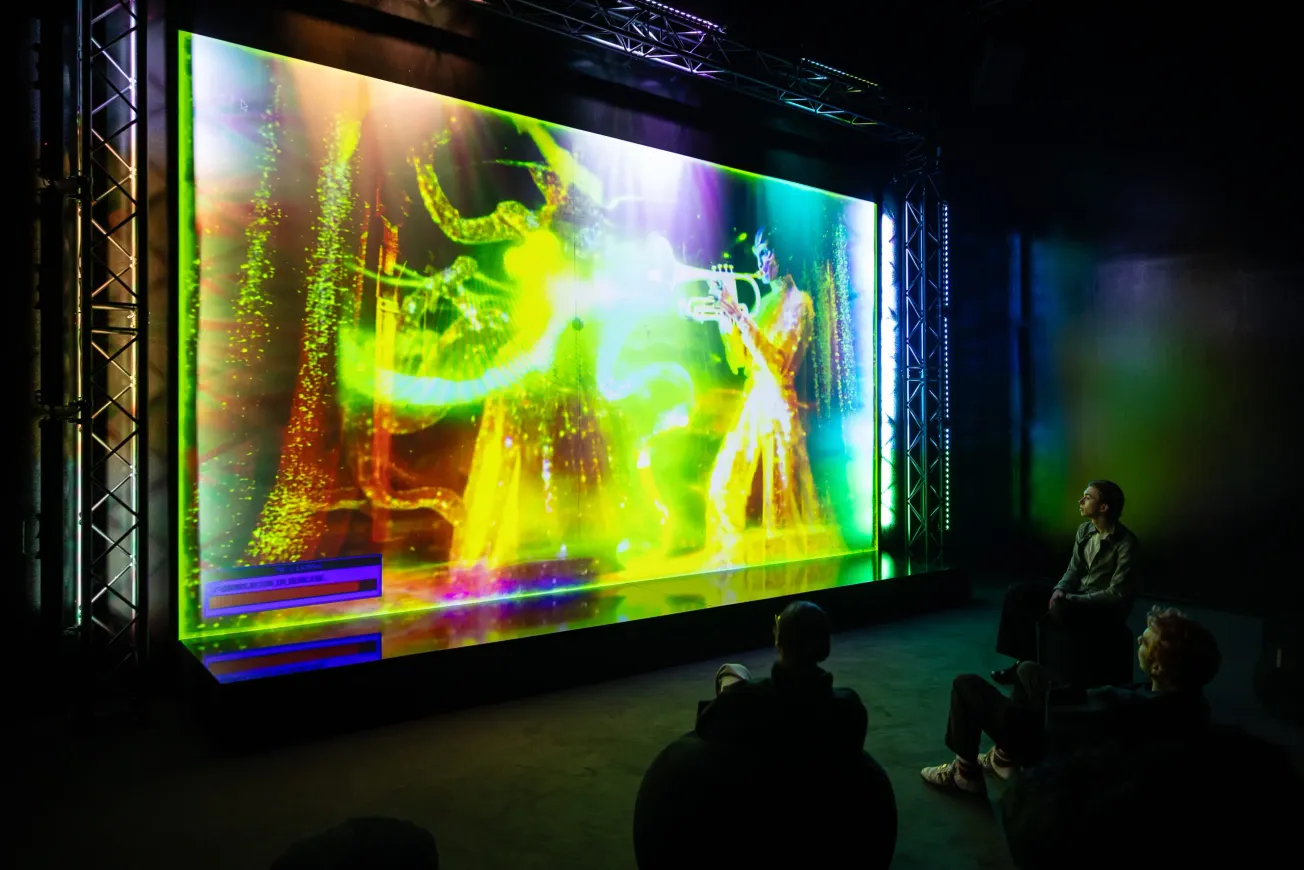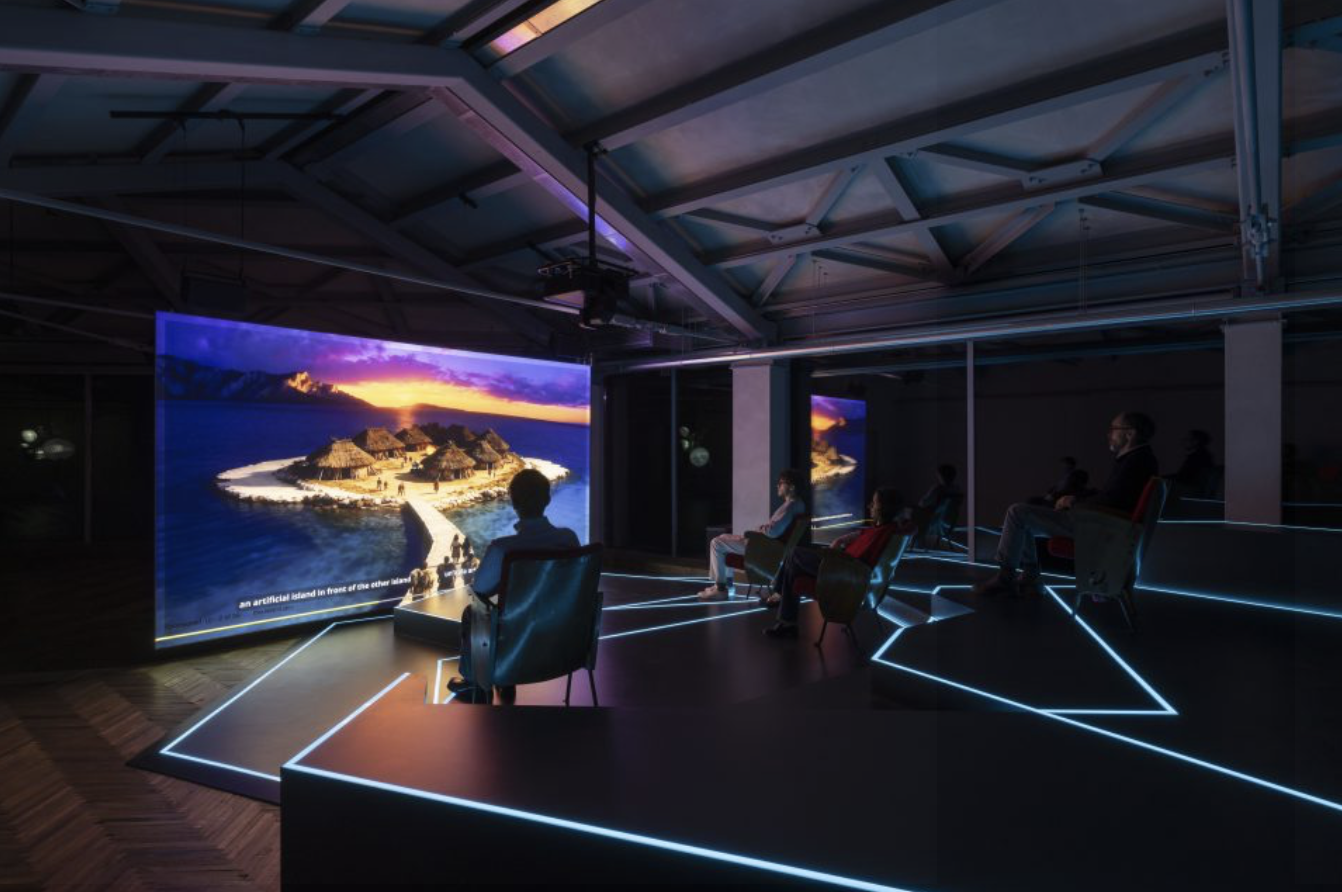
The Island is a site-specific project by Hito Steyerl, presented at Osservatorio, the exhibition space overlooking Milan’s Galleria Vittorio Emanuele II. Developed in close dialogue with the architecture and symbolic charge of its location, the work extends Steyerl’s sustained inquiry into how power operates through images, platforms, and infrastructures. Rather than isolating content from context, The Island treats the exhibition site as an active system—one shaped by visibility, circulation, and economic control.
The project can be read as mobilizing the island not as a place of retreat or autonomy, but as an operational condition. Across contemporary geopolitics, finance, and technology, islands function as zones of exception: special economic areas, offshore data centers, gated territories, and logistical enclaves. Steyerl’s installation foregrounds questions around how these spaces are produced, who benefits from their separation, and how their apparent isolation masks deep integration with global systems.
Osservatorio as an Active Infrastructure
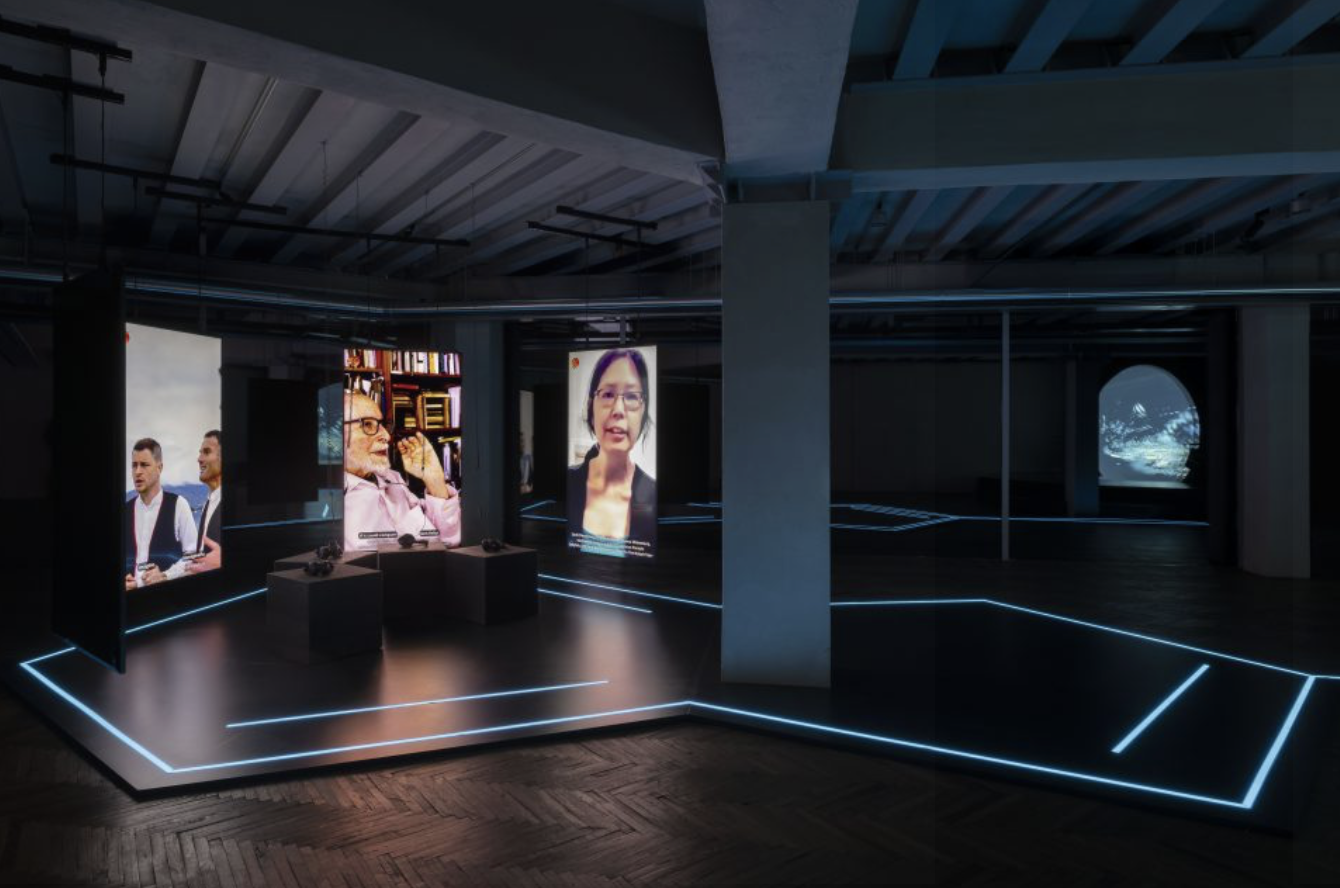
Osservatorio’s position above the Galleria is central to the work. The space is elevated, transparent, and carefully controlled—neither fully public nor conventionally institutional. Below, the Galleria operates as a dense node of luxury retail, tourism, and urban spectacle. Rather than attempting to neutralize this setting, The Island can be read as leveraging it to foreground how architecture structures perception. The installation situates viewers in a position of observation that echoes contemporary systems of oversight: platforms that promise openness while managing access, attention, and value behind the scenes. Glass walls, sightlines, and spatial thresholds function as material conditions through which the work is encountered, situating visitors within a layered environment of visibility and exclusion.
This approach aligns with Steyerl’s broader practice, in which exhibition spaces are frequently treated as operative environments rather than neutral containers. At Osservatorio, the building’s hybridity—a cultural venue embedded within a commercial landmark—offers a case through which to consider how institutions participate in the systems they host.
The Island as a Logic of Separation
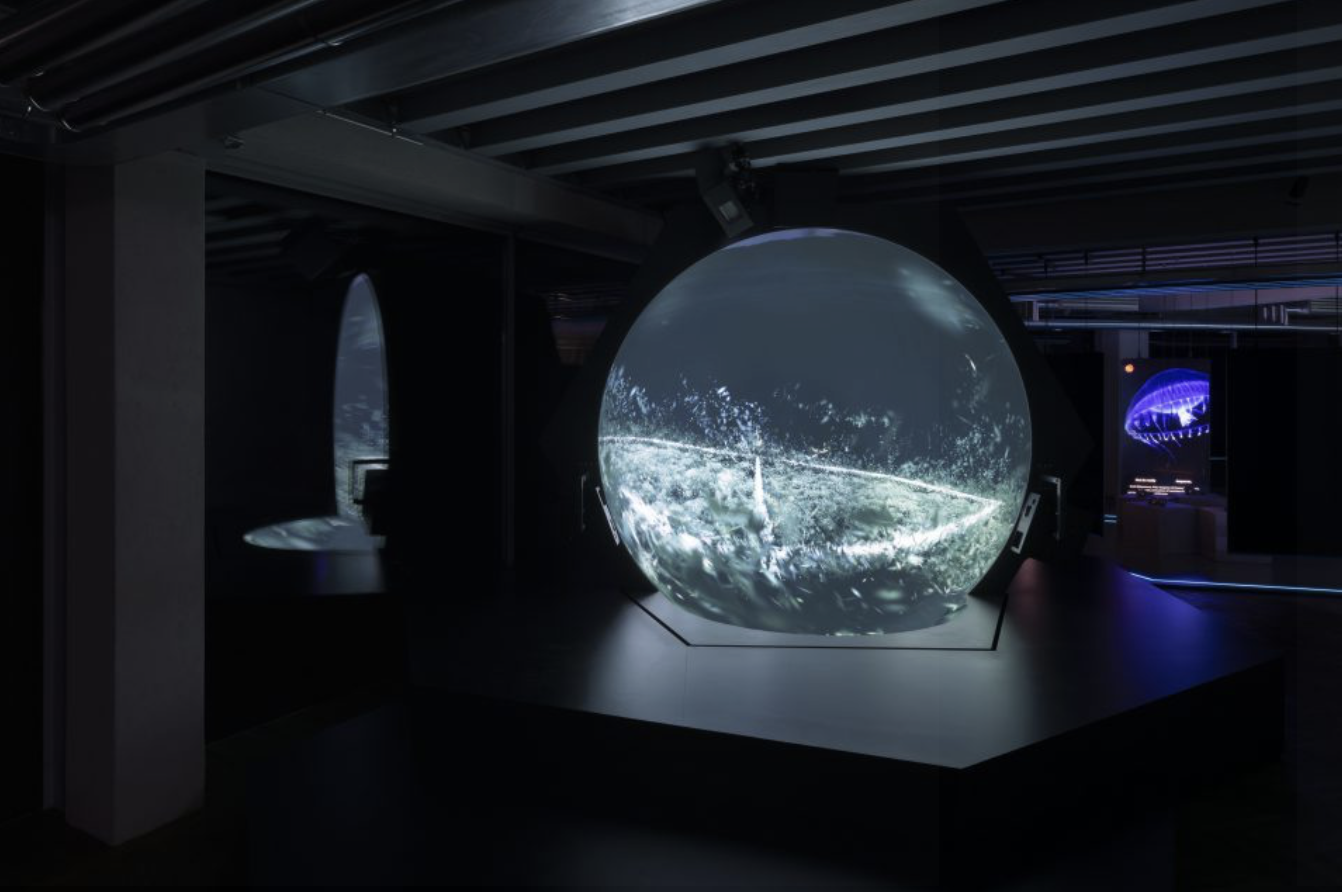
Rather than narrating a single story, The Island assembles fragments that can be read as pointing to separation as an infrastructural strategy. Visual and spatial elements emphasize enclosure, segmentation, and controlled access. The island emerges here as a logic through which contemporary power operates: carving out zones that appear autonomous while remaining tightly coupled to global flows of capital, data, and labor. Steyerl’s avoidance of linear explanation is consistent with her broader practice. The work does not present dashboards, speculative interfaces, or invitations to optimize or manage systems. Instead, it positions the viewer as an interpreter confronted with partial views and mediated perspectives—an experience that echoes how many real-world infrastructures function: opaque, distributed, and resistant to singular points of control. In this sense, The Island can be understood less as representation than as reenactment. Moving through the installation parallels forms of contemporary governance in which decisions are registered spatially and affectively, even as their mechanisms remain out of reach.
Against the Fantasy of Autonomy
The Island can be read as pushing against autonomy as a credible outcome. The island—often imagined as a refuge or self-sustaining unit—appears instead as a structure shaped by extraction and exclusion. This reading resonates within a technological landscape that frequently markets independence through platforms, automation, and smart infrastructures, even as risk and responsibility are redistributed downward.
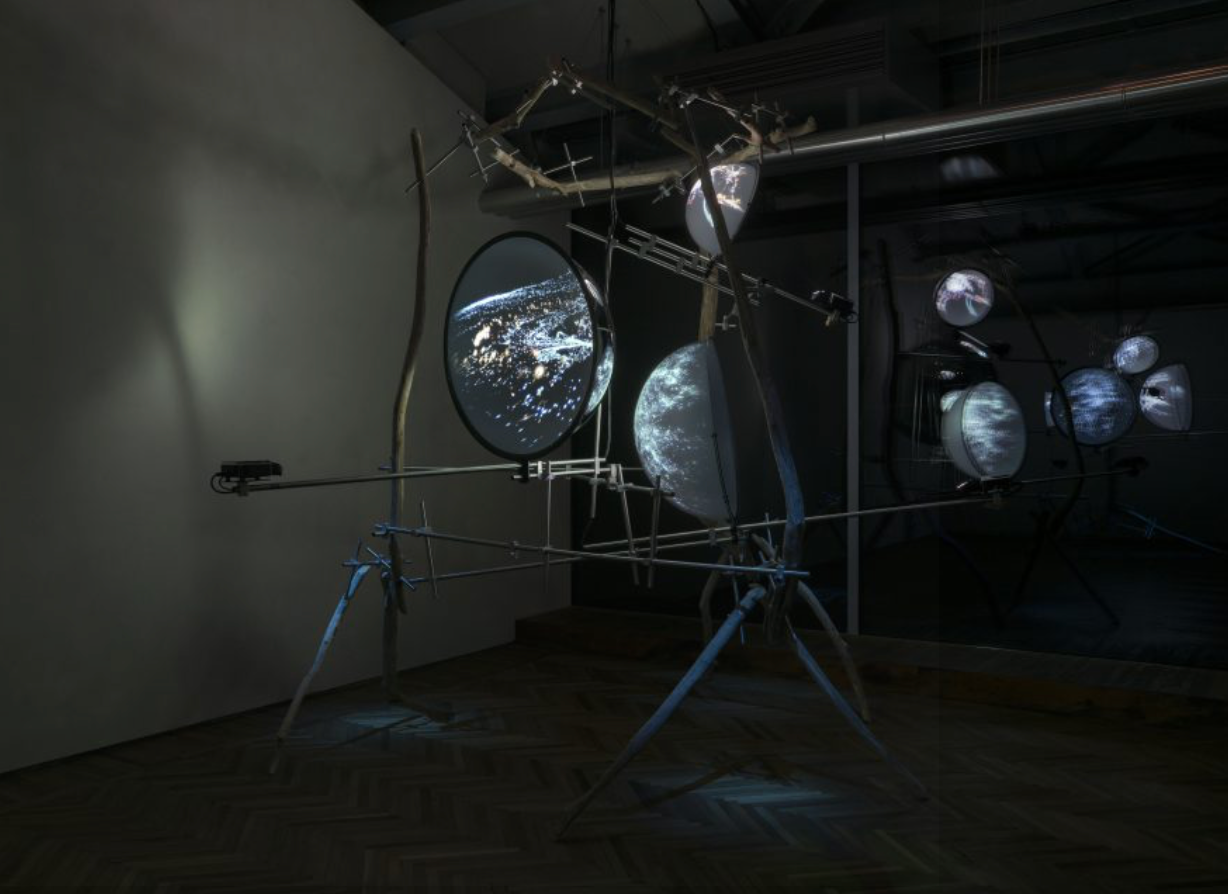
At Osservatorio, the elevated viewpoint functions as a spatial condition through which this logic becomes legible. From above, the Galleria’s flows appear orderly and contained, while the distance of that perspective underscores how decisions made at one level shape experiences at another. The spatial arrangement invites consideration of who sees, who decides, and who absorbs the consequences of systemic design choices. The work’s restraint is evident in what it withholds. The Island does not propose alternatives or solutions, nor does it frame oversight as empowerment. Instead, it concentrates attention on the conditions through which separation is produced and normalized.
Creative Practice Under Conditions of Infrastructure
The Island can be understood as operating less as a statement than as a working example of how contemporary practice engages systems without visualizing or mastering them. The installation does not present speculative interfaces, data dashboards, or forms of performative transparency. Instead, spatial arrangement, restricted sightlines, and institutional framing shape how the work is encountered—reflecting the partial, indirect ways infrastructures are typically experienced.
This is especially legible in how agency is structured. Viewers are not invited to interact, optimize, or intervene; their role is largely limited to navigation and interpretation. Control remains present but displaced, embedded in architecture, access protocols, and perspective rather than explicit commands—a condition that echoes how many users encounter platforms, logistical networks, and governance systems. The Island offers a reference point rather than a solution. It shows how design can register systemic conditions without translating them into tools or outcomes. The exhibition functions as a kind of infrastructural cross-section, briefly exposing how visibility, elevation, and enclosure organize experience.
Situated within Osservatorio—a cultural venue embedded in a commercial landmark—the project brings cultural and economic infrastructures into the same frame. Rather than resolving this overlap, the work holds it in place, allowing institutional conditions to remain visible. In this sense, The Island aligns with a growing body of practice in which design is treated less as interface-making than as the arrangement of conditions under which interfaces, decisions, and futures take shape.