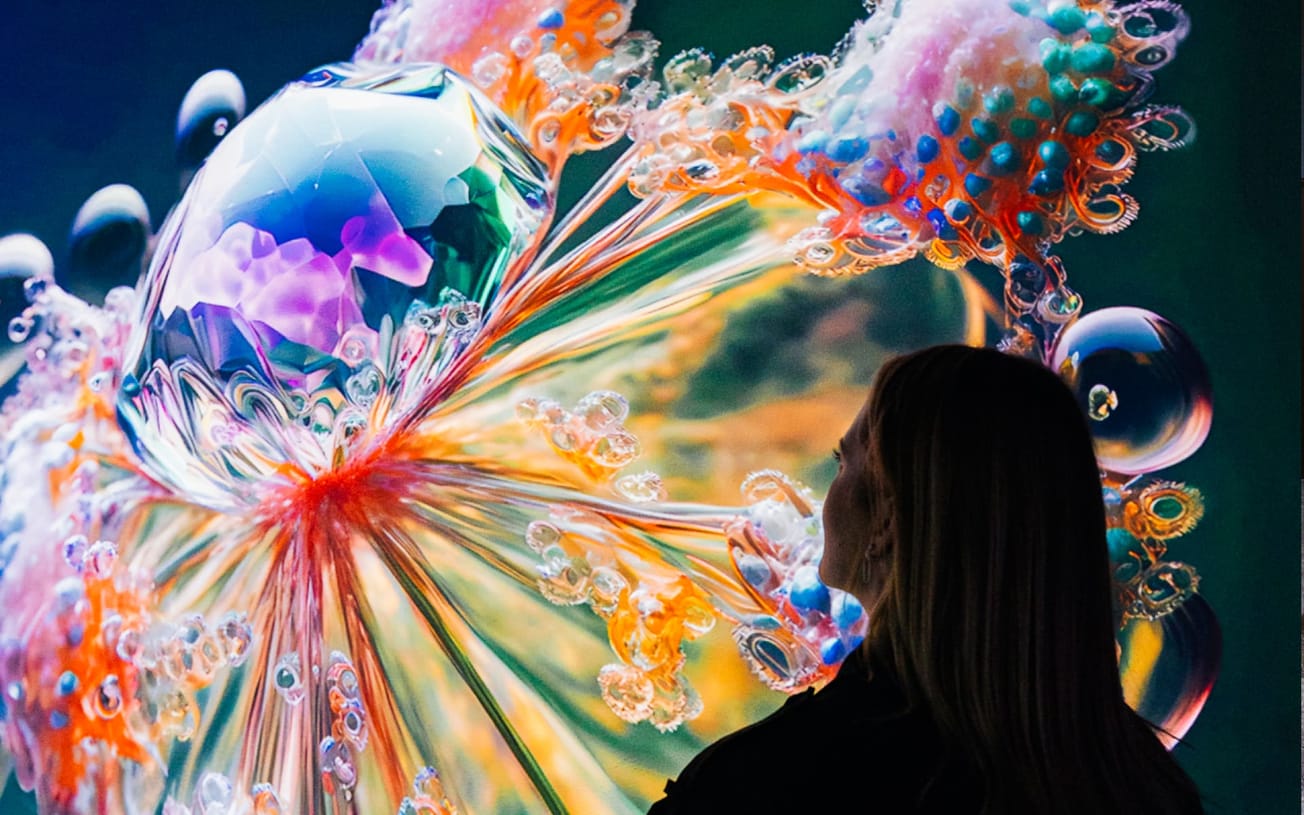
Inside Prague’s historic Old Town Market Hall, Signal Space has launched as a permanent venue dedicated to immersive and digital art. Its inaugural exhibition, ECHOES OF TOMORROW, assembles ten international artists and studios working across generative systems, laser environments, spatial audio, and data-driven visual media. On view through 31 March 2026, the exhibition unfolds as a sequence of large-scale installations embedded within the renovated hall.
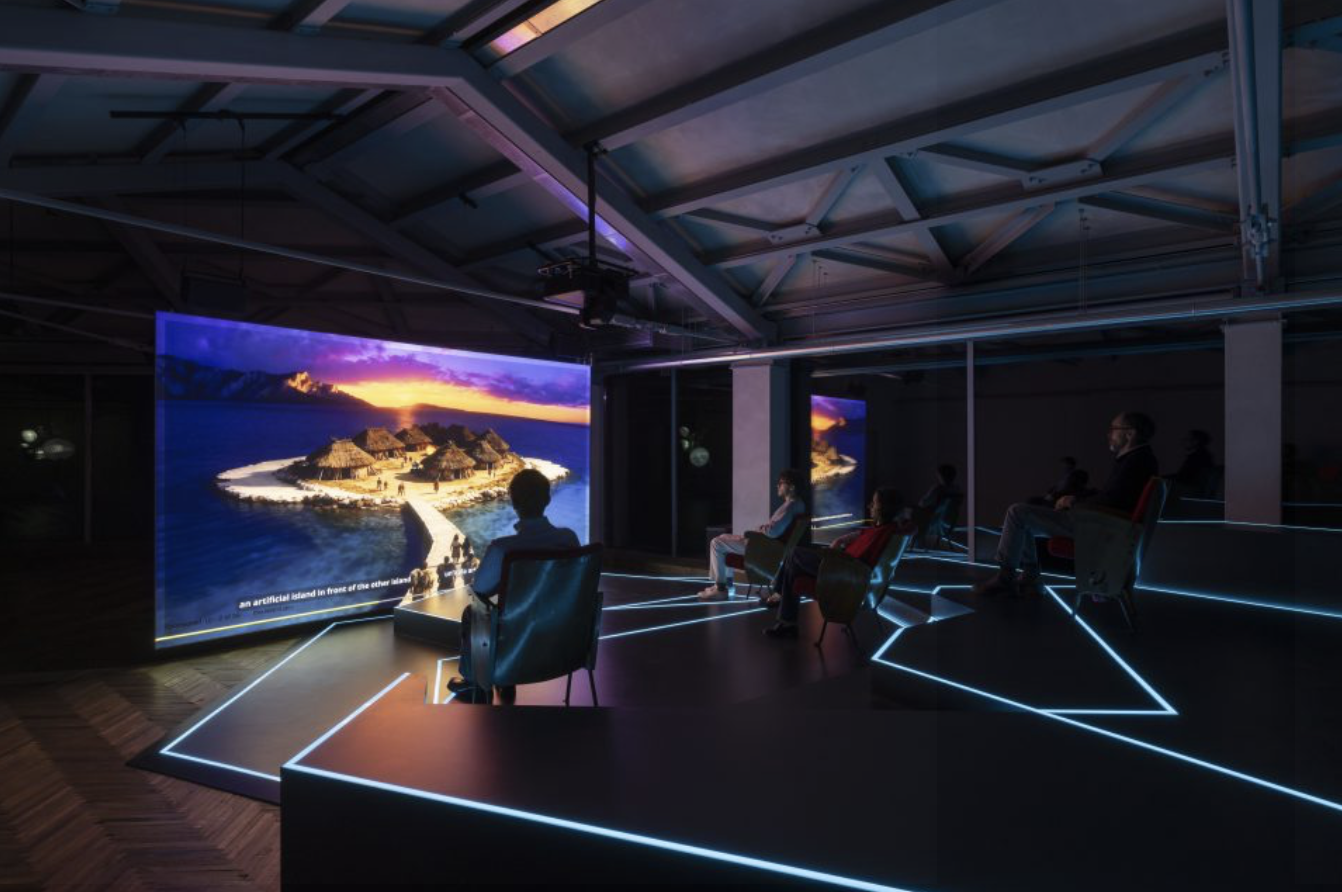
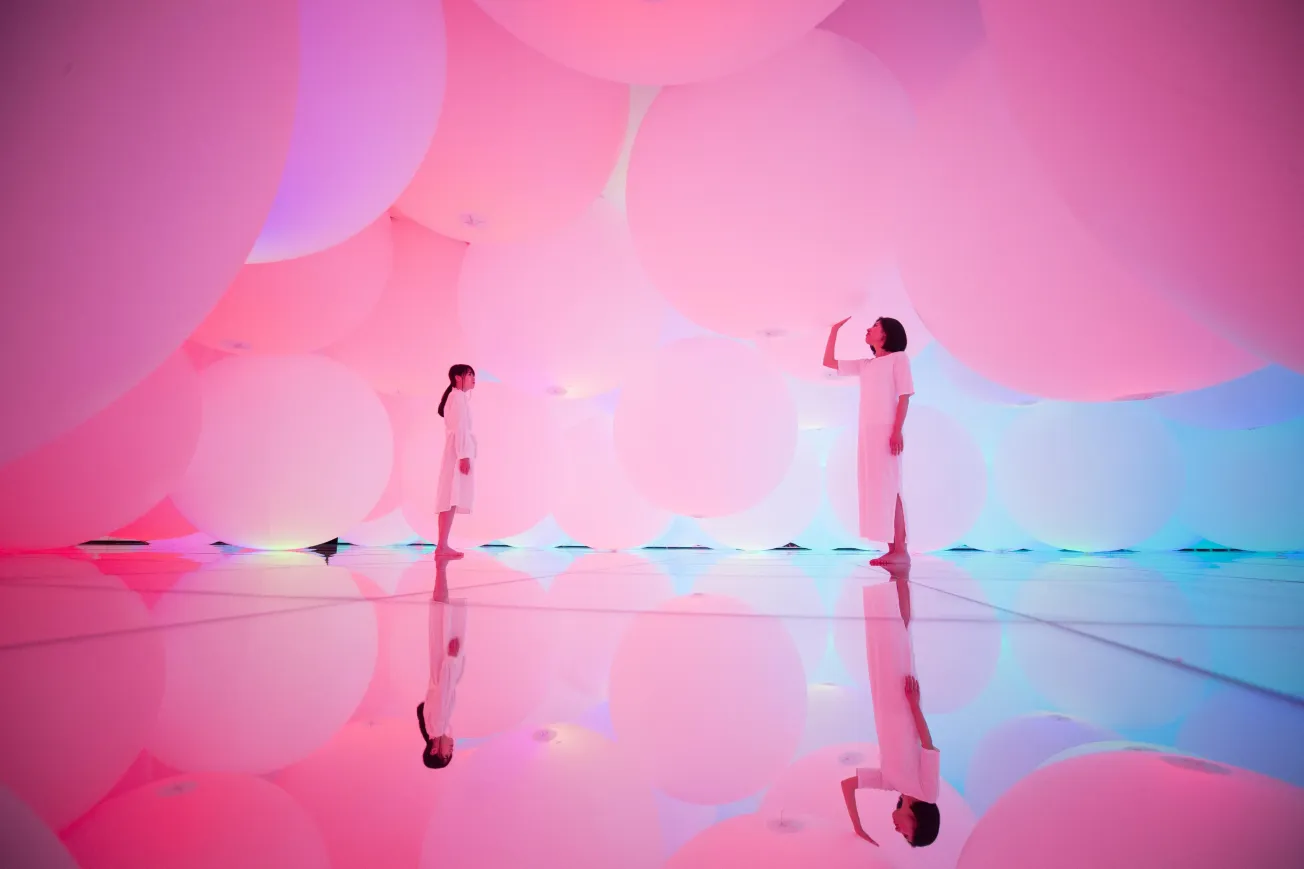
This is not a collection of screens placed inside a historic shell. The works function as environments. Projection, light, sound, and computational processes operate at room scale. In several installations, generative logic and interactivity are not hidden layers—they determine how space behaves.
Systems, Not Screens
Computation sets the tone. Spanish studio Playmodes’ Signes runs on algorithmic processes that govern both image and sound. Sequences evolve according to coded rules rather than fixed timelines; each iteration is calculated, not replayed.
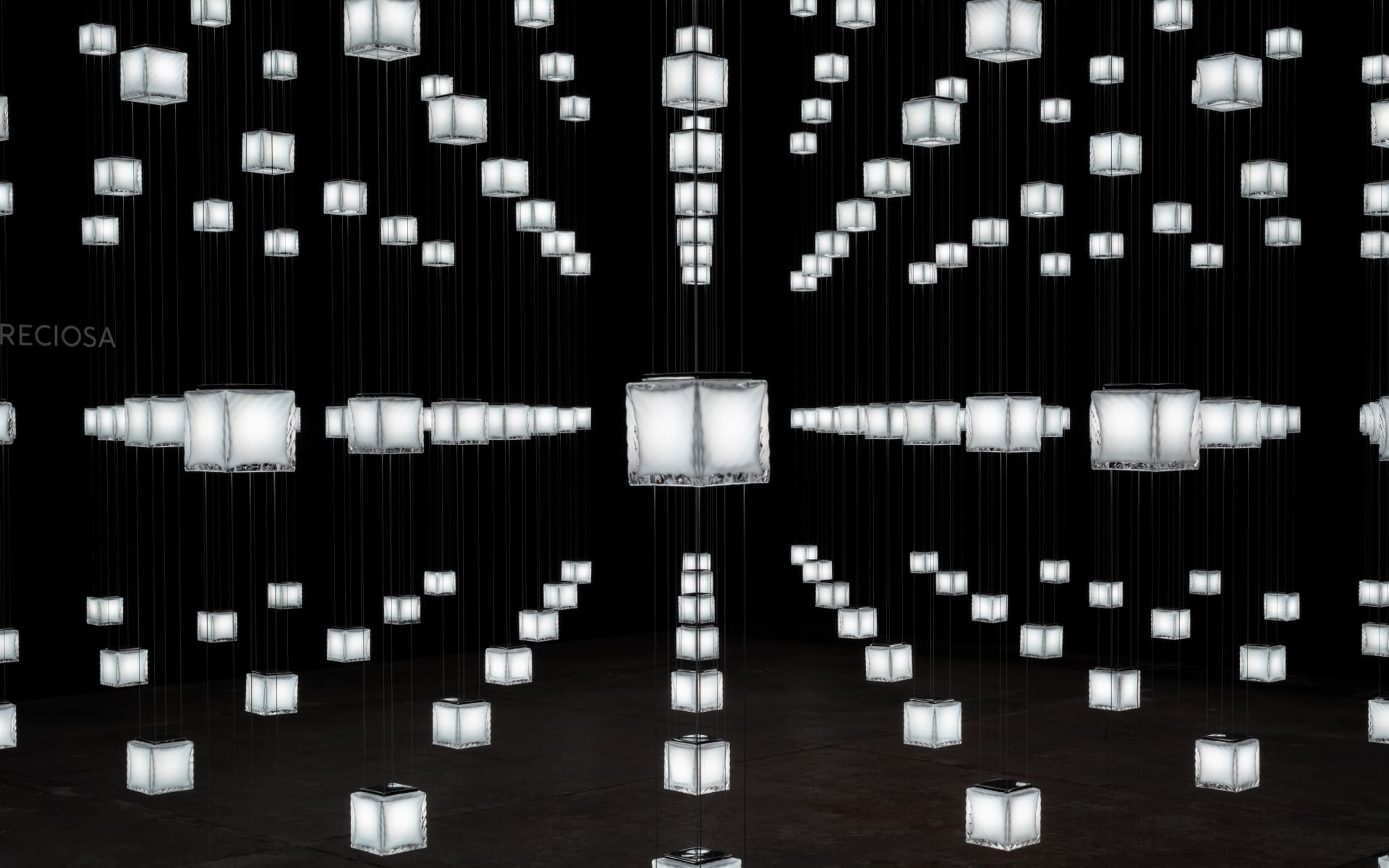
That systemic emphasis shifts form in Shohei Fujimoto’s intangible #form. Fine laser beams articulate geometric volumes in midair, appearing stable from one angle and dissolving from another. Light defines structure directly. Material and computation intersect in Crystal Pixels: Silent Reflections by the Preciosa Design Team. Digitally controlled lighting integrates with traditional Czech crystal, embedding programmable illumination within a craft lineage long associated with Bohemian glass.
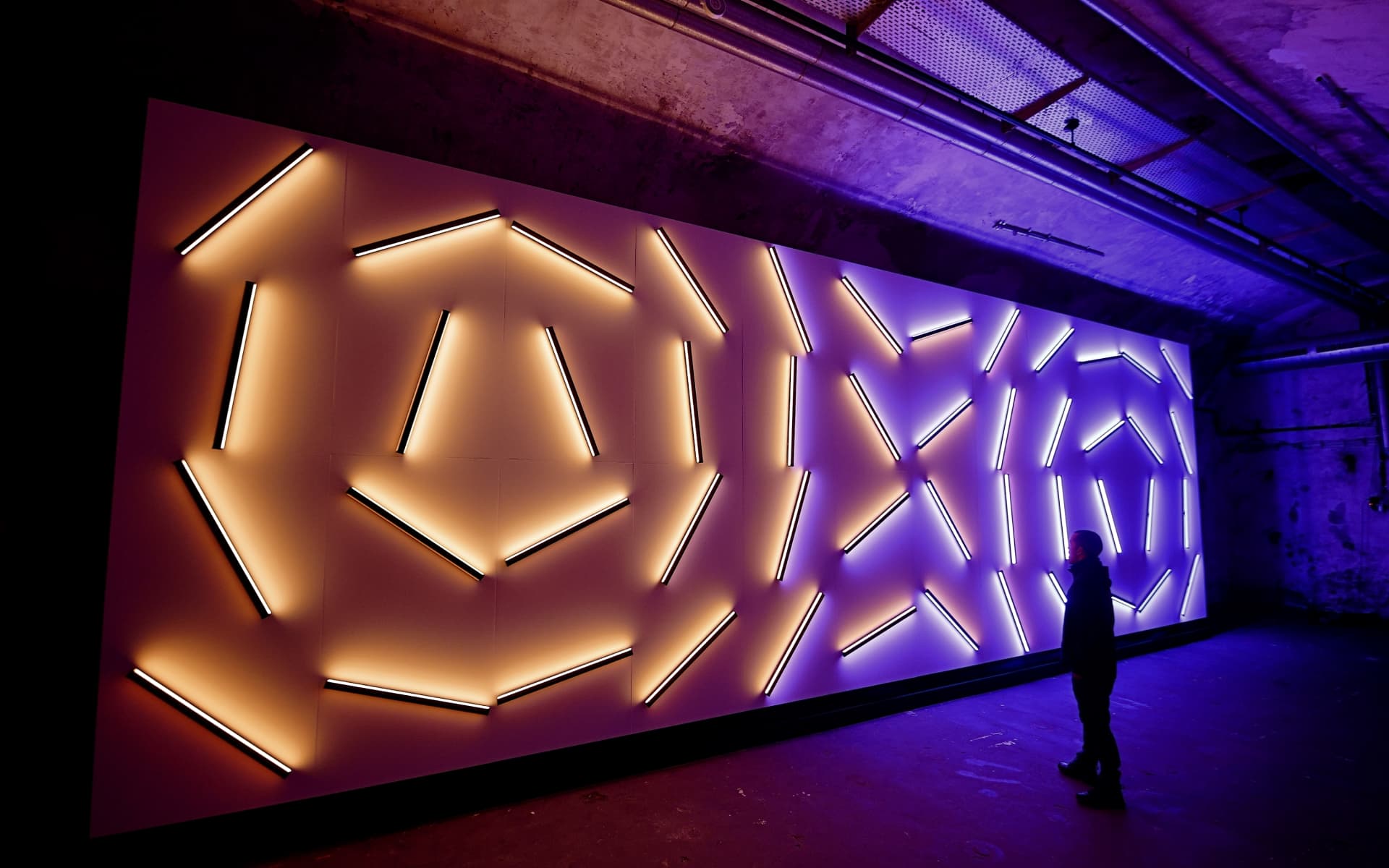
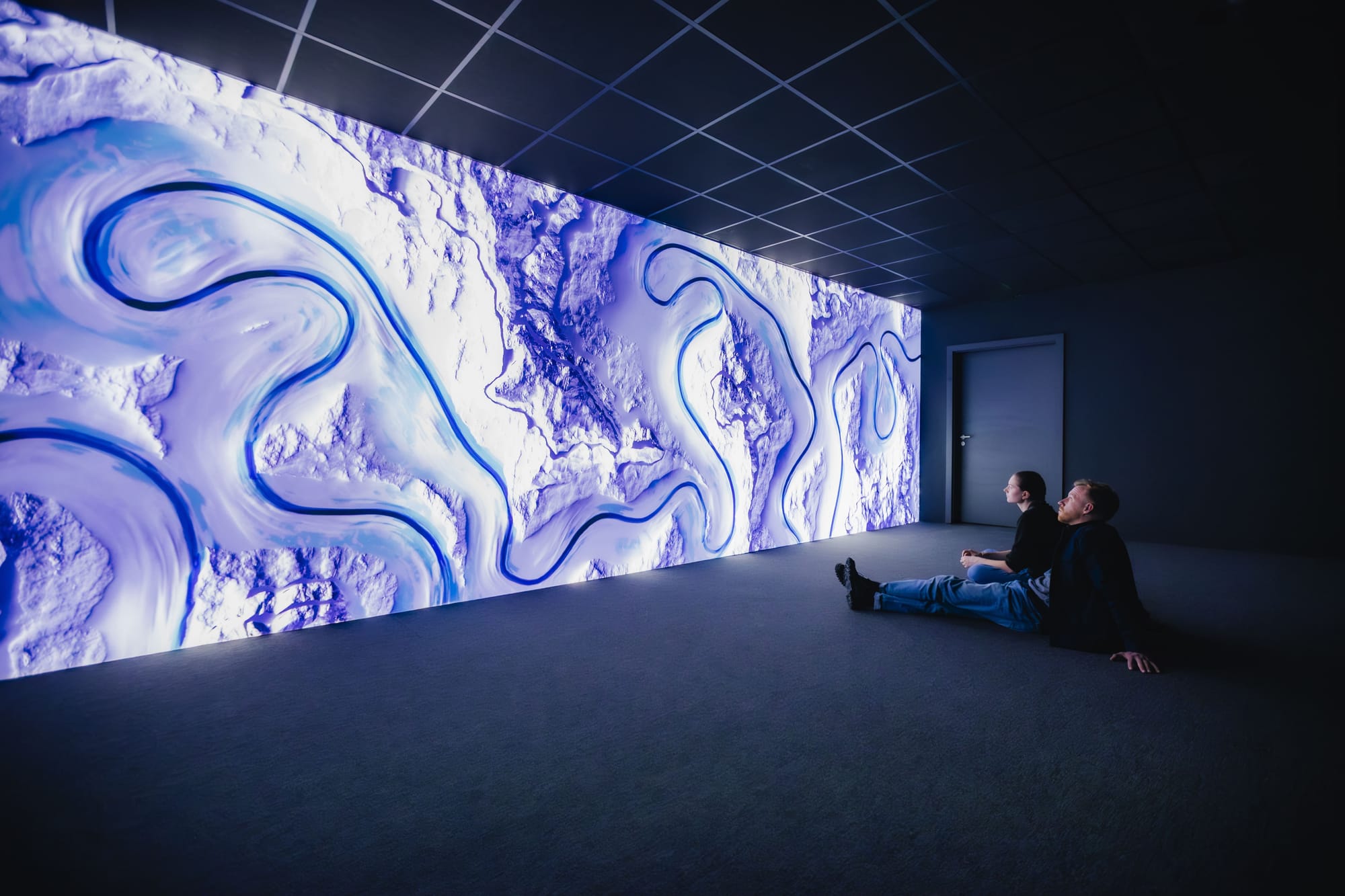
Data becomes composition in Onformative’s Meandering River, which transforms datasets into evolving visual fields through algorithmic processing. Numerical input resolves as motion and pattern. Historical reference is reframed in Fighters / For Palestrina Sicut, a collaboration between Quayola and Max Cooper. Classical visual and musical structures are translated into digitally generated image and sound, processed through contemporary computational systems.
The pattern is consistent: projection is not display format; it is spatial logic. Sound is not accompaniment; it structures time.
Immersion as Infrastructure
The exhibition scales those systems to architecture. Czech digital artist Ondřej Zunka’s PHOTOSYSTEM II presents digitally constructed environments referencing natural systems through computational imagery. Synthetic landscapes unfold across the room rather than within a frame. In Weaving Nowhere, Belgian artists Porz A Park and Arnaud Gerniers combine spatial sound and visual structures into a multi-sensory field shaped by acoustic and optical composition. Interactivity sharpens that architectural logic in Body Sketches / Scale Studies by Zach Lieberman. Motion tracking converts visitor gestures into projected line drawings in real time. Movement alters output; the body enters the system.
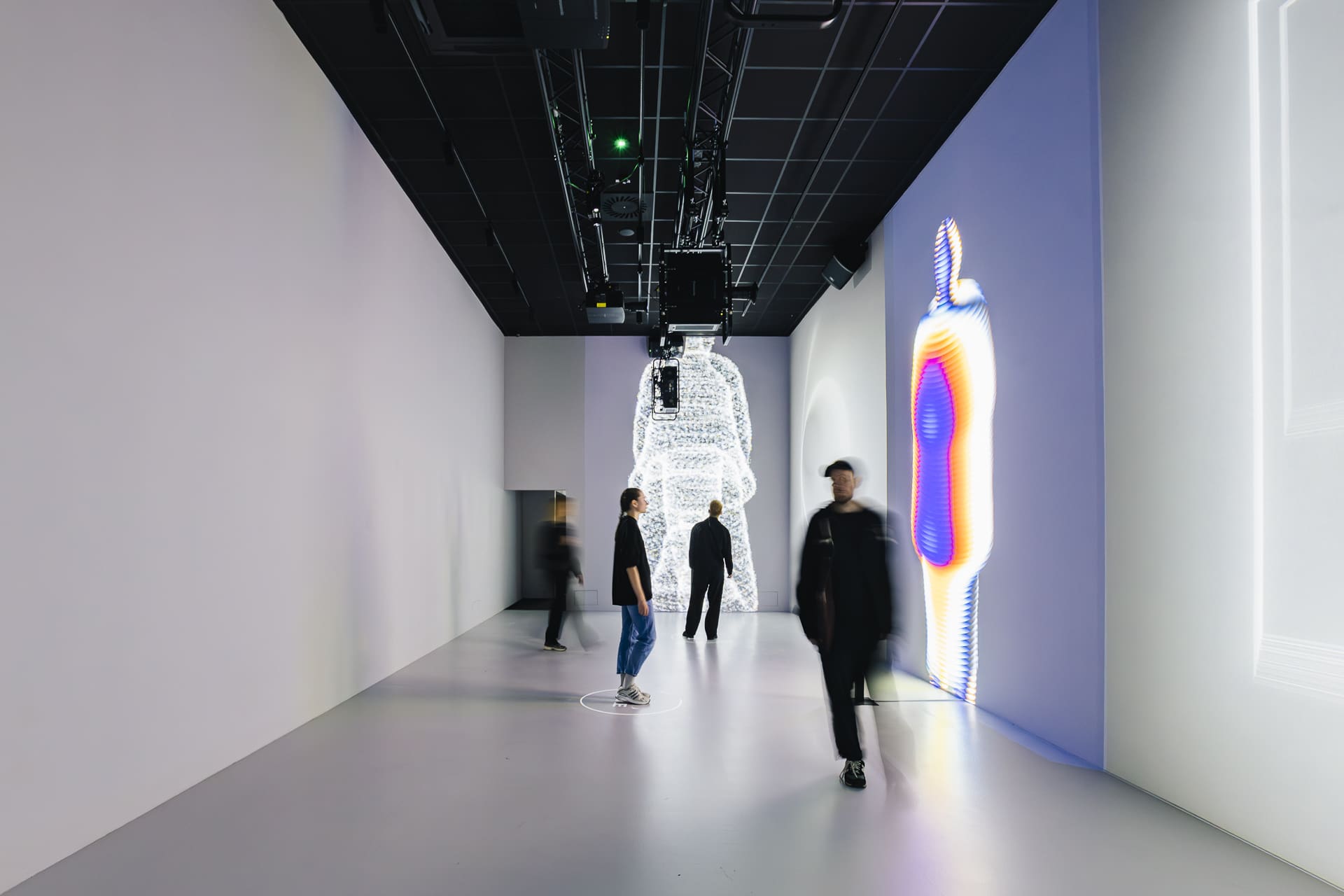
Generative animation continues the emphasis on rule-based formation in Markos Kay’s aBiogenesis, where evolving patterns reference biological processes without direct simulation. At the largest scale, Nohlab’s EVERYTHING integrates projection and spatial sound into a continuous audiovisual environment occupying the room as a unified field. Projection systems, laser arrays, lighting rigs, and spatial audio operate as architectural components. The market hall’s masonry remains visible, framing computational media within a pre-digital civic structure. The contrast clarifies the premise: digital systems are not temporary overlays but spatial agents embedded in permanent infrastructure.
Exhibition as Platform
ECHOES OF TOMORROW foregrounds generative processes, laser technologies, spatial audio, and projection-based environments as primary artistic media. Algorithmic logic and interactivity are visible drivers of form rather than concealed mechanisms. As a permanent digital art venue, Signal Space provides the projection, lighting, and sound infrastructure required for immersive installations to function at architectural scale. The gallery is engineered for this mode of work.
The result is an exhibition organized around systems rather than objects. Projection defines volume. Laser defines boundary. Sound defines orientation. Computational processes shape how space is experienced.
Immersive media here operates as built environment. Not spectacle layered onto architecture, but infrastructure shaping it from within.