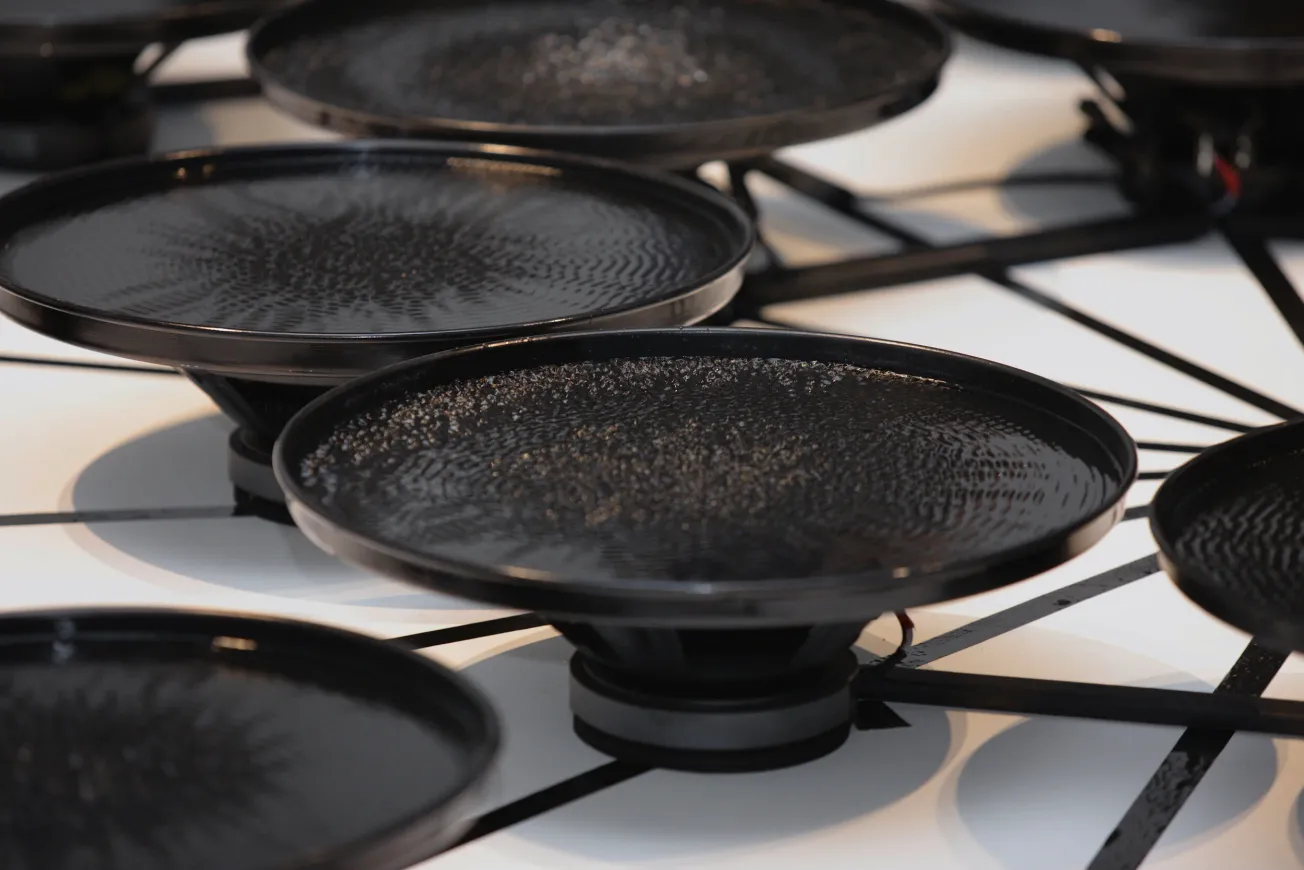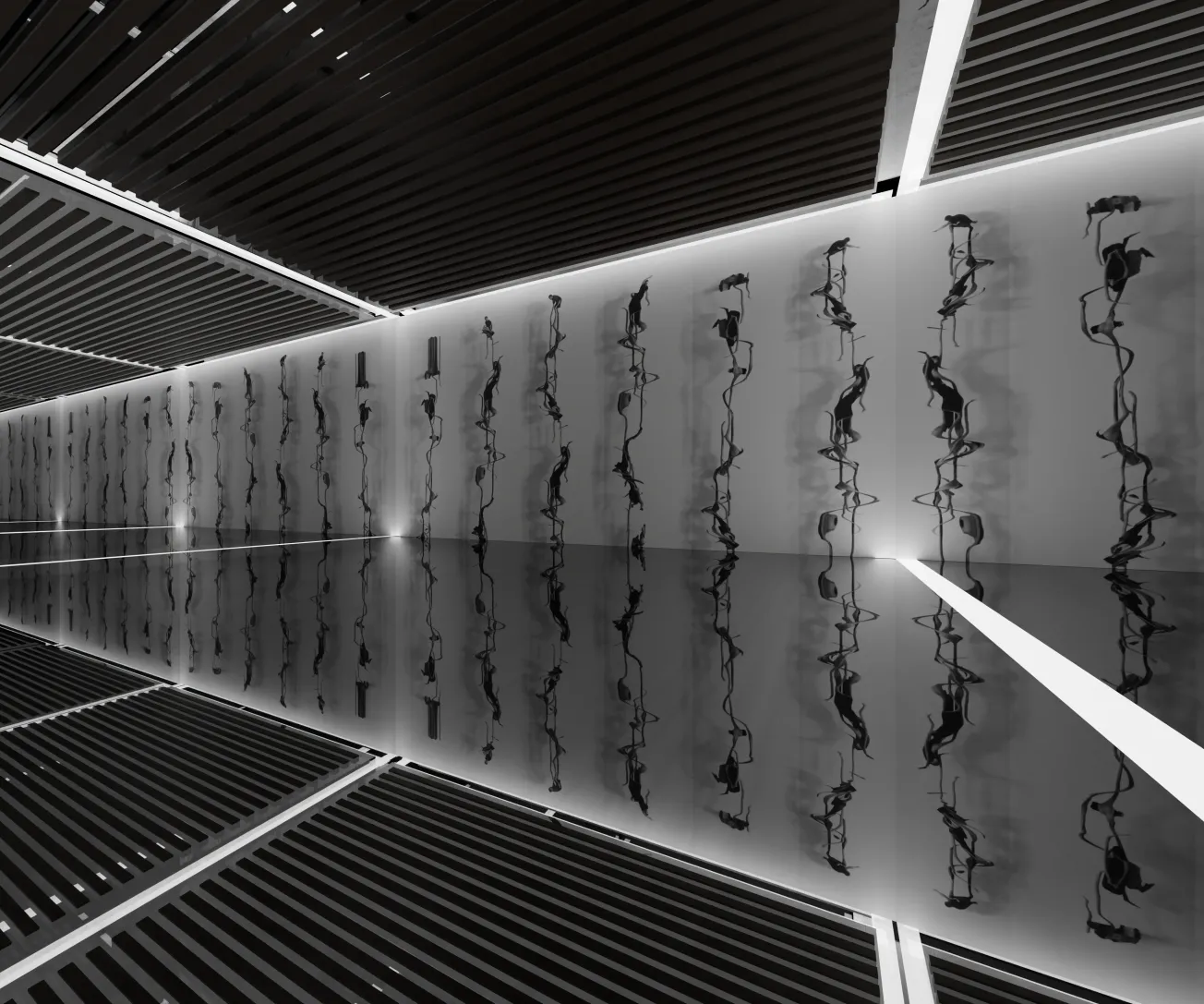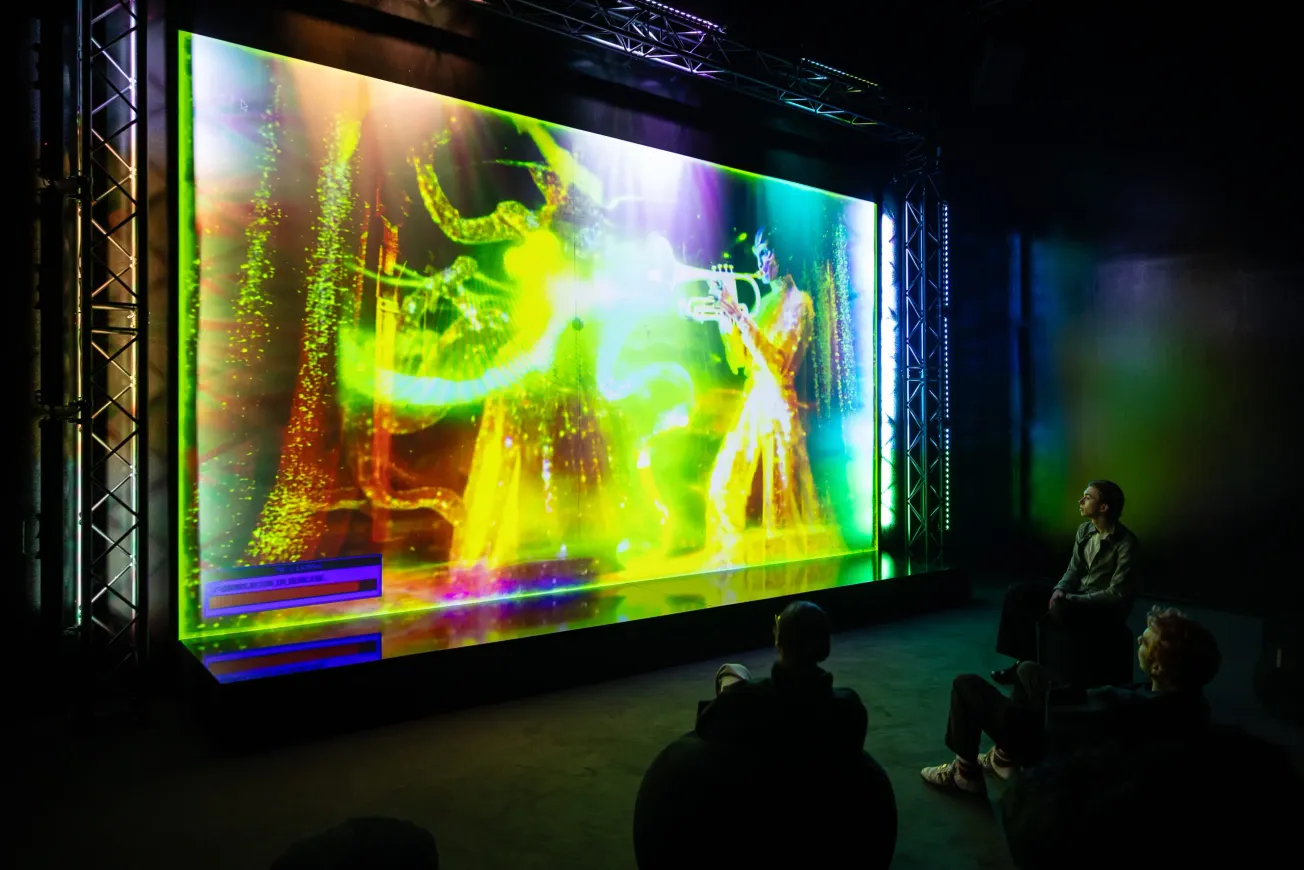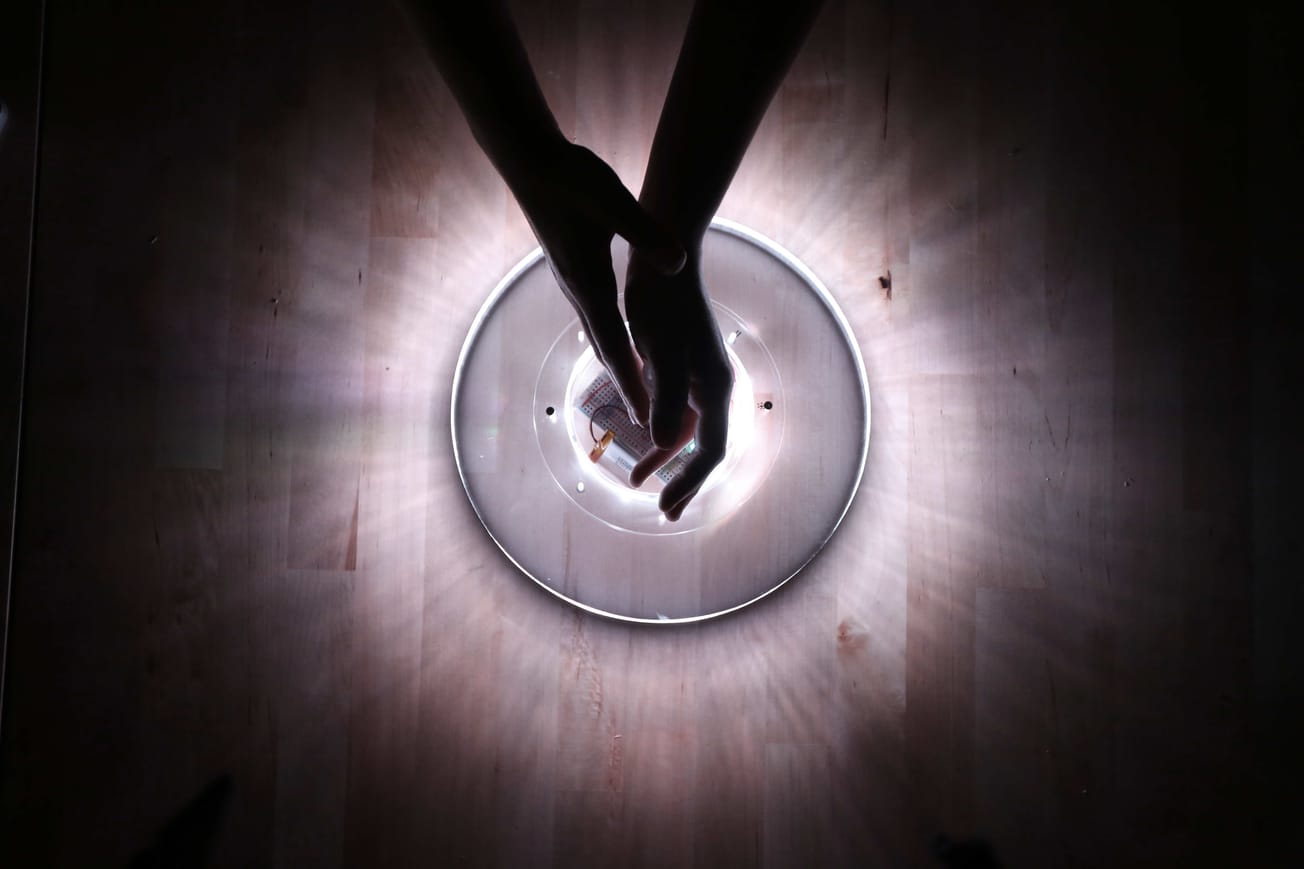
Founded in 2009 by Andrew Zolty, BREAKFAST operates at the intersection of industrial design, software engineering, and kinetic art. Based in New York, the studio develops large-scale installations that translate digital data and human interaction into coordinated physical motion. These projects function as engineered systems composed of actuated elements rather than screen-based displays or static objects.
Instead of rendering information through light-based pixels, BREAKFAST constructs environments where patterns and behaviors emerge through mechanical movement. Its work contributes to a growing body of practice exploring how computation can be embedded directly into physical systems.
Image Credit: Spectral Flashbacks, BREAKFAST
Mechanical Pixels and Data-Driven Motion
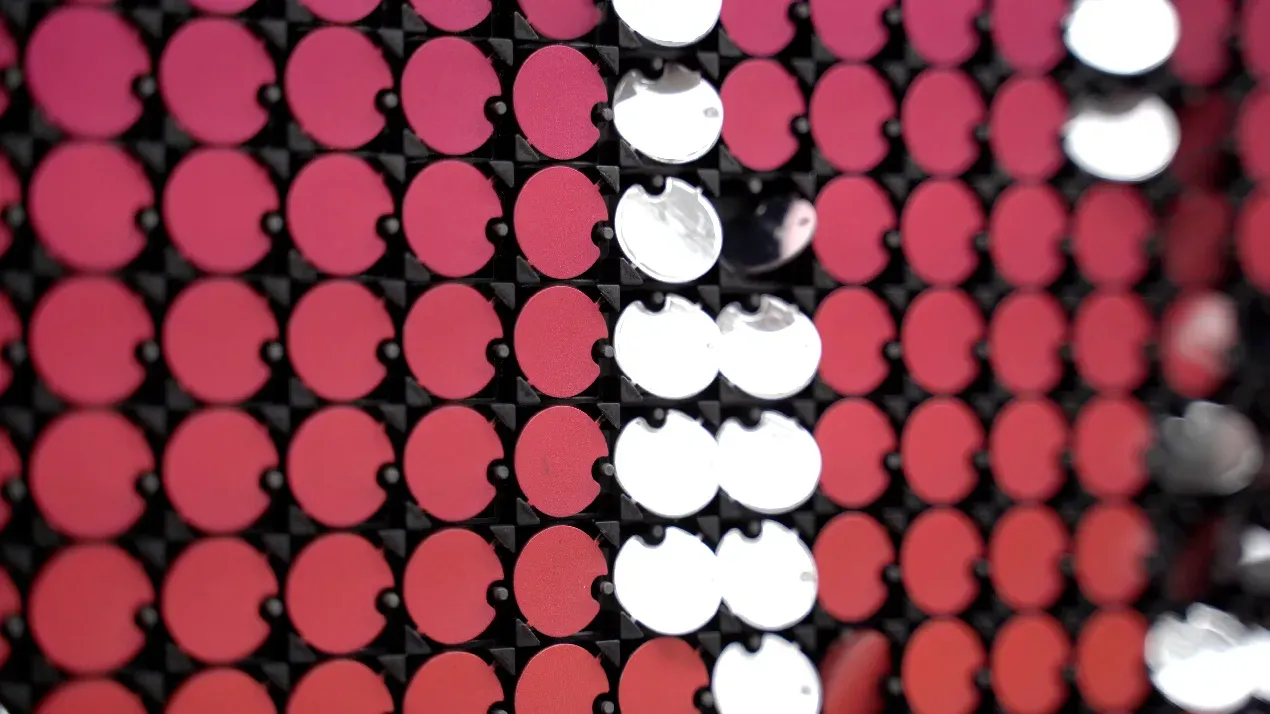
At the core of BREAKFAST’s practice is a studio-developed approach to modular kinetic units—often described as “mechanical pixels.” These components function similarly to digital pixels but operate through motors and custom mechanical linkages rather than light emission.
Image Credit: Brixel Mirror, BREAKFAST
Projects such as Brixel Mirror use mirrored elements that rotate or tilt in response to input. When arranged in large grids, these units generate shifting fields of reflection, turning architectural surfaces into responsive systems. Visual resolution is determined by the number and precision of actuated elements rather than screen density. The studio has also adapted flip-disc technologies—historically used in transit signage—into large-scale installations. These systems transition between states through coordinated mechanical motion, producing patterns and imagery through synchronized physical change.
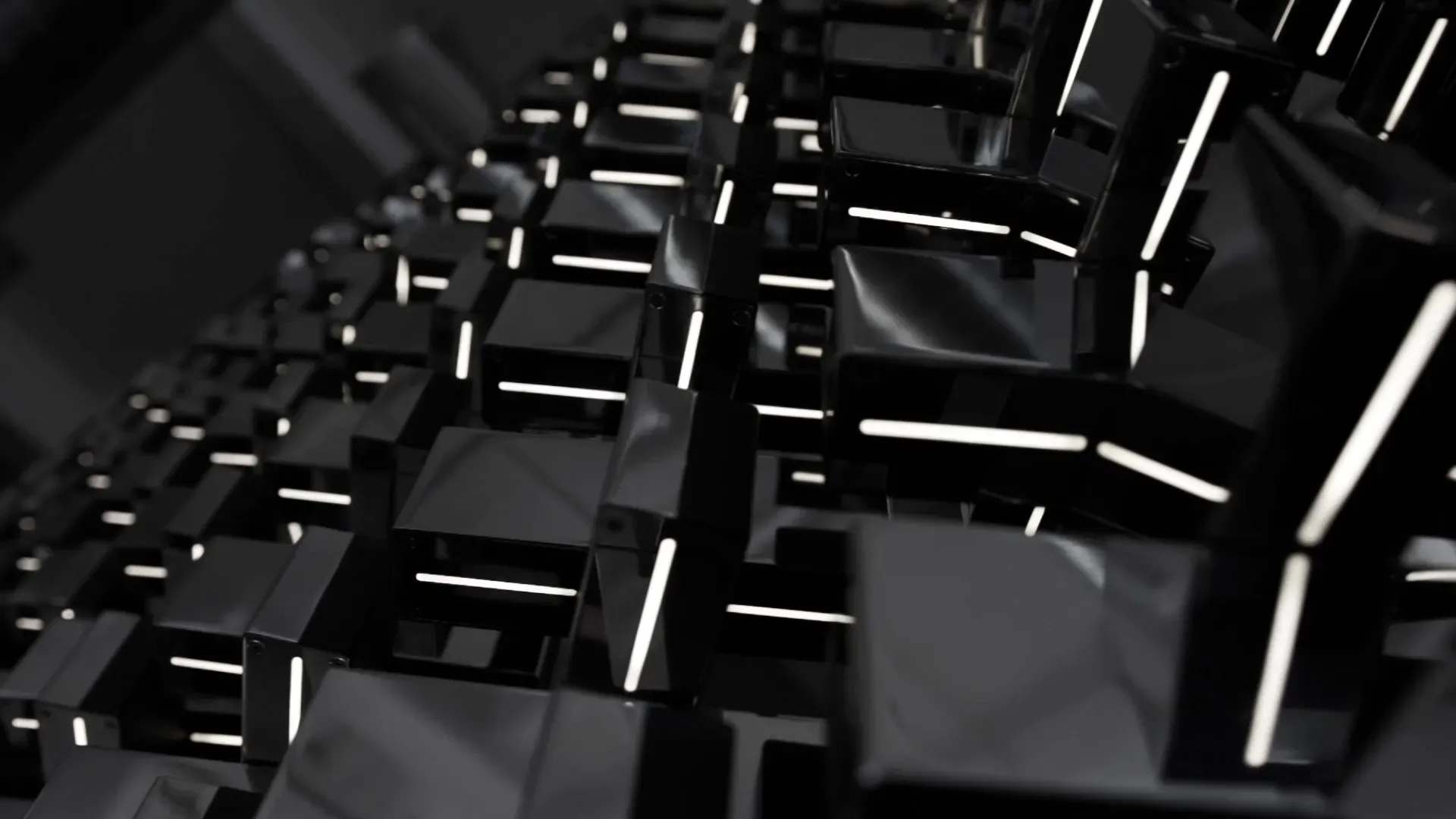
Many installations are connected to live or continuously updating data sources. BREAKFAST has developed works that respond to financial data, including cryptocurrency markets, as well as environmental inputs such as weather. These data streams are translated into motion across kinetic surfaces, allowing information to be perceived through changes in rhythm, density, and movement rather than through conventional charts or displays. This approach shifts data from representation to behavior. Instead of presenting information for direct interpretation, the systems operate continuously, embedding data into the surrounding environment.
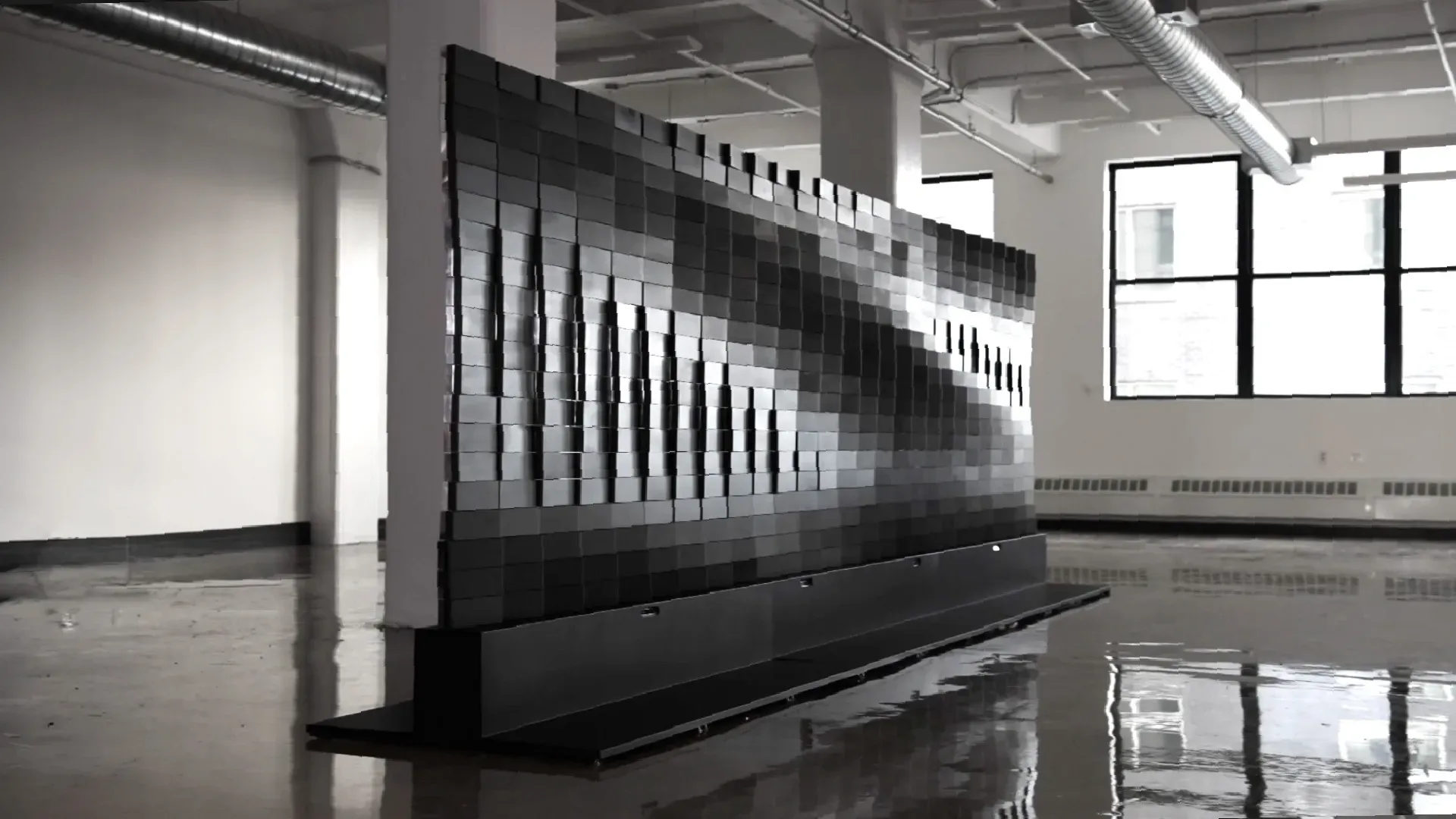
Architectural Integration and Continuous Operation
BREAKFAST’s installations are typically commissioned for corporate headquarters, cultural institutions, and other public-facing environments. Rather than functioning as standalone objects, they are integrated into walls, façades, or interior surfaces, operating as dynamic architectural elements.
Image Credit: Water, BREAKFAST
Scale is a defining characteristic. Many projects occupy large surfaces, where coordinated movement alters the perception of space over time. The experience extends beyond visual output: the sound of motors, changing reflectivity, and temporal variation all contribute to how the work is perceived. Because these systems are deployed in high-traffic environments, durability and maintainability are central to their design. Installations are built for continuous operation, requiring robust fabrication, modular components for repair, and software systems capable of long-term stability.
Image Credit: Reflections in Austin, BREAKFAST
Some projects incorporate sensors that respond to viewer presence or interaction, enabling real-time adjustments. Others operate autonomously, driven by external data streams. In both cases, the installations function as responsive systems embedded within their environment rather than static displays.

A Hybrid Studio Model and the Future of Physical Interfaces
BREAKFAST’s organizational structure reflects the complexity of its work. The studio integrates mechanical engineering, electronics, software development, industrial design, and fabrication within a single workflow. Projects are developed end-to-end, from concept and prototyping through manufacturing and installation, allowing technical and aesthetic decisions to be addressed simultaneously.
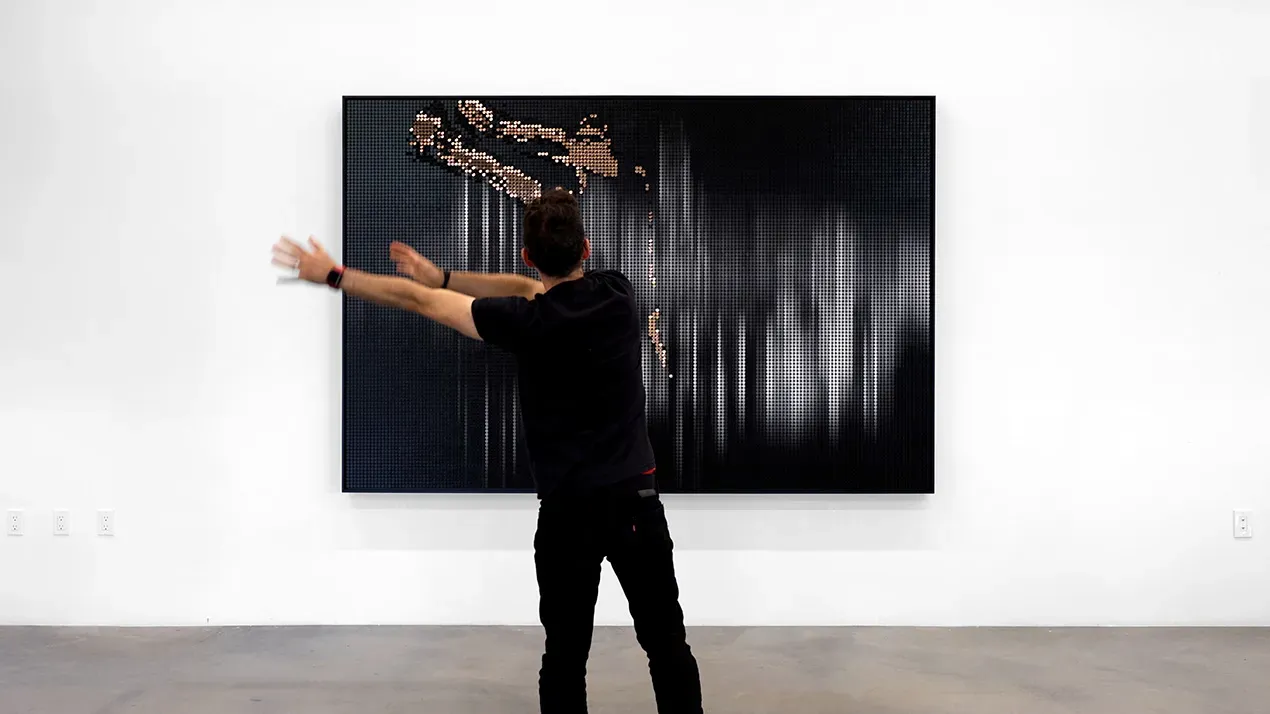
Under Zolty’s leadership, the studio operates across art, design, and commercial production. Many projects are commissioned at architectural scale, while maintaining a consistent focus on how physical systems can embody computation. This positioning has placed BREAKFAST within ongoing discussions around kinetic art, responsive environments, and spatial interfaces. Rather than replacing conventional screens, the studio extends computation into physical space. Digital inputs are translated into coordinated movement across surfaces, producing systems that operate continuously and often without direct interaction.
In this model, information is not confined to displays but distributed across material systems. Movement becomes a primary means of output, and environments take on a form of behavioral responsiveness shaped by the interaction of hardware, software, and data.