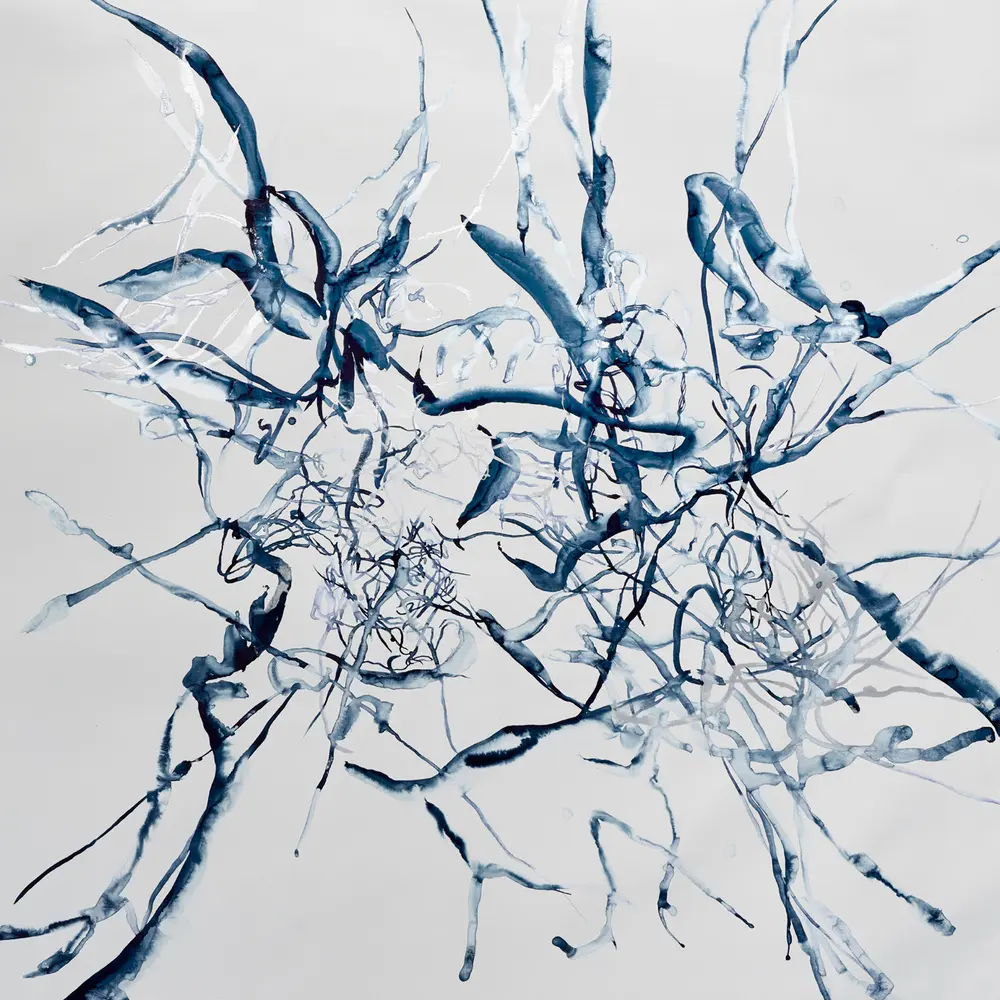
Presented by Fellowship and ARTXCODE at Art Basel Hong Kong 2026, RECURSIONS 遞迴 marks a shift in Sougwen Chung’s practice. Known for live, co-performative drawing systems, Chung extends this inquiry into painting, robotics, and light-based installation, positioning gesture as the result of feedback between human and machine.
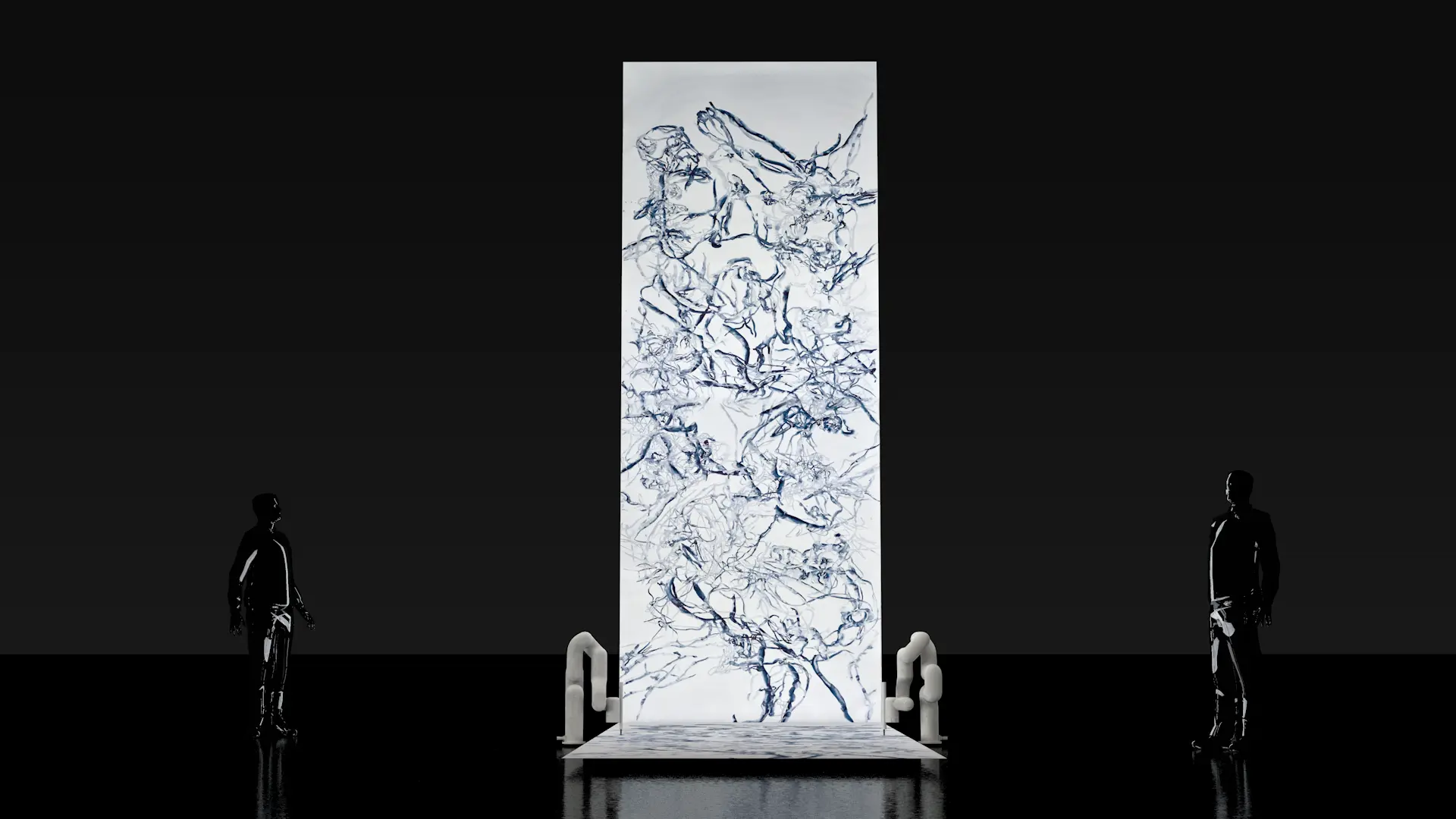
At the center of the exhibition is RECURSION 0 (2026), a monumental scroll produced through a kinetic robotic system trained on the artist’s accumulated drawing data. Biosensor input modulates the system in real time, allowing machine movement to extend and echo human gesture across linen. The surface records this exchange as intention and response accumulate without a clear point of origin.
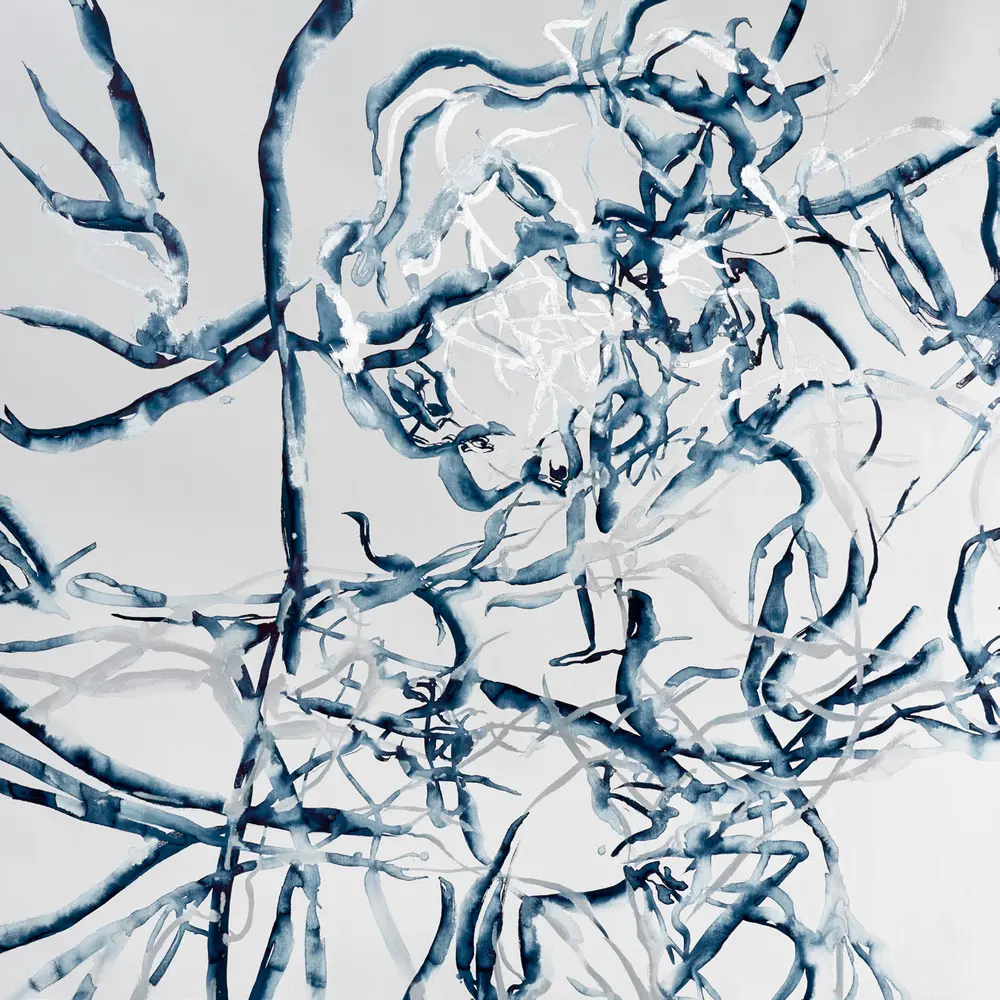
Six related works, RECURSION 1–6 (2026), translate this durational process into discrete paintings. Rather than isolating authorship, the works compress it. Marks layer without hierarchy, holding both the initiating gesture and its machinic continuation within a single field.
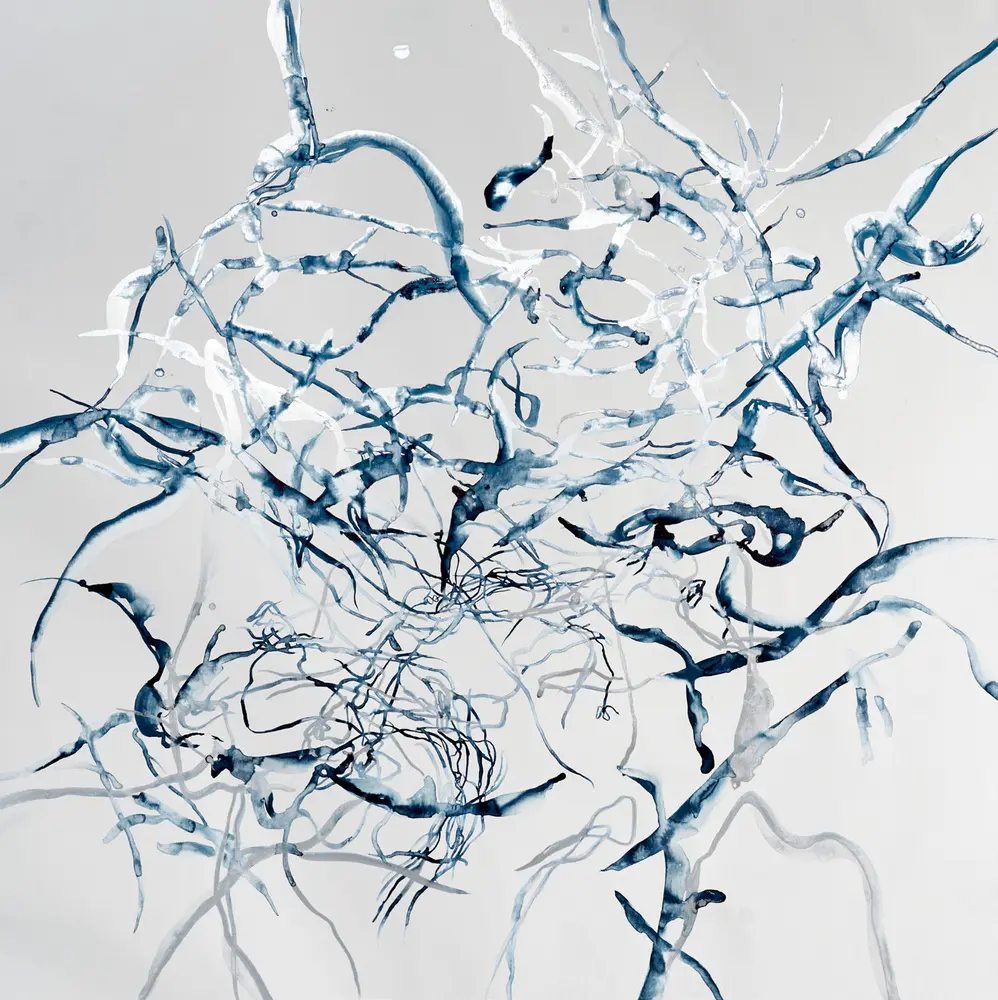
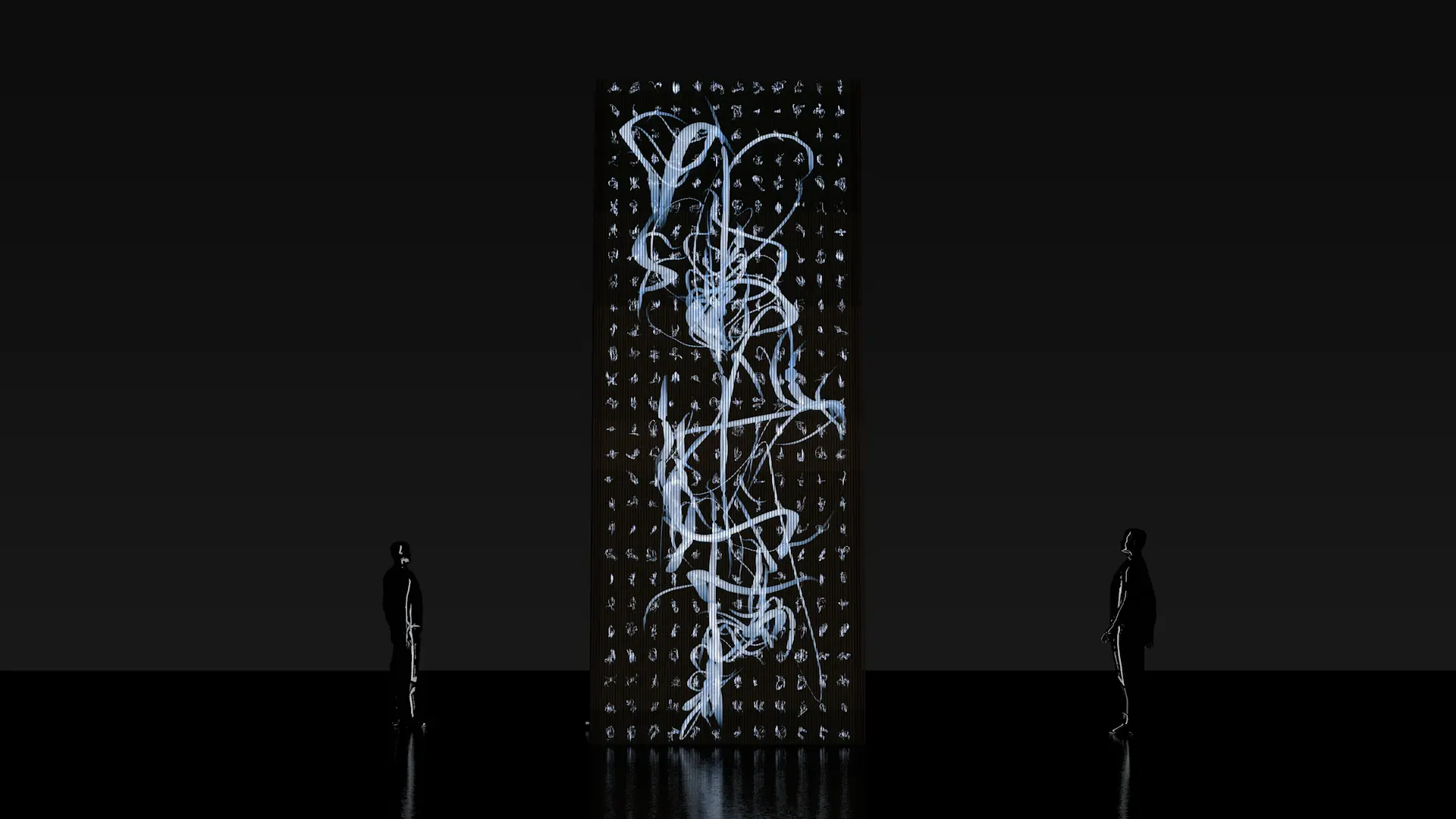
The investigation expands in RECURSION Dataset 1314 (For a Lifetime) (2026). Drawing and brainwave data are transposed into a suspended LED mesh, where patterns evolve continuously. The title references the Chinese homophone 一三一四, echoing 一生一世 (“one lifetime”), framing attention as duration—extended, compressed, and rendered as light.
Across these works, Chung develops a framework for co-creation across human, machine, and environment, where authorship is distributed through sensing, training data, and system response.
This exhibition builds on Chung’s Drawing Operations series (initiated in 2015), which has traced the evolution of human–machine collaboration through robotic drawing, neural networks, and biofeedback systems. In RECURSIONS, that trajectory consolidates into works where gesture is continuously negotiated across surfaces, systems, and time.