While desktop 3D printer hardware has seen few meaningful launches in recent months, innovation in additive manufacturing is continuing elsewhere: in materials. 3D bamboo filament, including products such as Fibrolon® Bamboo developed by FILOALFA, illustrates how material development is increasingly driving differentiation in a maturing fabrication ecosystem.
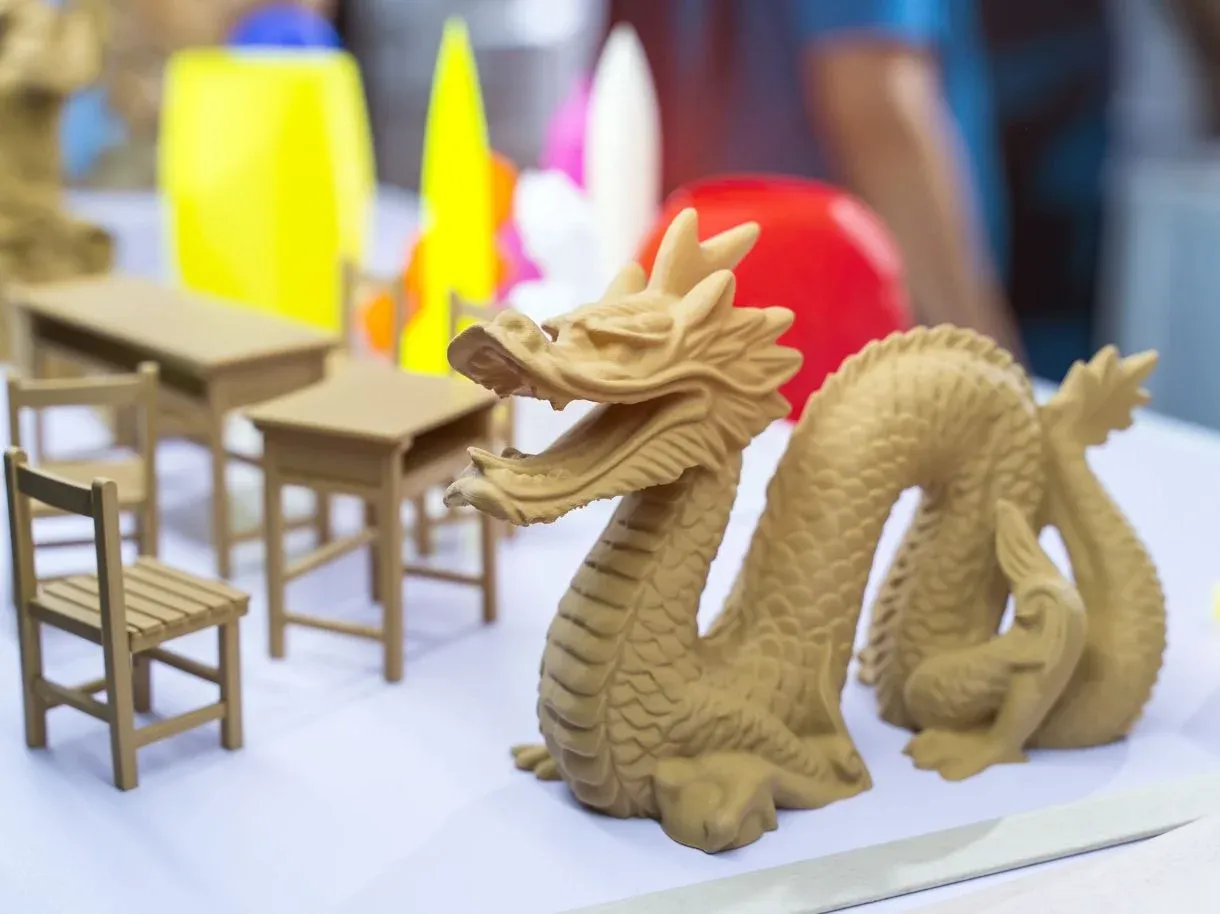
Bamboo-filled filaments typically combine PLA with finely processed bamboo fibers, producing prints with a matte, fibrous surface and subtle tonal variation. These materials are not new, but their growing visibility reflects a broader shift away from machine-centric innovation toward material intelligence—how composition, texture, and behavior influence design outcomes. As printer performance stabilizes around speed, enclosure, and automation, designers are turning their attention to what comes out of the nozzle rather than how fast it moves. Bamboo filaments deliberately resist the smooth, uniform finish associated with industrial plastics. Layer lines remain visible, fibers interrupt surface continuity, and variation becomes part of the object rather than a defect to be eliminated.
For architects, industrial designers, and researchers, this matters. Bamboo filaments are being used for architectural models, exhibition components, and speculative prototypes where material legibility is as important as geometry. The filament’s visual and tactile qualities communicate process and constraint, aligning with post-digital approaches that foreground making over polish.
Critically, bamboo-filled PLA should not be overstated as a sustainability solution. While bamboo is a renewable resource, the base polymer remains a bioplastic, and lifecycle impacts depend on sourcing, processing, and disposal. The significance of these materials is cultural and methodological rather than purely environmental. In a period where 3D printing hardware innovation has slowed, bamboo filament functions as a material signal - additive manufacturing is entering a phase where expression, texture, and material choice are primary sites of experimentation. For many, this may be more consequential than another incremental machine upgrade.