METALLY (2025), developed by @darius_ou in collaboration with @hyper.press, is a proof-of-concept 3D printed book that integrates additive manufacturing and embedded electronics into a single fabricated object. Rather than treating the book as a static container for text, the project approaches it as a composite system in which typography, circuitry, structure, and interface are materially interdependent
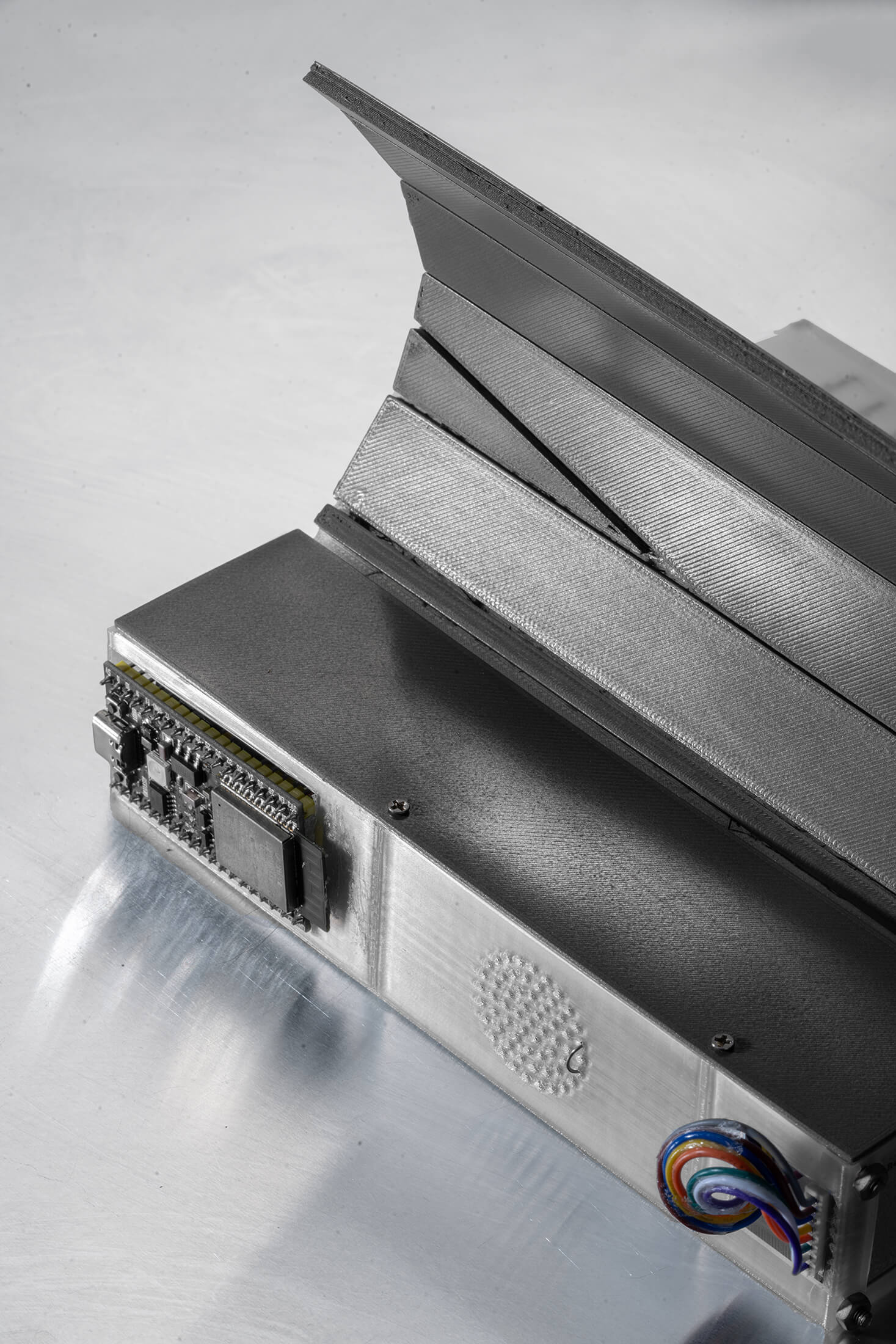
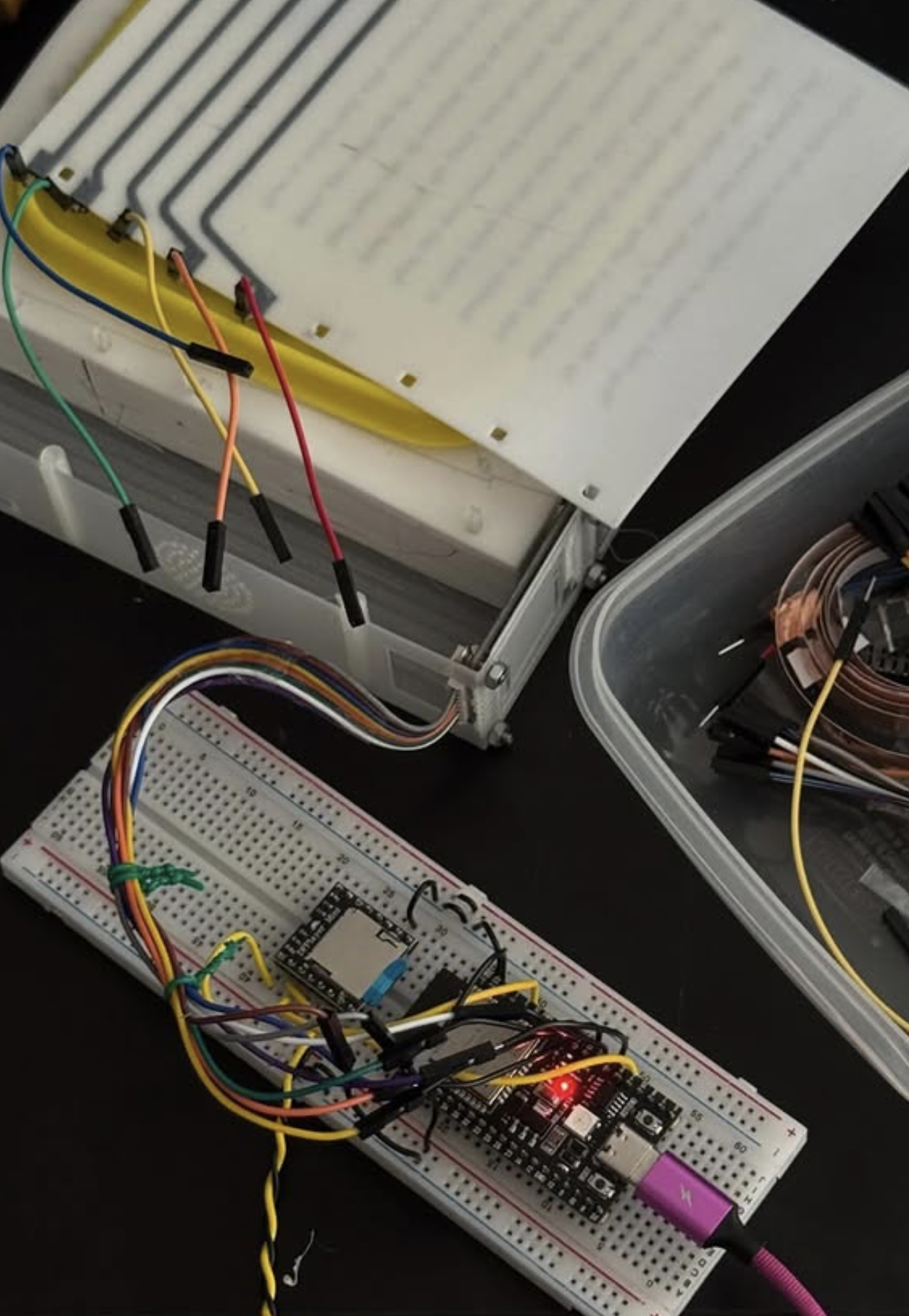
Each page is 3D printed with conductive TPU traces positioned beneath selected lines of text. These traces connect to capacitive touch sensors, allowing readers to activate audio output through direct contact with the printed surface. A microcontroller, speaker module, and electronic ink display are housed within a steel-infused PLA spine and cover, consolidating the computational components within the book’s physical architecture. The circuitry is not attached after printing; it is embedded into the page structure itself, making the book both printed artifact and functional device.
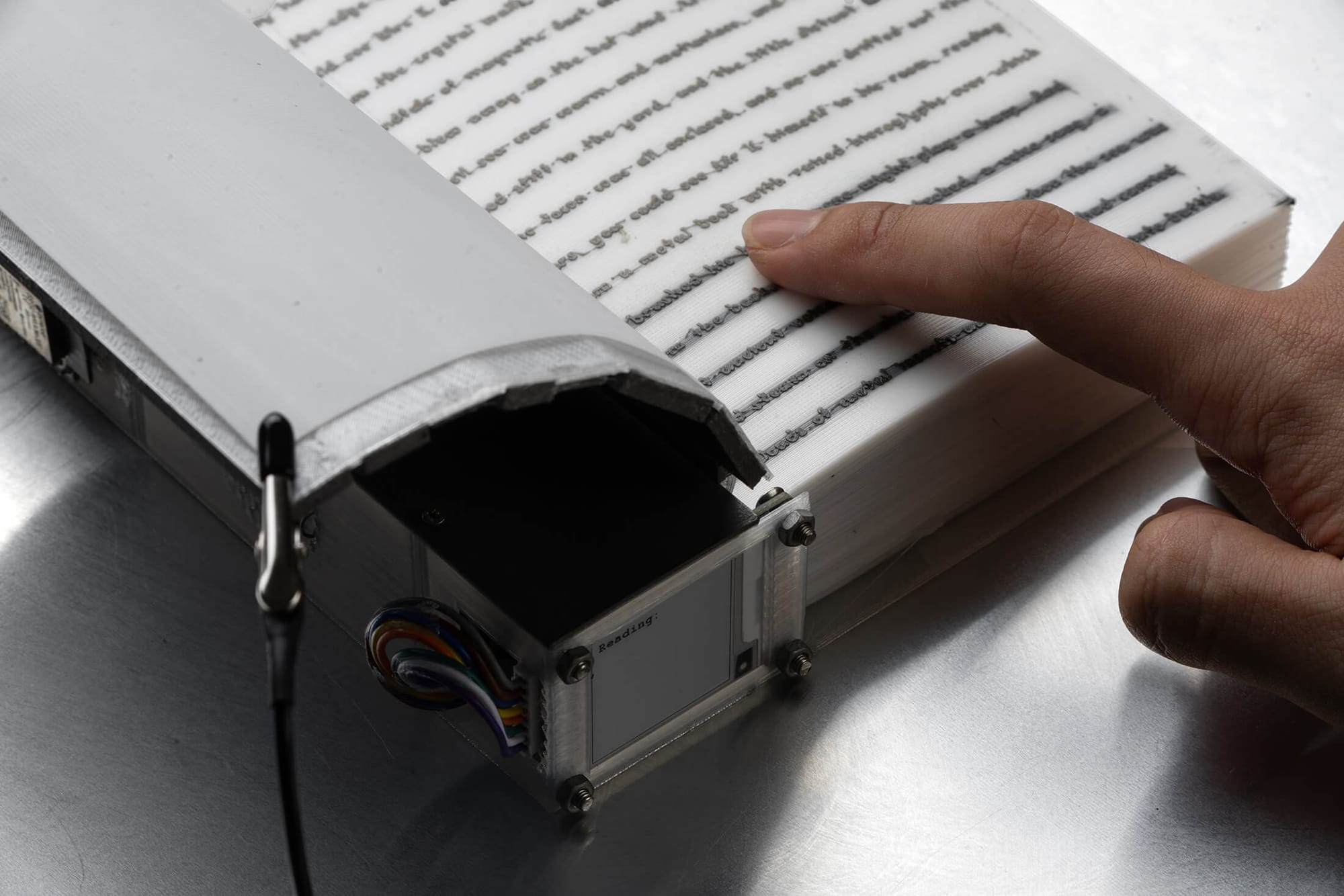
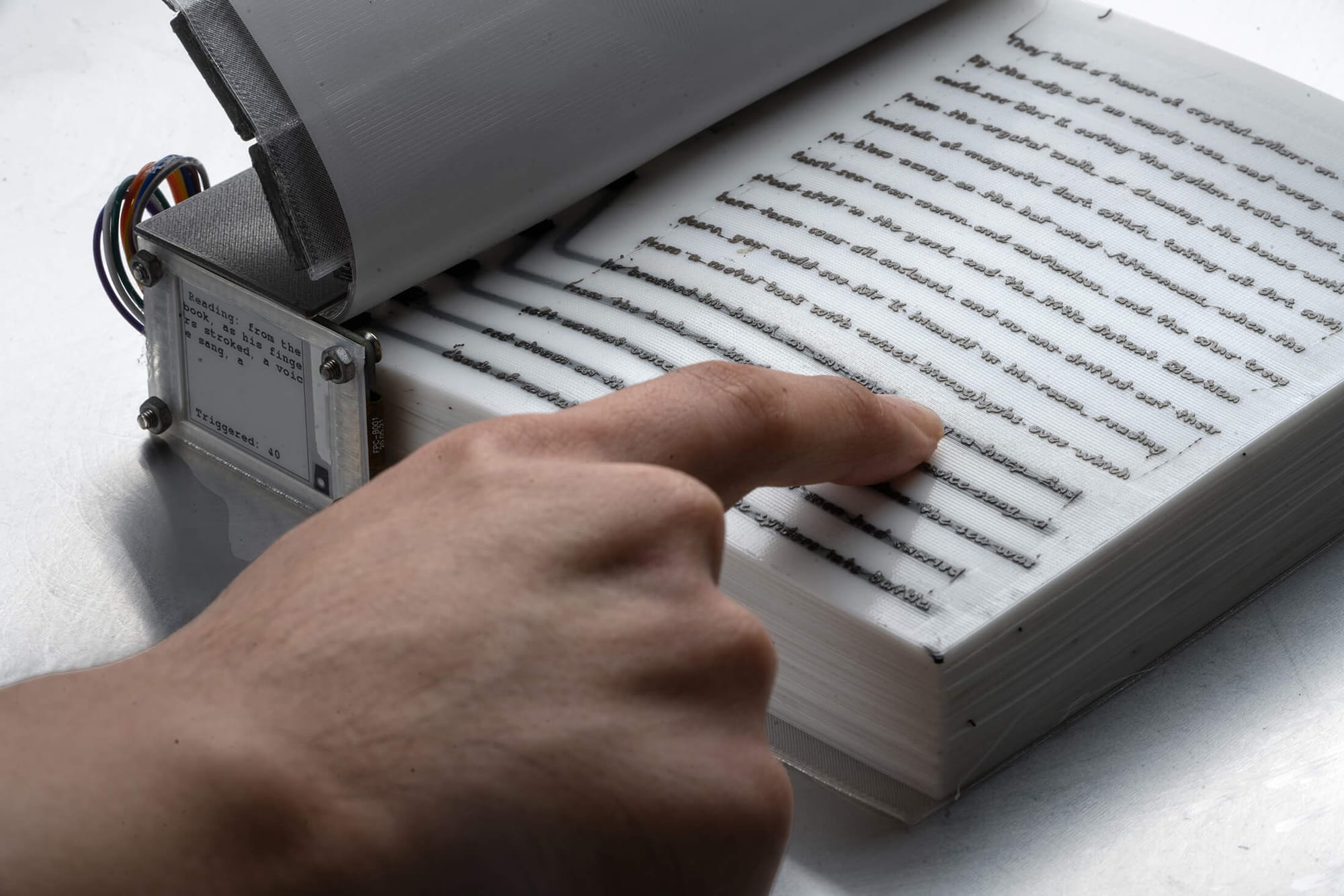
The project takes conceptual direction from Ray Bradbury’s short story “Ylla,” from The Martian Chronicles, which describes a metal book inscribed with raised hieroglyphs that emit sound when brushed by hand. METALLY interprets this description as a fabrication premise. The layered relief inherent to extrusion-based 3D printing—raised letterforms, surface ridges, volumetric marks—becomes both typographic strategy and tactile interface. In this configuration, touch is not symbolic; it is operational.
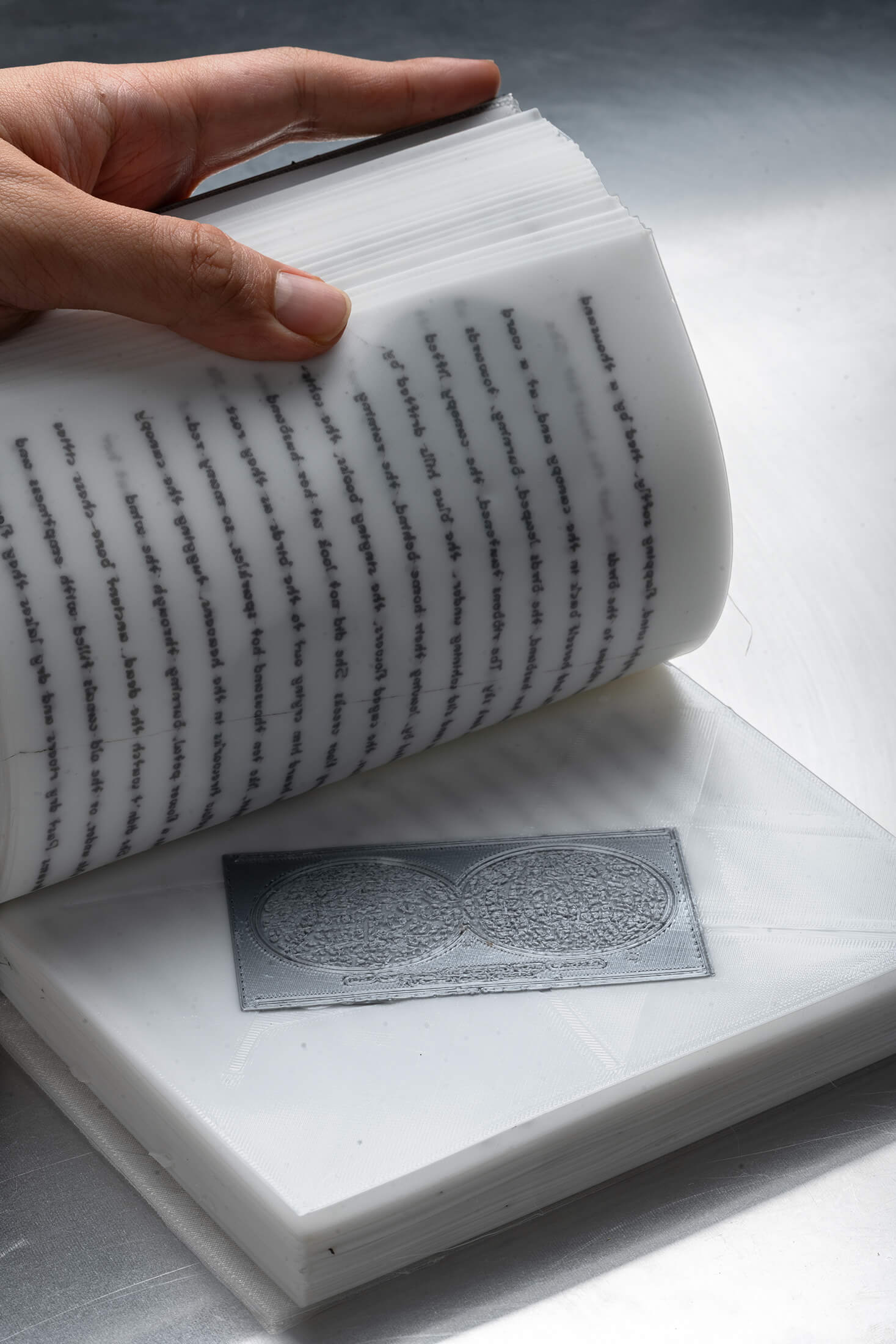
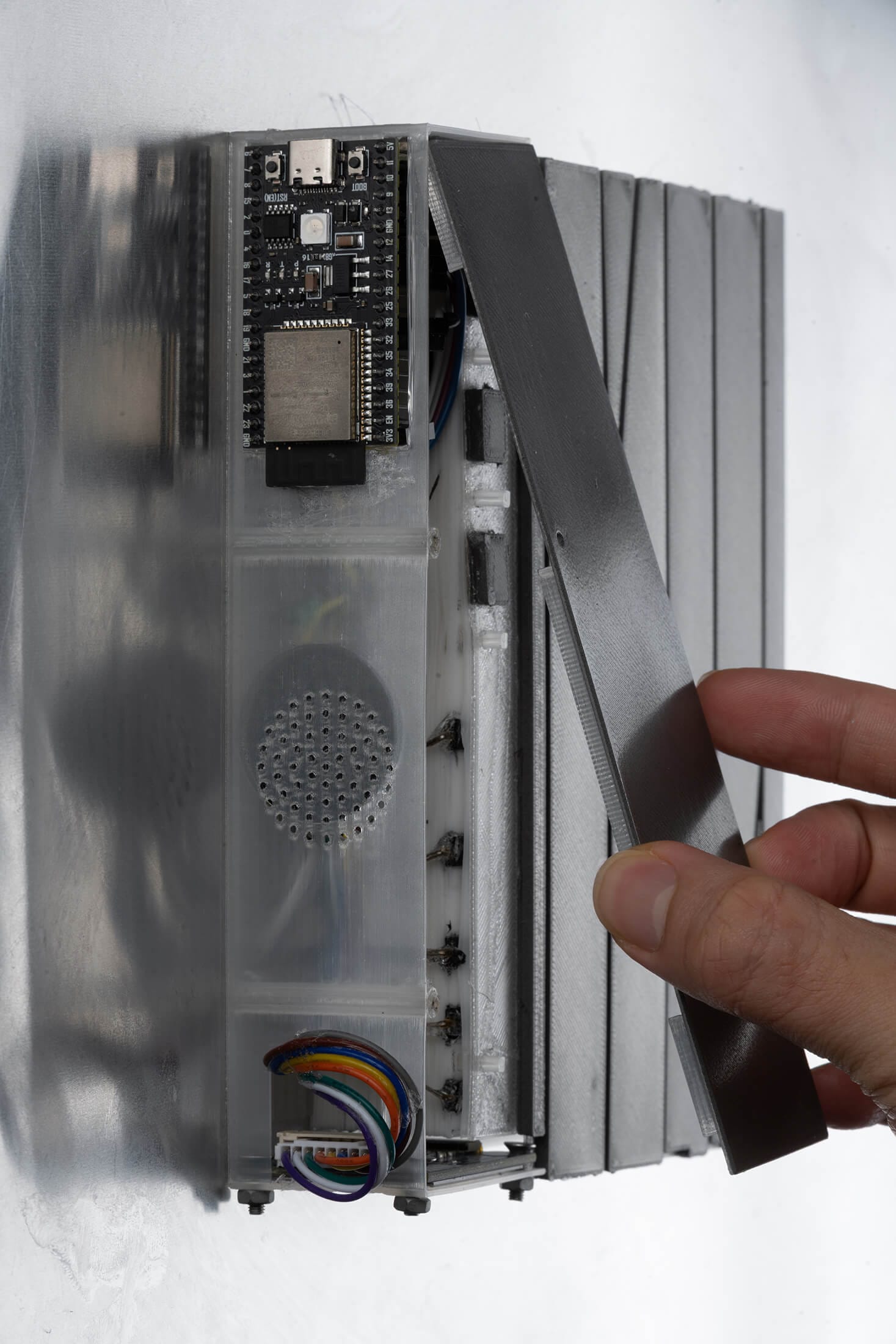
The development of METALLY builds on several years of experimental publishing at Hyper Press. Earlier research into flexible 3D printed substrates made it possible to produce page-like forms capable of bending while retaining embedded conductive pathways. Custom typefaces were designed specifically for extrusion-based production using a methodology termed path-trapping, which stabilizes letterforms during printing. Multi-material mechanical interlocking techniques, referred to as clotting, were developed to allow different printed materials to bind structurally without adhesives. These fabrication strategies converge in METALLY as a fully integrated workflow in which text, image, substrate, and electronics are co-produced.
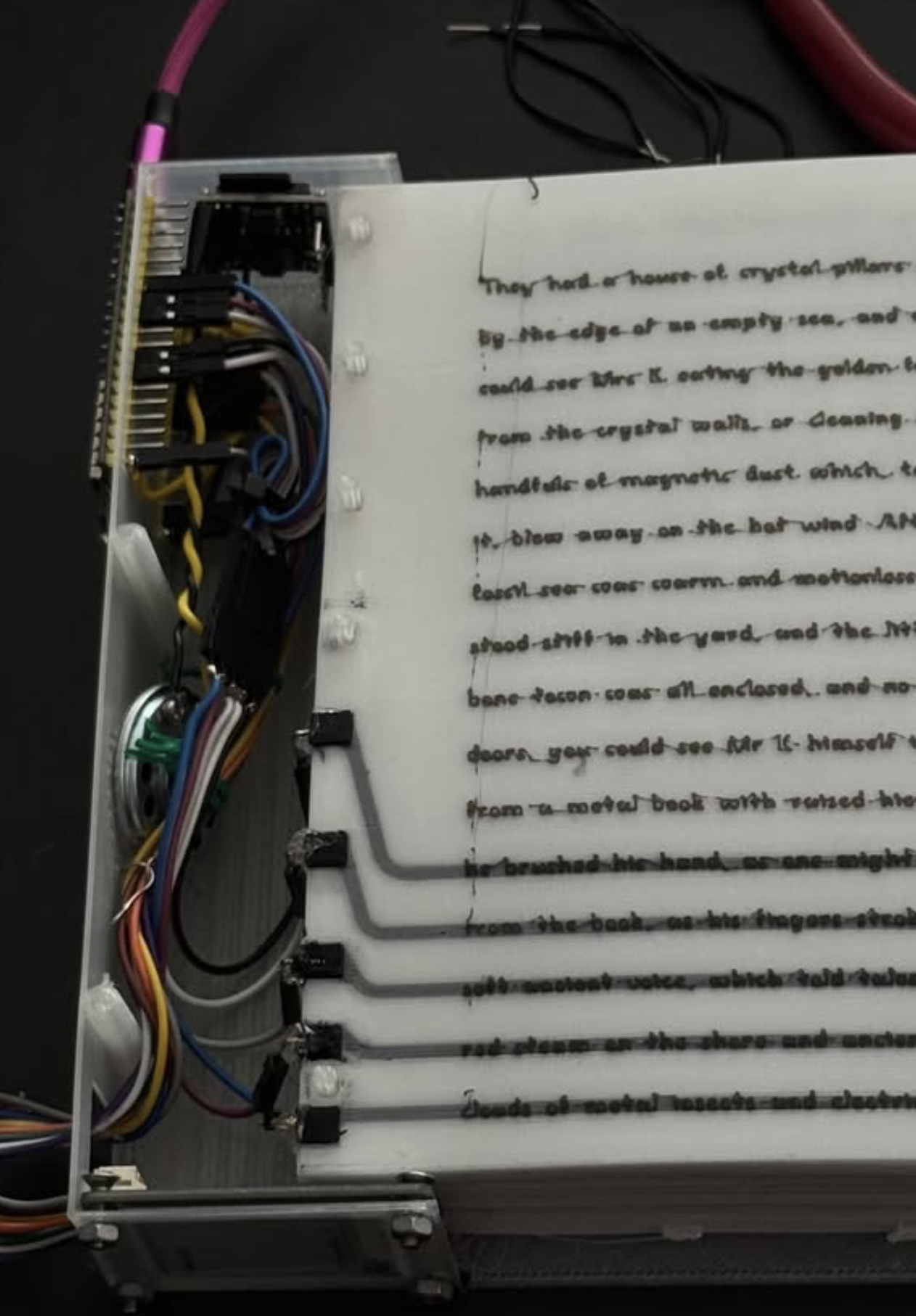
By embedding circuitry directly into printed matter, the project situates 3D printed books within a longer lineage of press technologies and graphic design. It does not frame additive manufacturing as a departure from print history, but as an extension of it—revisiting typesetting, plate-making, and binding through digital fabrication and computational control. In doing so, the book expands beyond a purely visual medium. The page registers touch, produces sound, and incorporates dynamic display, introducing additional sensory and technical layers while remaining legible as a book-object.
METALLY (2025) was selected as Excellent Work in the Experimental Work category for the Tokyo Type Directors Club Annual Award 2026. The recognition positions the project within contemporary graphic design discourse, particularly in relation to expanded definitions of typography, material production, and the future of the printed page.
Project Info
Project: @darius_ou
Publisher & Research Platform: @hyper.press
Support: @feelers_feelers, @joandkapi
Guidance: @hiddnur, @sojamo, @msjospark, Dr. Aprille
Photography: @jonathantyl
Talent: @suvalidh