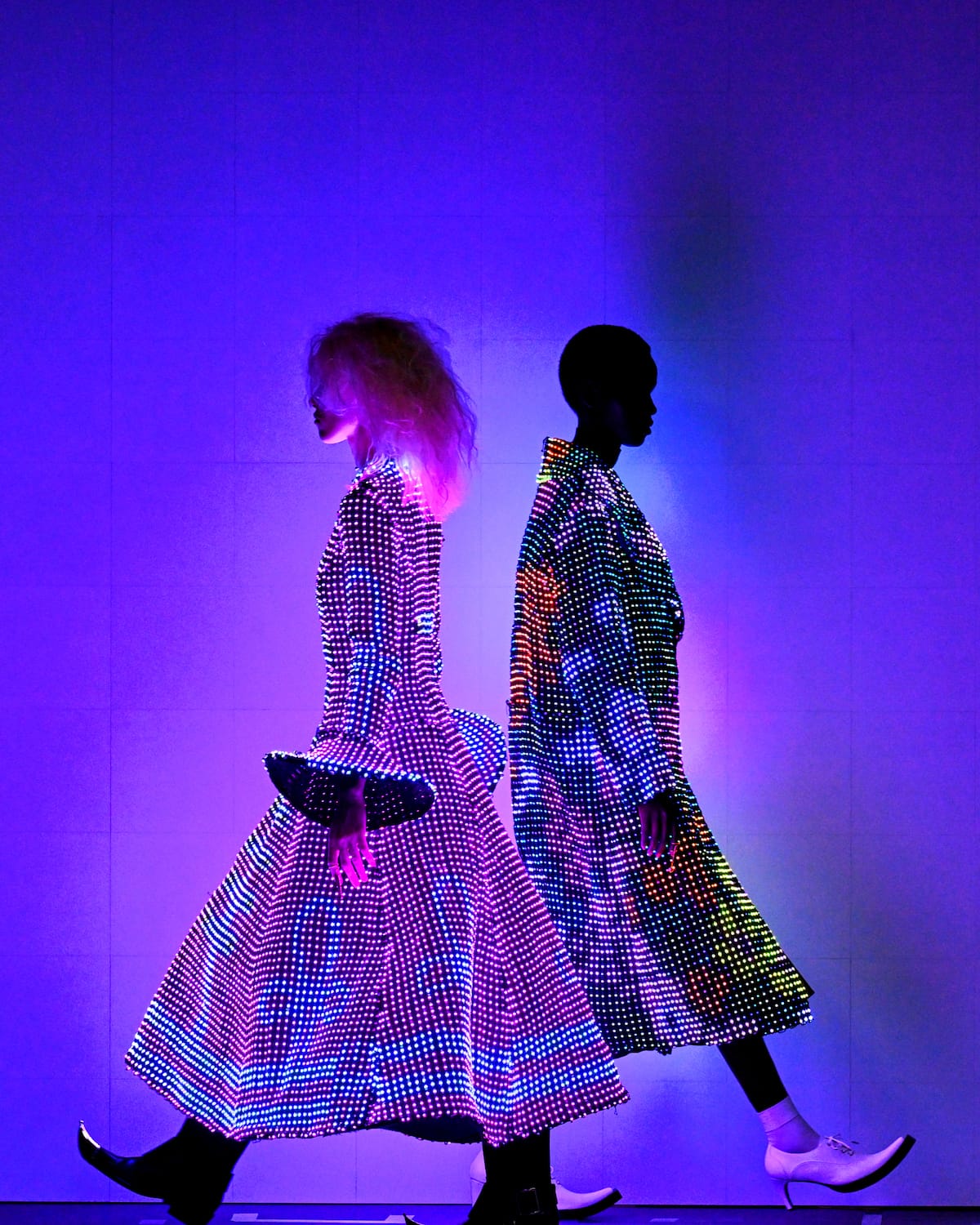
At Paris Fashion Week, ANREALAGE’s Fall/Winter 2026 collection introduced garments embedded with LED displays designed to visually blend into their surroundings. Designer Kunihiko Morinaga presented coats, dresses, and structured outerwear that reproduced fragments of the projected runway environment, creating a camouflage-like effect as models moved through the space. The garments functioned as programmable visual surfaces, displaying imagery synchronized with the projections surrounding the catwalk. The concept draws on thermoptic camouflage, a fictional technology depicted in Ghost in the Shell, the cyberpunk manga created by Masamune Shirow.
Clothing as a Digital Display
The FW26 collection centered on garments that functioned more like modular display surfaces than traditional textiles. Coats, dresses, and structured outerwear incorporated LED panels capable of presenting animated imagery. During the show, large-scale projections formed the visual backdrop of the runway while the garments displayed fragments of the same visuals through embedded displays.
When alignment occurred between projection and garment, sections of the clothing visually blended with the background imagery, producing the illusion that parts of the wearer were dissolving into the environment. The effect relied on coordination between stage design and garment programming. LED displays embedded within the clothing rendered digital imagery synchronized with the projected visuals surrounding the runway.
According to the brand, Morinaga and his team spent several months developing the programming system used in the show. The process involved calibrating LED panels, synchronizing visuals with runway projections, and ensuring the garments remained structurally wearable. This differs from many projection-mapping runway presentations, where garments primarily serve as surfaces for projected imagery. In the ANREALAGE show, the garments themselves displayed digital visuals through embedded LED panels synchronized with the surrounding projections.
Cyberpunk References in Material Form
While the LED garments formed the technical core of the collection, the surrounding designs incorporated recognizable clothing elements. Prairie-style shirts, fringed denim, and softer fabrics appeared beneath or alongside the illuminated structures. This juxtaposition created a contrast between programmable surfaces and more conventional garment forms. Digital display components were layered over familiar silhouettes, combining electronic materials with traditional clothing construction.
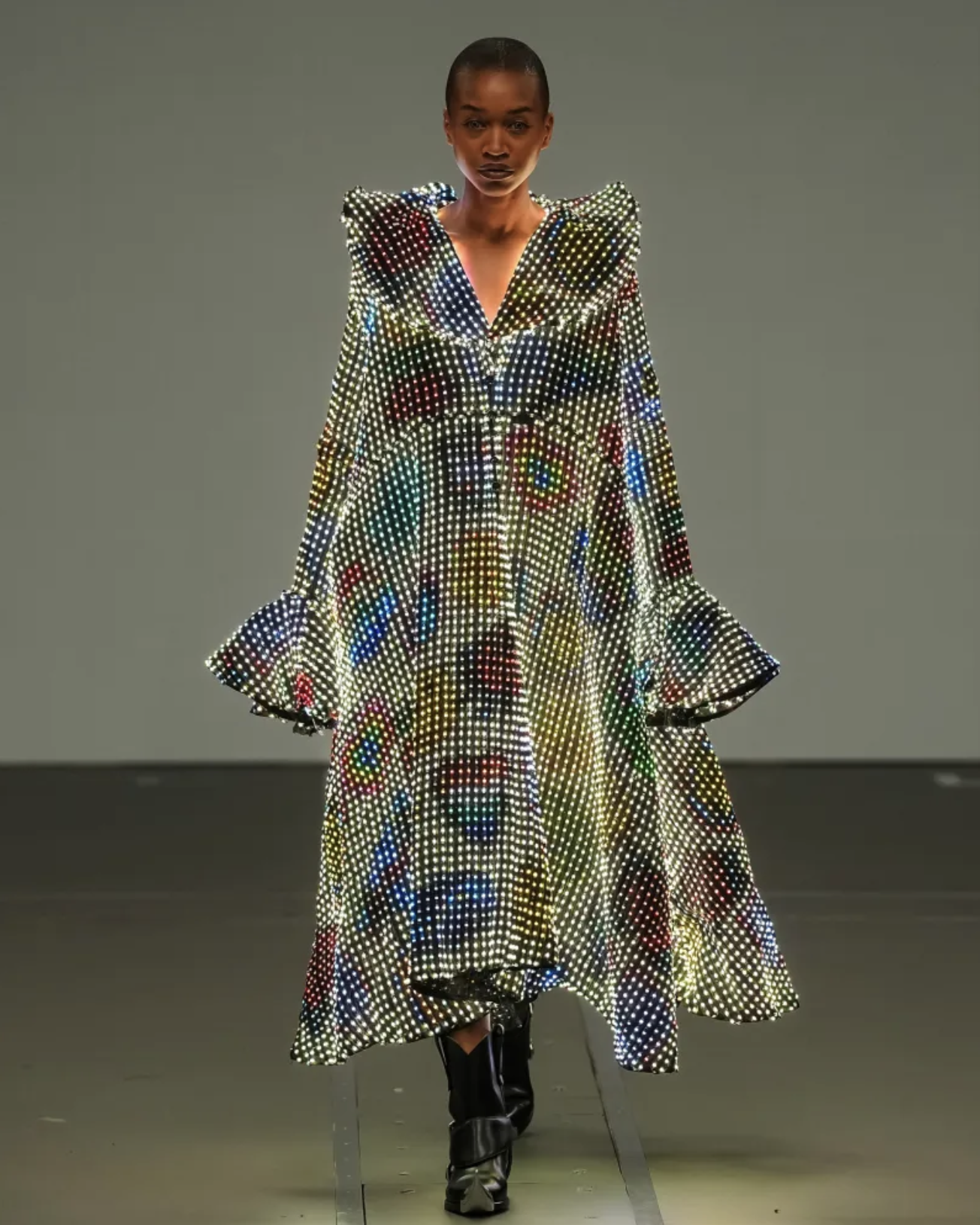
Several looks incorporated structured, armor-like shapes alongside bright neon color palettes. Metallic accessories and hardware-like details appeared throughout the collection, reinforcing the technological aesthetic established by the LED garments. The collection also referenced thermoptic camouflage from Ghost in the Shell. The cyberpunk narrative imagines surfaces capable of reproducing their surroundings in order to conceal objects, a concept Morinaga translated into wearable display garments synchronized with the runway projections.
Fashion as a Testing Ground for Emerging Materials
Morinaga founded ANREALAGE in 2003 and has frequently incorporated experimental materials and technologies into his collections. Previous runway presentations have included ultraviolet-reactive fabrics, garments that change color under different lighting conditions, and pieces designed for projection mapping.
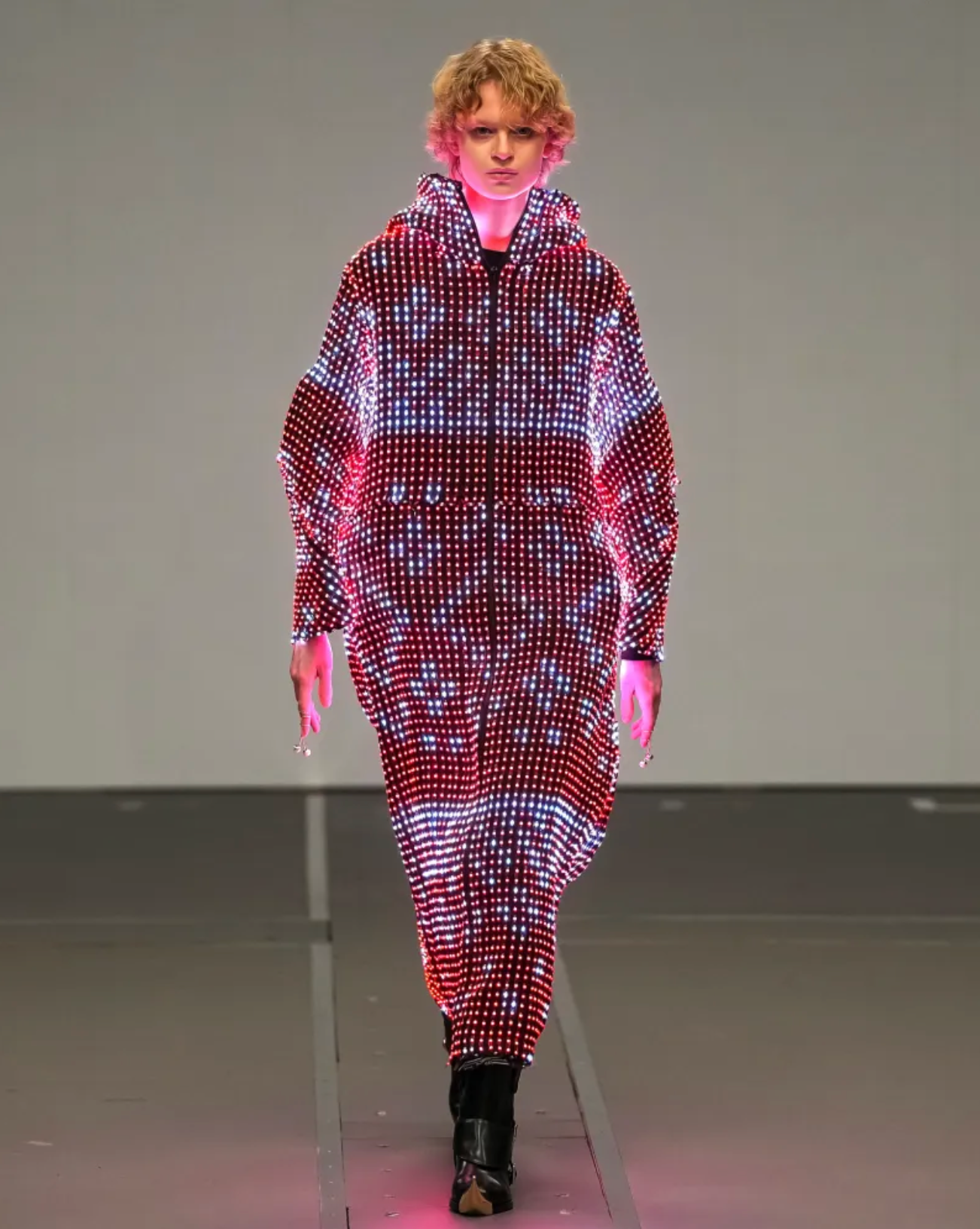
Many of these projects explore how clothing surfaces respond to light, projection, and environmental inputs. The FW26 runway extends this approach by integrating LED display systems directly into garments. While wearable LED technology has appeared in experimental fashion contexts before, the ANREALAGE presentation incorporated these displays into the structure of the runway environment itself. Background projections generated the visual environment while the garments displayed synchronized digital imagery.
Runway presentations provide a controlled setting where designers can experiment with new materials, visual systems, and interactions between clothing and digital media. In the FW26 show, thermoptic camouflage was explored through garments equipped with LED displays synchronized with the projections surrounding the runway.