When the New Museum reopened its expanded building on March 21, 2026, it did so with New Humans: Memories of the Future, a large-scale exhibition spanning the museum and examining how conceptions of the human have shifted across the twentieth and twenty-first centuries. The exhibition brings together more than two hundred artists, writers, scientists, architects, and filmmakers, placing contemporary works in dialogue with historical material.
Curated by Massimiliano Gioni, Gary Carrion-Murayari, Vivian Crockett, and Madeline Weisburg, the exhibition does not limit the idea of “new humans” to recent developments in artificial intelligence or biotechnology. Instead, it situates current technological conditions within a longer history of artistic and scientific attempts to represent the body, perception, and human identity. Materials from early twentieth-century avant-garde movements appear alongside contemporary works, reflecting how earlier moments of industrialization, mechanization, and media transformation produced new ways of imagining the human. By placing these periods in relation, the exhibition frames present-day concerns—including machine learning and computational media—within a broader continuum of technological and cultural change.
A Century-Long View of the Human Under Pressure
One of the exhibition’s defining structural moves is its refusal of a linear timeline. The show “traces a diagonal history” of the twentieth and twenty-first centuries, placing canonical figures such as Constantin Brâncuși, Salvador Dalí, Man Ray, and August Sander in proximity to artists including Bruce Lacey, Rammellzee, Toyen, and Unica Zürn. This juxtaposition situates modern and contemporary works within a shared field rather than a chronological sequence.
Scientific imagery is integrated directly into this structure including Lennart Nilsson’s embryo photographs, Santiago Ramón y Cajal’s drawings of neural structures, Franz Tschackert’s Glass Man, and Wilder Penfield’s sensory homunculus. Presented alongside artworks, these materials reflect how scientific models and visual culture have both contributed to representations of the human body. The Guardian described the exhibition as a 732-object survey of art, artifacts, and visual culture, noting the prominence of historical material such as Nilsson’s fetal photography from the 1960s, produced using endoscopic imaging techniques.
Contemporary Commissions and Expanded Bodies
The exhibition includes more than fifteen new commissions by contemporary artists including Ryan Gander, Camille Henrot, Jamian Juliano-Villani, Wangechi Mutu, Hito Steyerl, Alice Wang, and Santiago Yahuarcani. These works are presented alongside historical material as part of the museum’s reopening program.
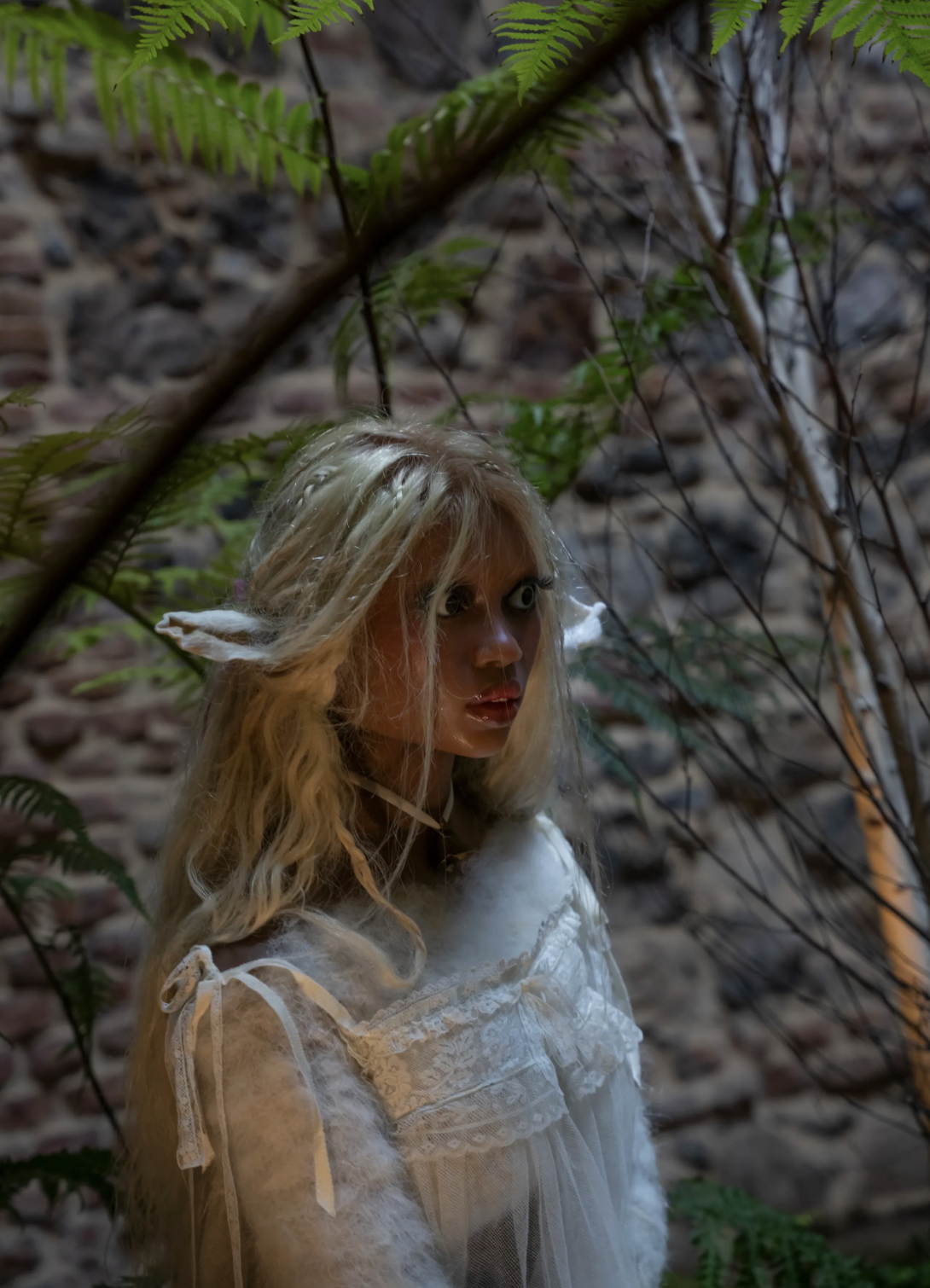
Several individual works clarify the exhibition’s range of approaches to the body and its representation. For example, Aneta Grzeszykowska’s photographic series Mama (2018), in which the artist uses a lifelike silicone model of her own body to construct staged images of familial relationships. The exhibition also includes Goshka Macuga’s projects Before the Beginning and After the End (2016) and Transhumanism (2017), which combine archival material and machine-assisted drawing. Nearby is Alina Szapocznikow’s Kaprys – Monstre (1967), composed of cast body fragments in synthetic materials.
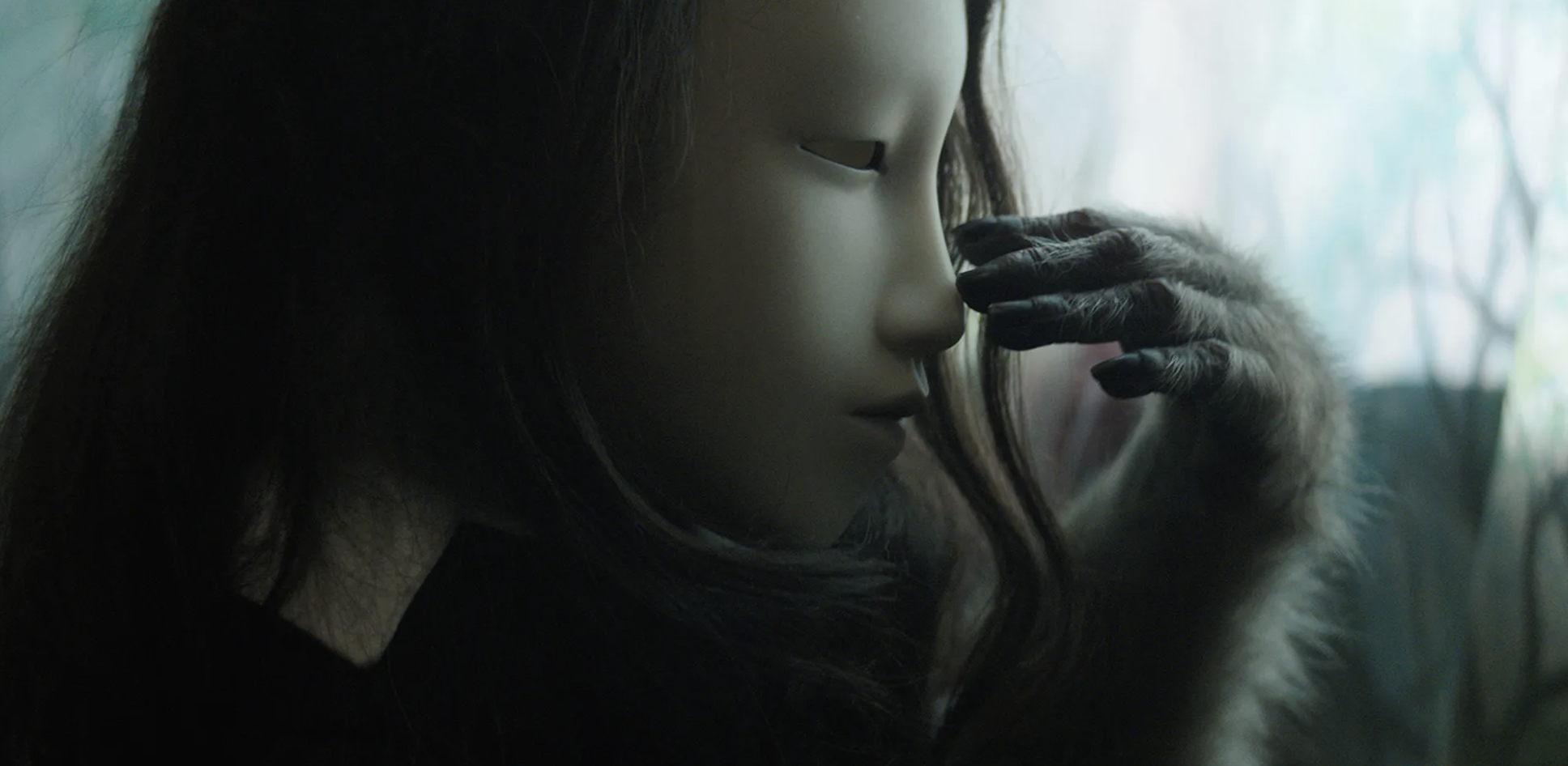
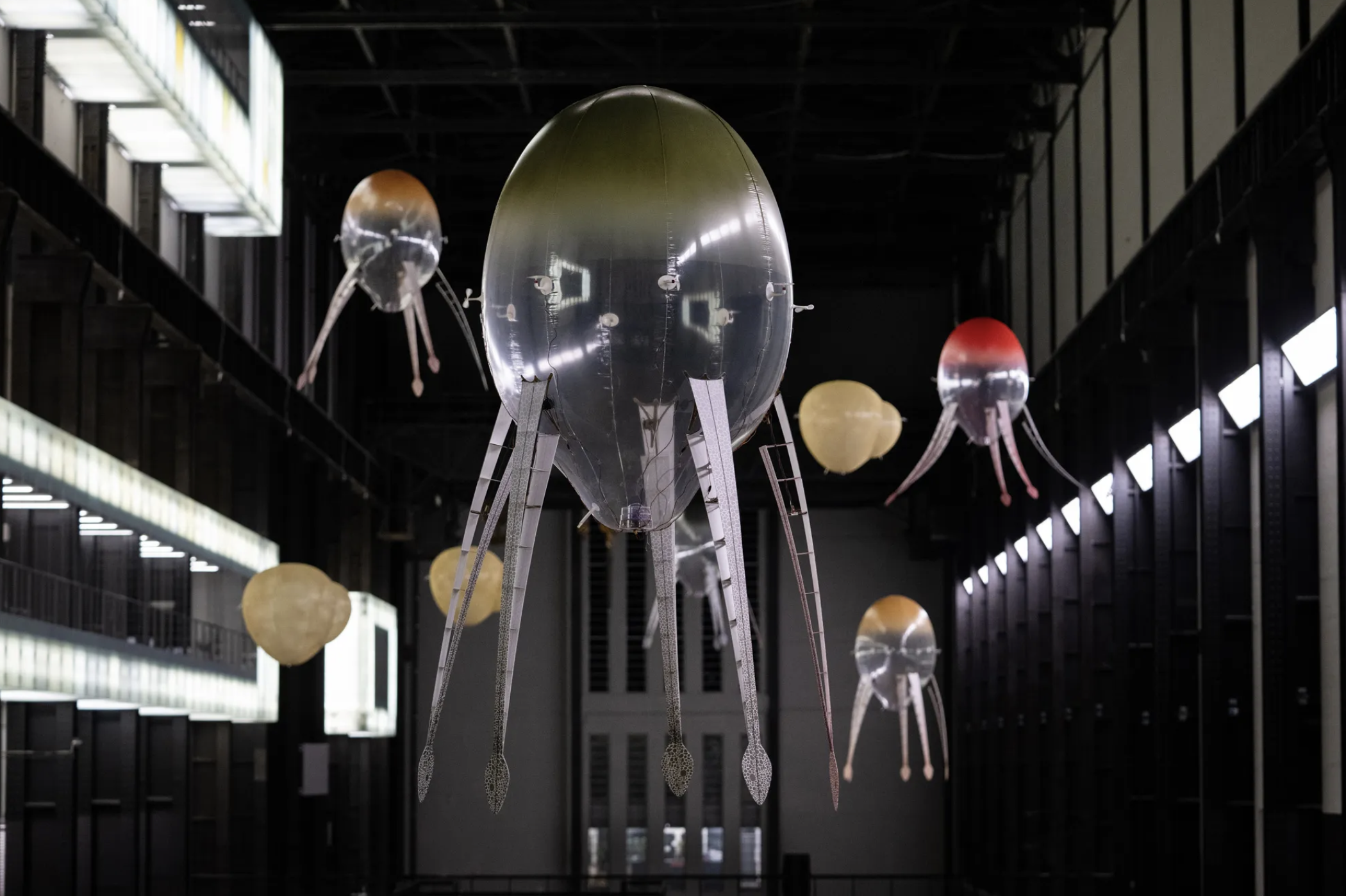
Other sections extend beyond the individual body to speculative environments. The curatorial framework references imagined cities and habitats by Sophia Al-Maria, Bodys Isek Kingelez, Gyula Kosice, Constant Nieuwenhuys, Hariton Pushwagner, and Albert Robida. It also includes Anicka Yi’s floating aerobes, originally developed for Tate Modern’s Turbine Hall, presented here within the New Museum galleries.
Positioning the Present Within a Longer Continuum
The exhibition is positioned within ongoing discussions about artificial intelligence and technological change. Rather than focusing exclusively on recent developments, New Humans: Memories of the Future situates these topics within a longer history of visual culture, scientific representation, and artistic experimentation.
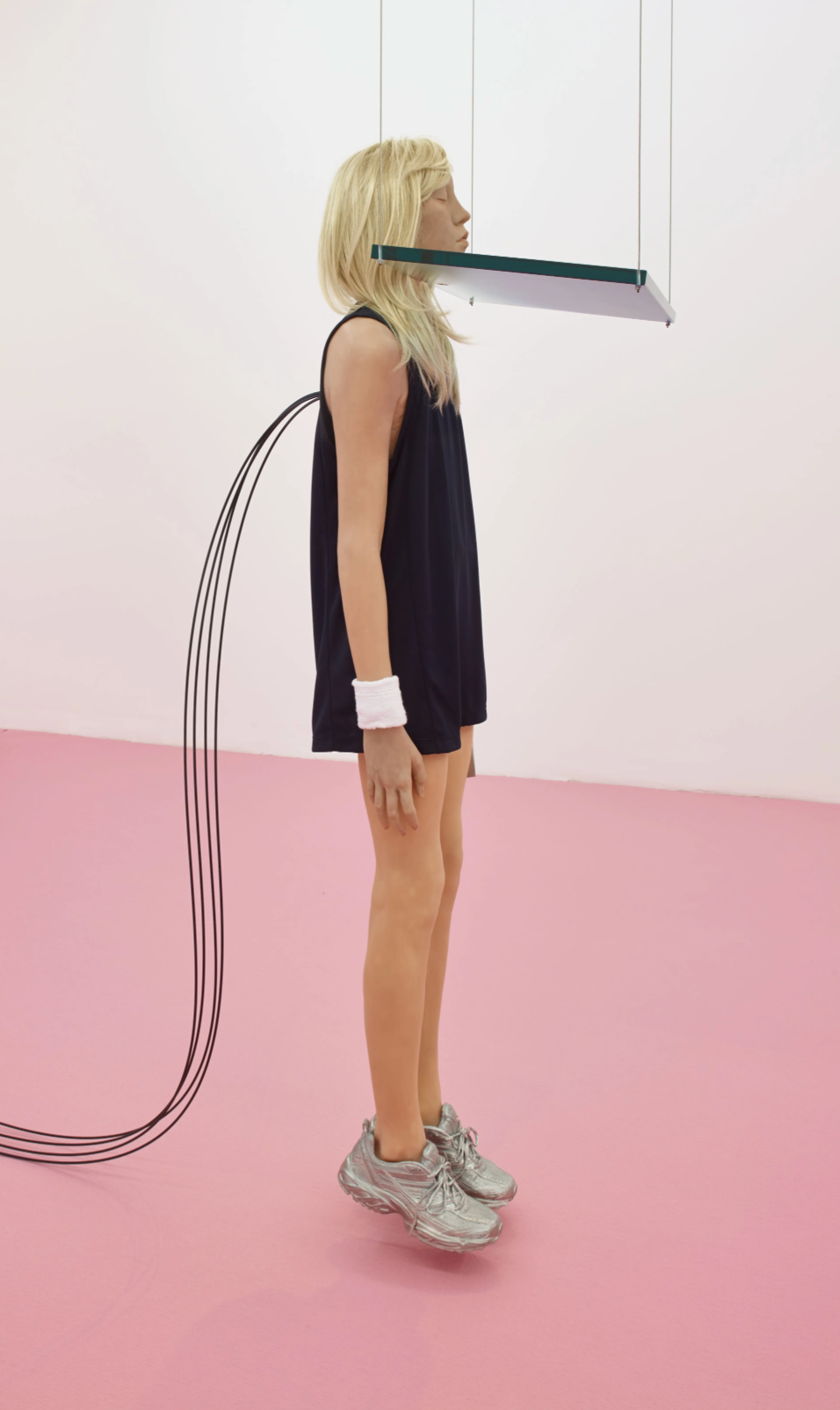
As the inaugural exhibition for the New Museum’s expansion, the show operates at the scale of a survey, combining historical material with contemporary commissions. This structure places current technological conditions in relation to earlier moments of industrialization, mechanization, and media transformation.
Across its sections, the exhibition assembles works that address recurring questions about representation, identity, and the relationship between humans and technical systems. By bringing together materials from different disciplines and time periods, it frames the future as something shaped through existing cultural, scientific, and artistic frameworks rather than as a distinct break from the past.